
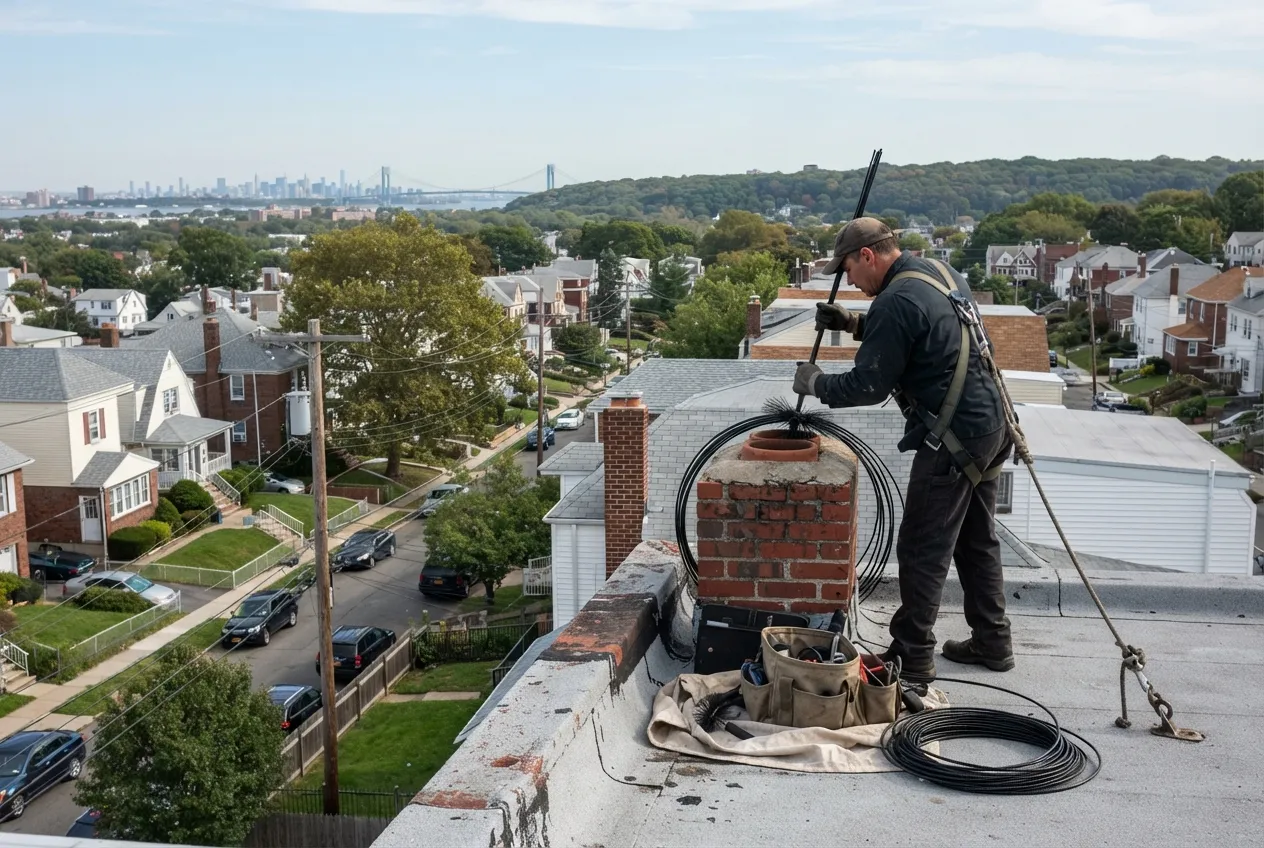
Chimney, Dryer Vent and Air Duct FAQ
Serving Staten Island and nearby cities.
- Diagnosis before any repair
- Photos of every finding
- Written price before we start
These are the questions Staten Island homeowners ask us most often about chimney sweeping, inspections, repairs, liners, dryer vents and air ducts. We've also covered what to expect on the day of your visit: how to get ready, how long the work usually takes, how we handle mess and pets, and how roof access works in rowhouses and apartment buildings. If your question isn't answered here, reach out and a member of our team will help.
How to Reach Us
The easiest way to reach BluePeak Chimney Service is through the request form on our website. Tell us what you need and we'll follow up to confirm a time. It helps to include a few details so we arrive prepared.
If you manage an apartment building or a rowhouse with shared roof access, please mention that in your request. We can plan for any permissions or keys needed to reach the roof.
- Your address and the type of home (detached house, rowhouse or apartment building)
- The service you're interested in, such as a sweep, inspection or dryer vent cleaning
- What heats your home and what fuel it uses (wood, gas or oil)
- Any problems you've noticed, like smoke, odors, water leaks or a dryer that runs long
FAQ
Frequently asked questions
How often should my chimney be swept?
The NFPA 211 standard calls for chimneys, fireplaces and vents to be inspected once a year, and the inspection shows whether a sweep is needed. Wood-burning fireplaces usually build up soot and creosote faster than gas appliances. Our certified technicians will tell you what they find and whether cleaning makes sense.
What is creosote, and why does it matter?
Creosote is a tar-like residue that forms inside a chimney when wood smoke cools. It builds up in layers and can catch fire if it's left in place. Regular sweeping removes it before it becomes a hazard.
Do gas fireplaces and oil furnaces need chimney service too?
Yes. Gas and oil appliances don't produce creosote the way wood does, but their flues can still become blocked by debris or nests, or damaged over time. The yearly inspection recommended by NFPA 211 applies to vents for these appliances as well.
What's the difference between Level 1, 2 and 3 inspections?
A Level 1 inspection is for chimneys where nothing has changed. A Level 2 inspection is called for when the system changes, such as a new appliance or a fuel switch, or when the home is being sold. A Level 3 inspection is used when a hidden hazard has to be reached by opening part of the chimney or building.
Do I need an inspection if I'm buying or selling a home?
Under the inspection levels chimney professionals use, a home sale is one of the situations that calls for a Level 2 inspection. It gives buyers and sellers a clear picture of the chimney's condition before closing. Let us know about the sale when you book so we schedule the right inspection.
My building is converting from oil to gas. Does the chimney need work?
In New York City, the chimney has to be evaluated as part of an oil-to-gas boiler conversion. A new liner is often needed because gas exhaust produces acidic condensate that can corrode a masonry flue. We can inspect the chimney and install a liner if one is required.
How do I know if my chimney needs repair?
Common signs include crumbling mortar, loose or cracked bricks, water stains near the fireplace, rust on the damper, and pieces of tile or masonry falling into the firebox. An inspection will show what's causing the problem. Depending on what we find, the fix may be a repair, waterproofing, a new cap or chase cover, or rebuilding part of the chimney.
What do a chimney cap and chase cover do?
A chimney cap sits on top of the flue and helps keep out rain, animals and debris. A chase cover seals the top of a framed chimney chase so water doesn't get inside. Both help prevent water damage and blockages.
Why should I clean my dryer vent?
According to the U.S. Fire Administration, failure to clean is the leading factor contributing to clothes dryer fires in homes. Lint builds up in the vent line over time, beyond what the lint trap catches. Signs it's time include clothes taking longer to dry, a hot laundry room or a burning smell.
When should air ducts be cleaned?
The U.S. EPA advises cleaning air ducts when there is substantial visible mold growth, signs of vermin, or excessive dust and debris. The EPA also notes that duct cleaning has not been shown to prevent health problems. We'll look at your system and tell you honestly whether cleaning is worthwhile.
Do you use chemical treatments in air ducts?
The EPA advises consumers to be careful with chemical treatments in ductwork. We'll talk through any treatment with you before using it and explain why it might or might not help. The EPA also suggests researching the process before responding to very cheap advertised duct cleaning offers.
What should I do before you arrive?
Please stop using the fireplace or stove at least a day ahead so the firebox is cool. Clear a path to the fireplace, dryer or vents, and move fragile items off the mantel. If we need roof access, have any keys or permissions ready.
How long does a visit take, and will it be messy?
Most sweeps and dryer vent cleanings take one to two hours, while inspections, repairs and liner work vary with the job. We'll give you an estimate of the time when you book. We lay down drop cloths and use vacuum equipment to keep soot and dust contained, and we clean up the work area before we leave.
What should I do with my pets?
Please keep pets in a closed room away from the work area during the visit. Our equipment can be noisy, and doors may be open while we work. It also keeps your pets away from soot and debris.
How does roof access work for rowhouses and apartment buildings?
Many rowhouses and apartment buildings reach the roof through a hatch or a shared stairway, so we may need a key or permission from the building owner or management. Please arrange this before your appointment. For apartment buildings, we suggest scheduling chimney work before New York City's heat season starts on October 1, since owners must keep apartments heated through May 31.
Schedule a Chimney or Vent Inspection
Tell us what you're noticing, whether that's a smell, a leak, a slow dryer or a home you're about to buy. We'll inspect it, show you what we find, and give you a written price before any work begins.