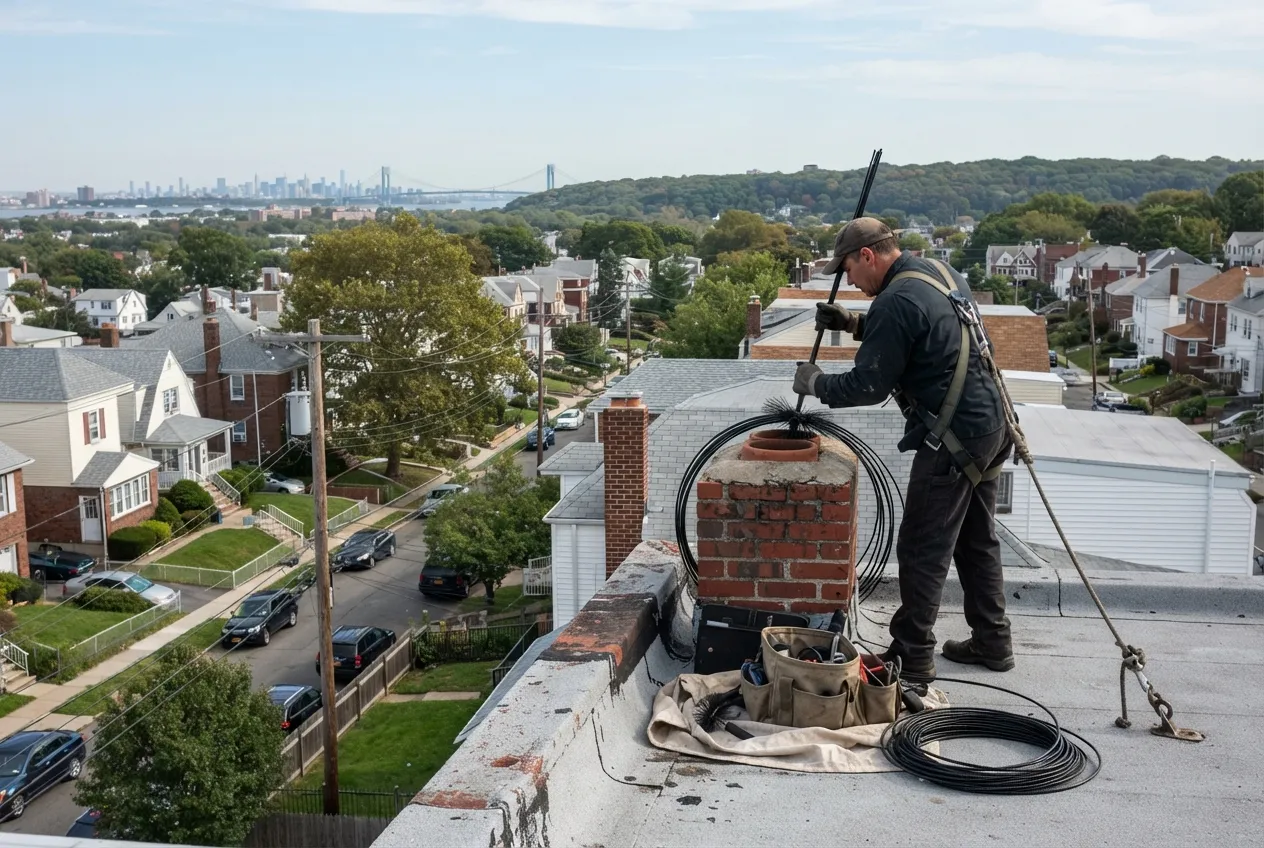
The short answer
BluePeak Chimney Service provides chimney sweeping, inspections, repairs, liners, and dryer vent and air duct cleaning in Charleston, Staten Island (10307). We're about 3 miles east of the neighborhood. We also serve nearby Tottenville, Annadale, Huguenot, Prince's Bay and Woodrow.
BluePeak Chimney Service works throughout Charleston, the South Shore neighborhood about 3 miles west of our Staten Island office. We sweep and inspect chimneys, repair masonry and dampers, install liners, and clean dryer vents and air ducts for homeowners across the 10307 ZIP code. Charleston is close enough that scheduling is simple, and our certified technicians know what South Shore weather does to a chimney over a few winters. Below is what we see most often in local homes and how we approach the work.
Chimneys in Charleston Homes
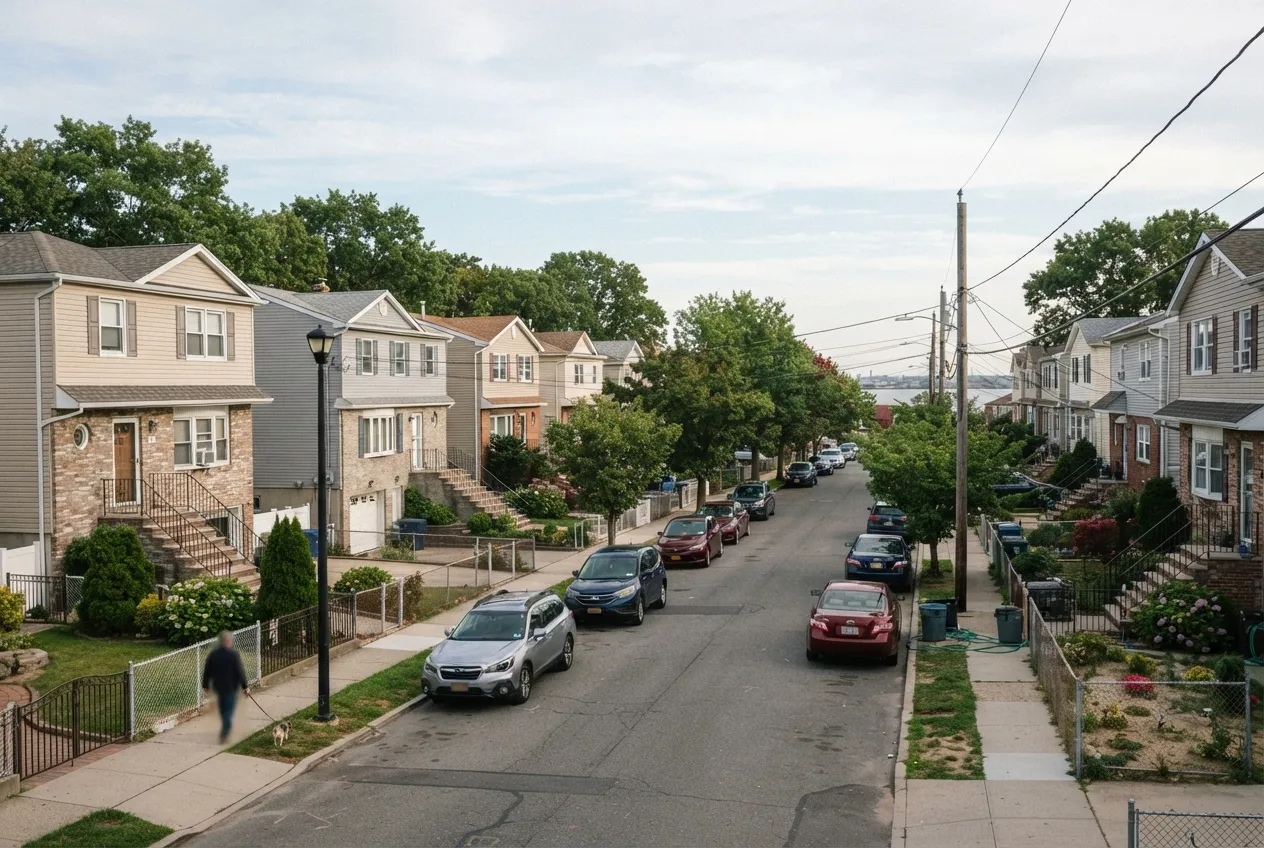
Most of Charleston's housing is detached and semi-detached single-family homes, along with attached townhouses. Some homes have a masonry fireplace that gets used on winter weekends. Others have a chimney that only vents a gas furnace or boiler and a water heater. Each setup needs different care.
A wood-burning fireplace builds up creosote and needs regular sweeping. A chimney that vents only gas appliances has less soot. Its risks are corrosion, blockages from nests or debris, and liner damage. On newer homes with a framed chimney chase, the metal chase cover on top is often the first part to rust or let water in.
What South Shore Weather Does to a Chimney
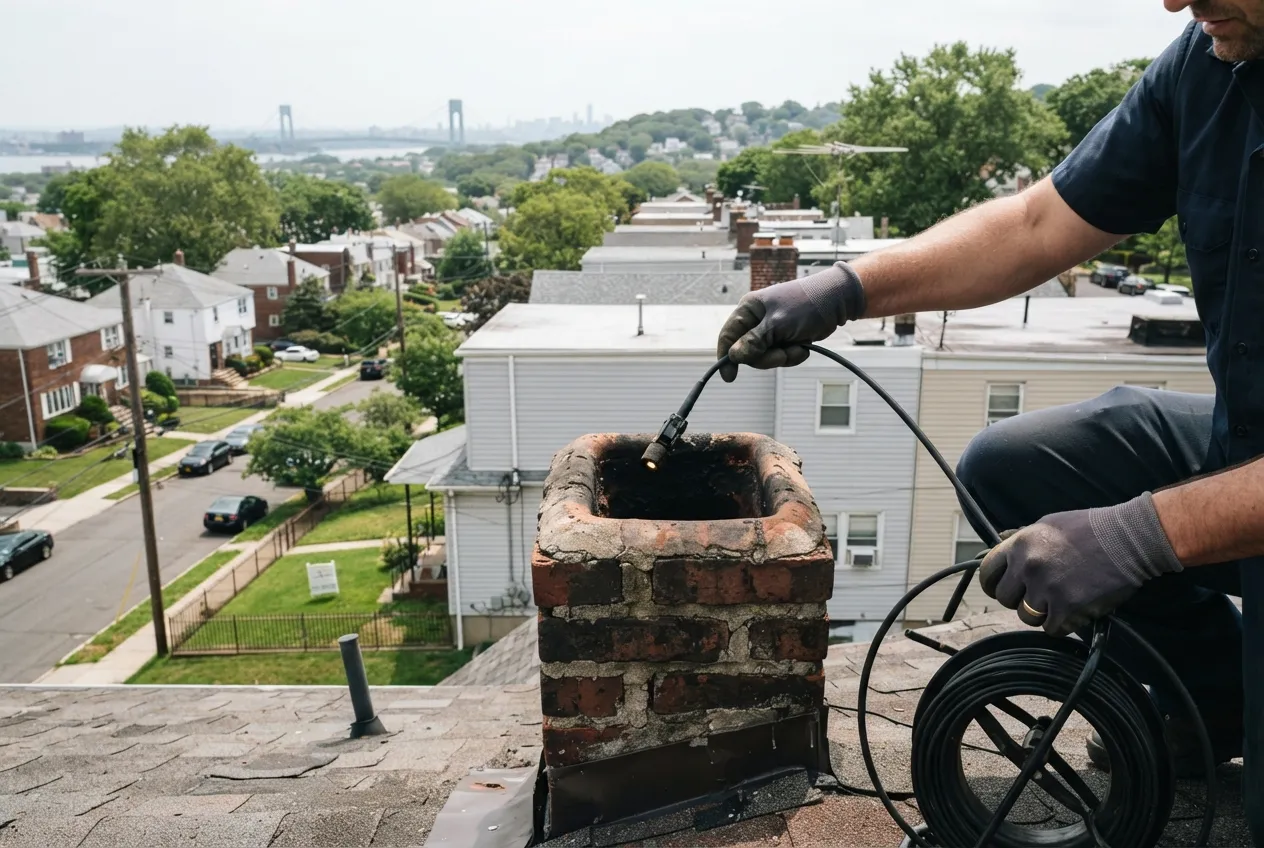
Charleston's spot near the water means damp air, wind-driven rain from coastal storms, and plenty of winter days that swing above and below freezing. Water that soaks into brick and mortar freezes, expands and slowly breaks the masonry apart. That's how a small crack in a crown or a missing cap becomes loose bricks, stained ceilings or a damaged flue.
We look for these early signs and fix them before they spread:
- Cracked or crumbling chimney crowns
- Missing or rusted chimney caps and chase covers
- Gaps in flashing where the chimney meets the roof
- Spalling brick and eroded mortar joints that may call for waterproofing, repointing or partial rebuilding
- Dampers that stick, rust or no longer close tightly
Yearly Inspections and Heating Season
The NFPA 211 standard calls for chimneys, fireplaces and vents to be inspected once a year. A Level 1 inspection fits when nothing about the system has changed. A Level 2 inspection is used when the system changes, such as a new appliance or a switch of fuel, or when a home is being sold. A Level 3 inspection is reserved for cases where a hidden hazard can only be reached by opening part of the chimney or building.
New York City's heat season runs from October 1 through May 31. If you own a two-family home or rent out a unit, the heating system has to keep tenants at the city's minimum temperatures during those months. Having the chimney and flue checked in late summer or early fall leaves time for repairs before the heat comes on for good.
Time for your annual chimney check?
Converting From Oil to Gas
Some Charleston homeowners are replacing oil heat with gas. When a New York City building converts its boiler from oil to gas, the chimney has to be evaluated as part of the work. A new liner is often needed because gas exhaust produces acidic condensate that can corrode a masonry flue. We inspect the existing flue, explain what we find, and install a properly sized liner when one is needed.
Dryer Vents and Air Ducts
According to the U.S. Fire Administration, failure to clean is the leading factor contributing to clothes dryer fires in homes. Long vent runs, ducts that pass through a garage, and vents that exit on a second floor tend to collect lint fastest. If your clothes take more than one cycle to dry or the laundry room feels unusually hot, the vent probably needs cleaning.
For air ducts, we follow the U.S. EPA's guidance. Cleaning makes sense when there is substantial visible mold growth, signs of vermin, or excessive dust and debris. The EPA also notes that duct cleaning has not been shown to prevent health problems. We'll tell you plainly whether your ducts need cleaning, and we don't push chemical treatments.
Neighborhoods Near Charleston We Also Serve
Along with Charleston, our technicians regularly work in Tottenville, Annadale, Huguenot, Prince's Bay and Woodrow. These South Shore neighborhoods share the same coastal weather and many of the same home styles, so the chimney and vent problems we see there are much the same.
ZIP codes we serve
- 10307
Services in Charleston
- Chimney Sweep in Charleston
- Chimney Inspection in Charleston
- Chimney Repair in Charleston
- Air Duct Cleaning in Charleston
- Chimney Liner Installation in Charleston