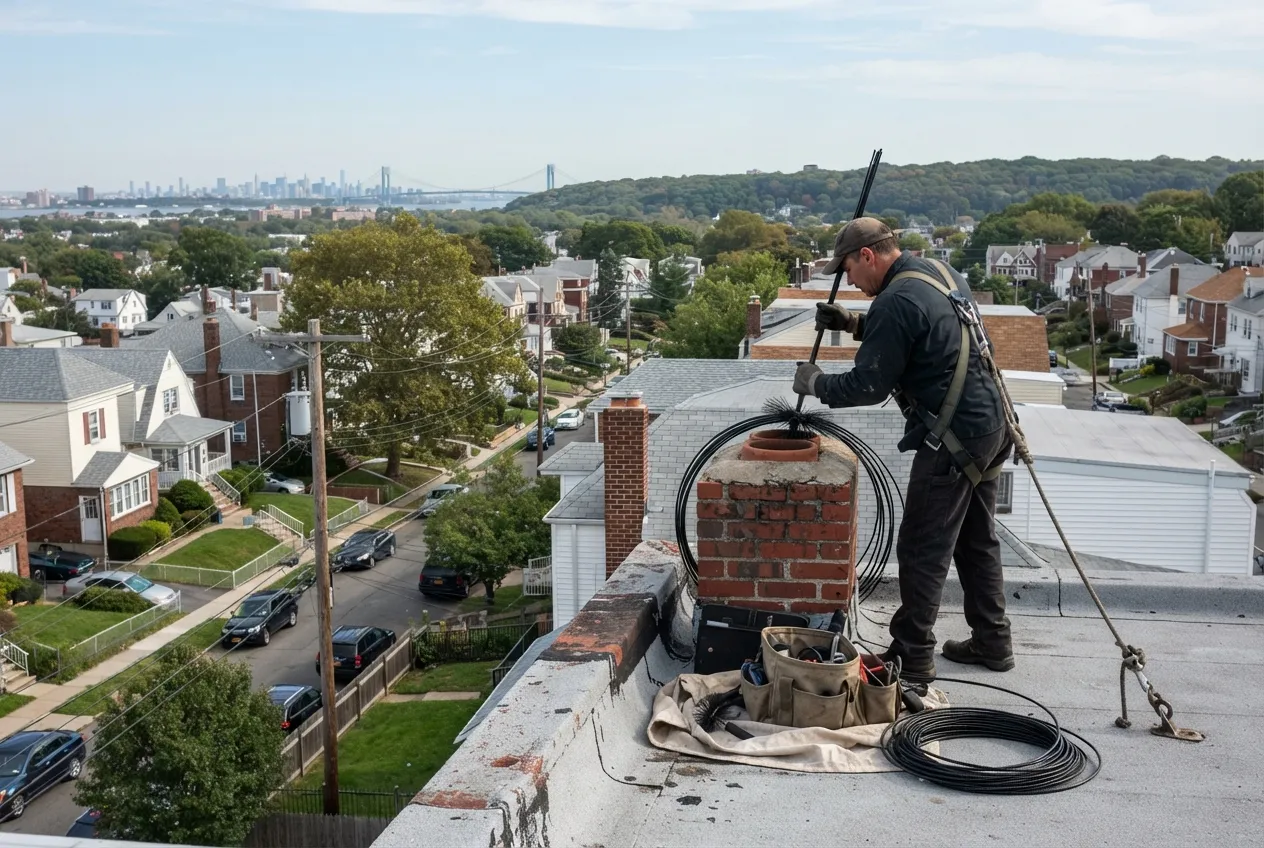
The short answer
Yes, BluePeak Chimney Service covers Huguenot, Staten Island, in ZIP codes 10309 and 10312, about a mile from our office. We handle chimney sweeping, inspections, repairs, liners, caps, waterproofing, rebuilding, and dryer vent and air duct cleaning.
BluePeak Chimney Service works in Huguenot, about a mile southwest of our Staten Island office, so homes in ZIP codes 10309 and 10312 are a short drive for our crews. We sweep, inspect and repair chimneys, install liners, fix fireplaces and dampers, and clean dryer vents and air ducts. Our technicians are certified, and they explain what they find in plain terms before any repair starts, so you can decide what makes sense for your home.
Chimney and Fireplace Care for Huguenot Homes
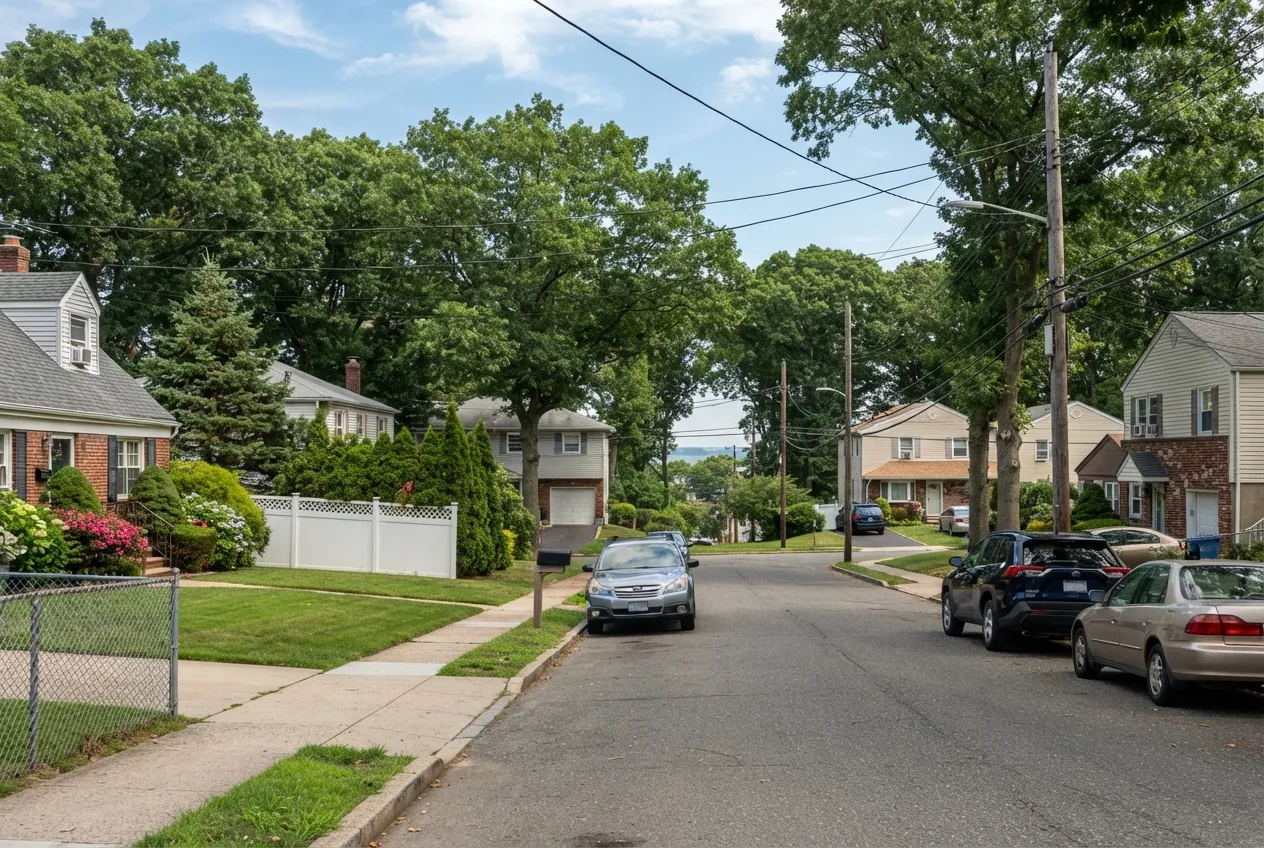
Huguenot is mostly detached single-family homes, along with some semi-attached houses and townhouse-style buildings. Many have a masonry chimney serving a wood-burning fireplace, a gas or oil boiler, or both. Others vent a furnace or water heater through a metal flue that still needs regular attention.
A routine visit usually starts with a chimney sweep to remove soot and creosote, which builds up with every fire and can ignite if it gets thick enough. While we're there, we check the firebox, the smoke chamber and the damper. A damper that sticks or doesn't seal lets warm air escape all winter and cold drafts come down in, so fireplace and damper repair is often a small fix that makes a noticeable difference.
How South Shore Weather Affects Your Chimney
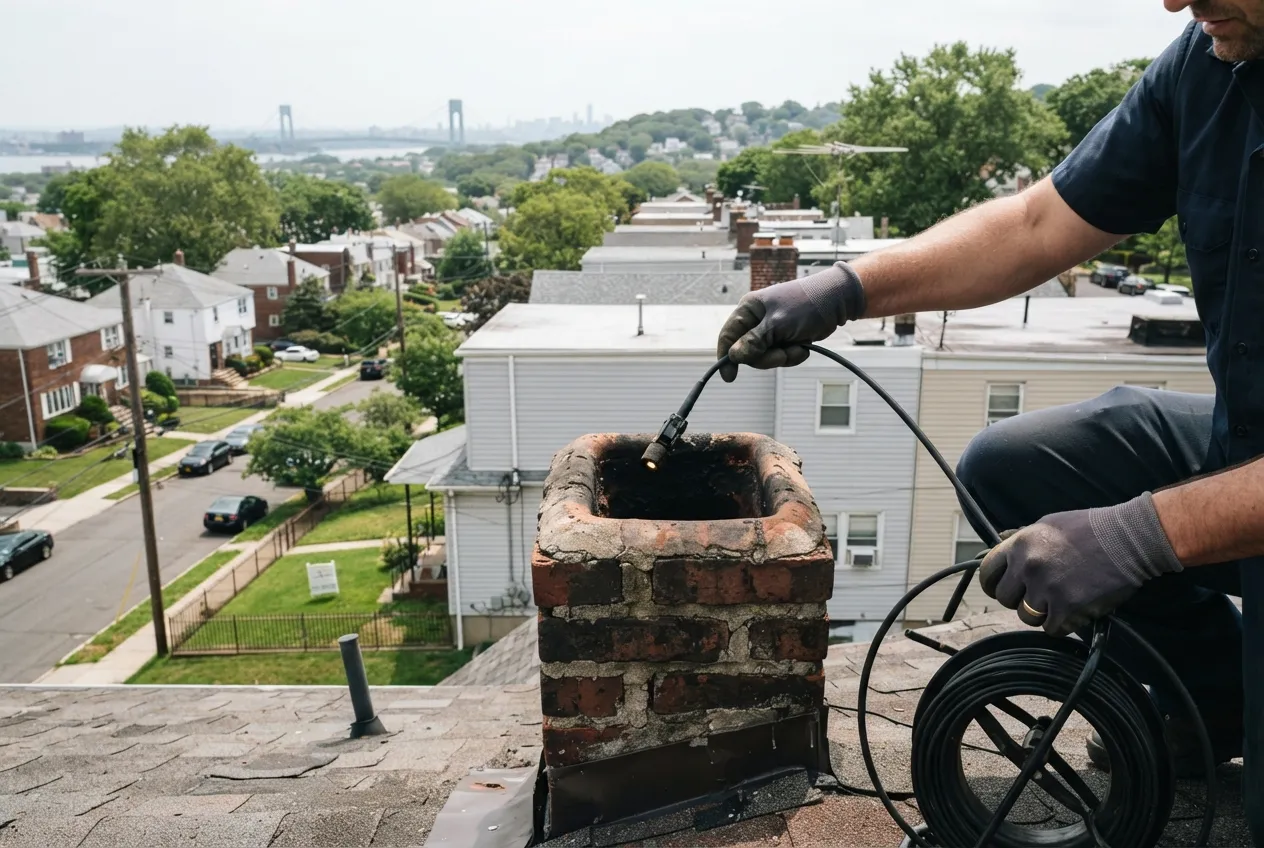
Huguenot sits on Staten Island's South Shore, close to the water, so chimneys here deal with damp winters, wind-driven rain, nor'easters and repeated freeze-thaw cycles. Water that soaks into brick and mortar expands when it freezes, and over a few seasons that loosens joints, cracks crowns and pushes bricks out of line.
Most of the masonry damage we see starts with water getting in from the top or through porous brick. Keeping it out is usually cheaper than repairing what it breaks.
- Chimney caps keep rain, leaves, birds and animals out of the flue.
- Chase covers protect the top of framed chimneys that enclose metal flues.
- Chimney waterproofing applies a breathable sealant that sheds water but lets moisture inside the brick escape.
- Chimney repair covers repointing mortar joints, fixing cracked crowns and resealing flashing.
- Chimney rebuilding is for stacks that have leaned, crumbled or lost too much mortar to repair.
Yearly Inspections and When You Need More
The NFPA 211 standard calls for chimneys, fireplaces and vents to be inspected once a year. A Level 1 inspection fits most homes where nothing has changed. A Level 2 inspection is called for when the system changes, such as a new appliance or a switch of fuel, or when the home is being sold. A Level 3 inspection is used only when a suspected hidden hazard has to be reached by opening part of the chimney or building.
New York City's heat season runs from October 1 through May 31, so late summer or early fall is a good time to schedule an inspection before the boiler and fireplace get steady use.
If you're converting a boiler from oil to gas, the chimney has to be evaluated as part of that work in New York City. A new liner is often needed, because gas exhaust produces acidic condensate that can corrode a masonry flue. We handle chimney liner installation so the flue is sized and protected for the new appliance.
Time for your annual chimney check?
Dryer Vent and Air Duct Cleaning
According to the U.S. Fire Administration, failure to clean is the leading factor contributing to clothes dryer fires in homes. Lint collects in the vent run, especially in long or bent ducts, and slows drying long before it becomes a hazard. If loads take two cycles or the laundry room gets unusually hot, the vent is worth checking.
For air ducts, we follow the U.S. EPA's guidance: cleaning makes sense when there is substantial visible mold growth, vermin, or excessive dust and debris. The EPA also notes that duct cleaning hasn't been shown to prevent health problems, and it urges care with chemical treatments. We'll tell you honestly whether your ducts need cleaning.
Huguenot and Nearby Neighborhoods We Serve
We work throughout Huguenot in ZIP codes 10309 and 10312, and in the surrounding South Shore neighborhoods of Annadale, Prince's Bay, Woodrow, Arden Heights and Rossville. Because we're based nearby, scheduling follow-up work or a second look is straightforward.
ZIP codes we serve
- 10309
- 10312
Services in Huguenot
- Chimney Sweep in Huguenot
- Chimney Inspection in Huguenot
- Chimney Repair in Huguenot
- Air Duct Cleaning in Huguenot
- Chimney Liner Installation in Huguenot