The short answer
Chimney repair fixes the crown, mortar, bricks, flashing, cap, damper and flue liner so water, smoke and heat stay where they belong. BluePeak starts with an inspection based on the NFPA 211 standard, shows you photos or camera footage of the problem, and explains the repair options before any work begins.
Most chimney damage starts small: a cracked crown, a few soft mortar joints, or a loose piece of flashing. Water gets in, freezes, thaws, and the gap widens every winter until bricks start to shift or the flue liner breaks down. BluePeak Chimney Service repairs masonry chimneys, flues and the parts that keep water and animals out for homeowners in Staten Island and nearby communities. Our certified technicians find the cause first, show you what they found, and explain your options before any repair work begins.
Signs you need chimney repair
Chimney problems usually show up inside the house before anyone climbs onto the roof. If you notice any of the signs below, stop using the fireplace or stove until the chimney has been checked. Small leaks and cracks are much easier to fix before a freeze-and-thaw season works them wider.
- Water or damp ash in the firebox after rain or snow
- Pieces of brick, mortar or tile flue liner falling into the firebox
- White, chalky staining on the outside or inside brick, a sign that water is moving through the masonry
- Smoke drifting into the room or a fire that is hard to keep drawing
- A strong smoky or creosote smell, especially on humid days
- Water stains on the ceiling or wall next to the chimney
- Missing, rusted or bent chimney cap, or animal noises in the flue
- Cracked or crumbling crown, or mortar joints you can scrape out with a key
What's included in a chimney repair visit
Every repair begins with an inspection so we fix the cause, not just the stain. The work we recommend depends on what we find, and you approve the plan before we start. A typical scope can include any of the following:
- Inspection of the firebox, smoke chamber, flue, crown, cap and flashing
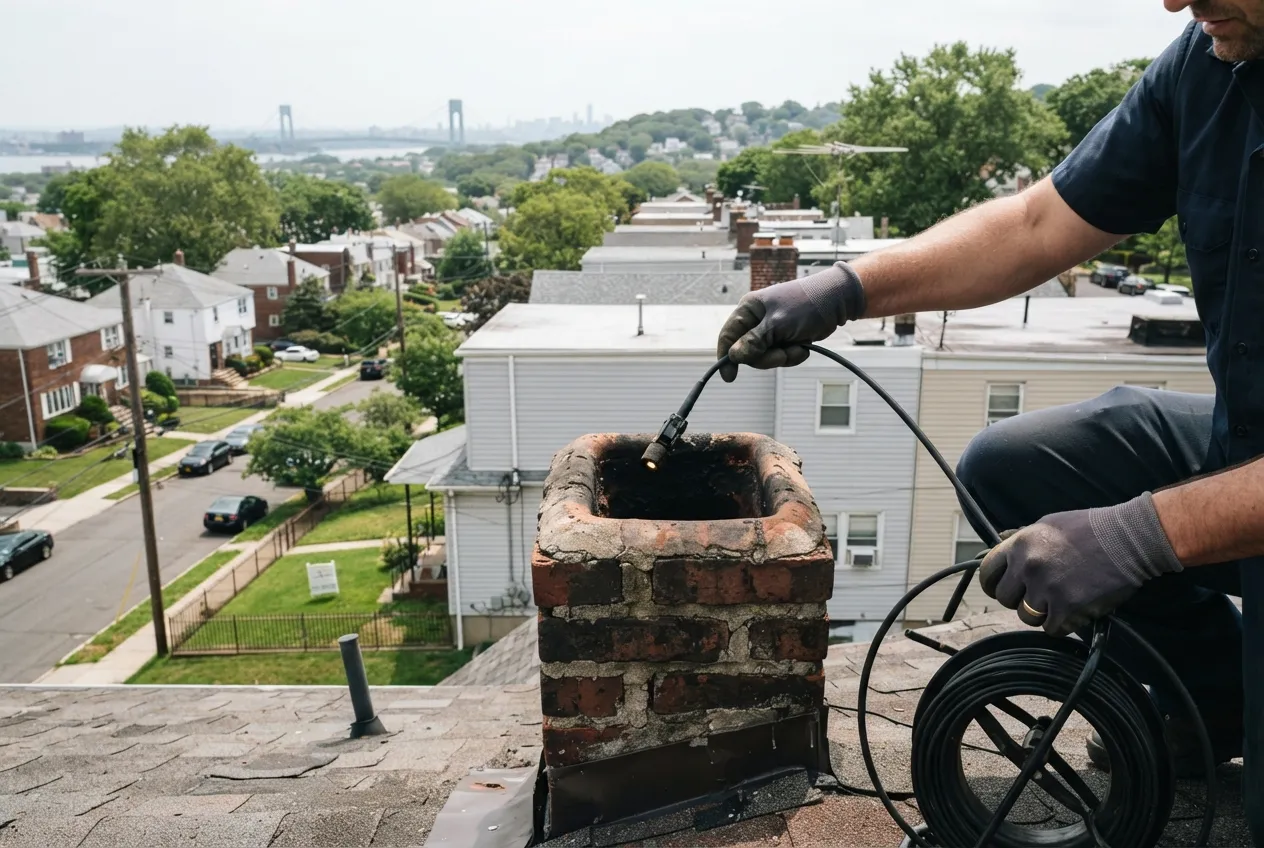
- Camera inspection of the flue liner when cracks, gaps or missing mortar are suspected
- Crown repair, sealing or rebuilding
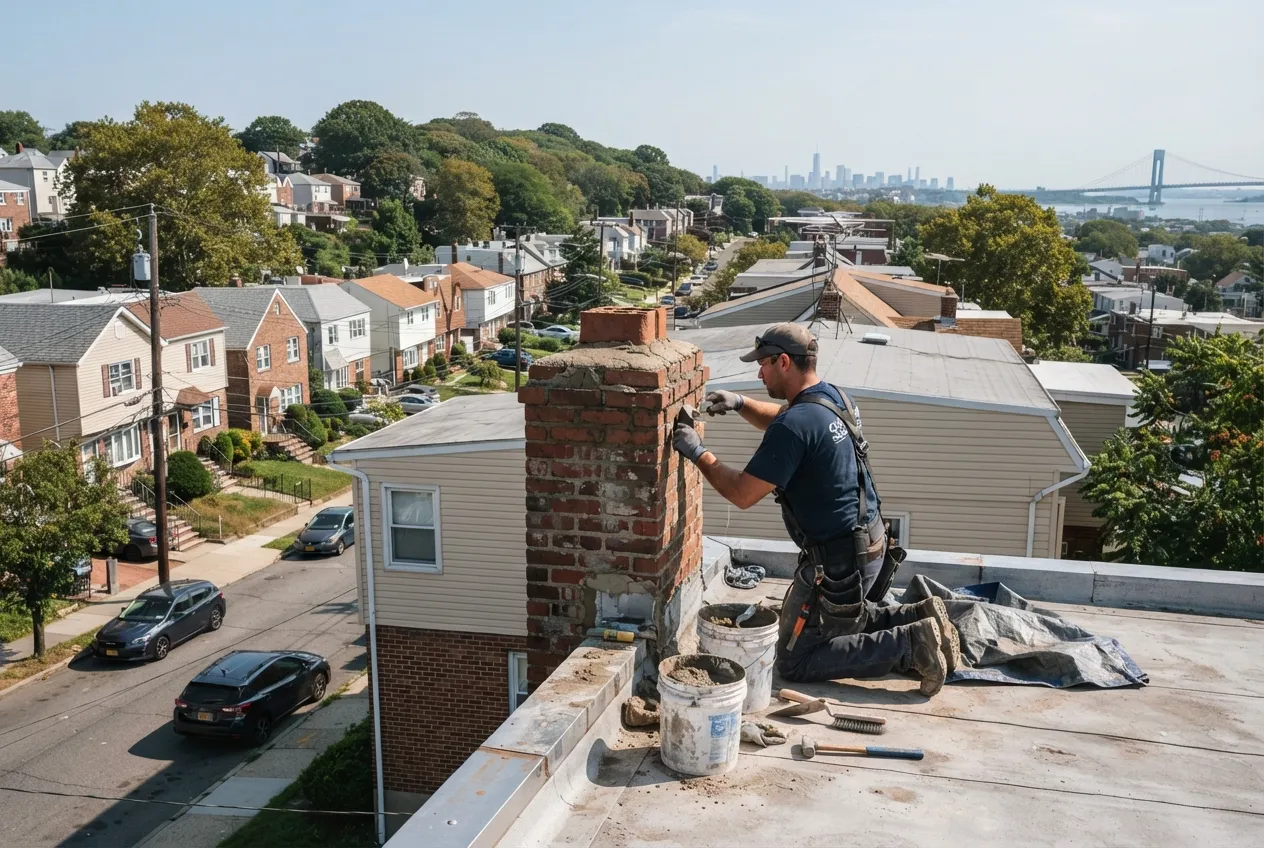
- Repointing of worn or missing mortar joints
- Replacement of cracked or spalled bricks
- Flashing repair or replacement where the chimney meets the roof
- Chimney cap installation or replacement to keep out rain and animals
- Damper repair or a top-sealing damper
- Flue liner repair or a new stainless steel liner
- Breathable water repellent on the masonry where it fits
- Full cleanup of the work area and a written summary with photos
How our crew works inside your home and on the roof
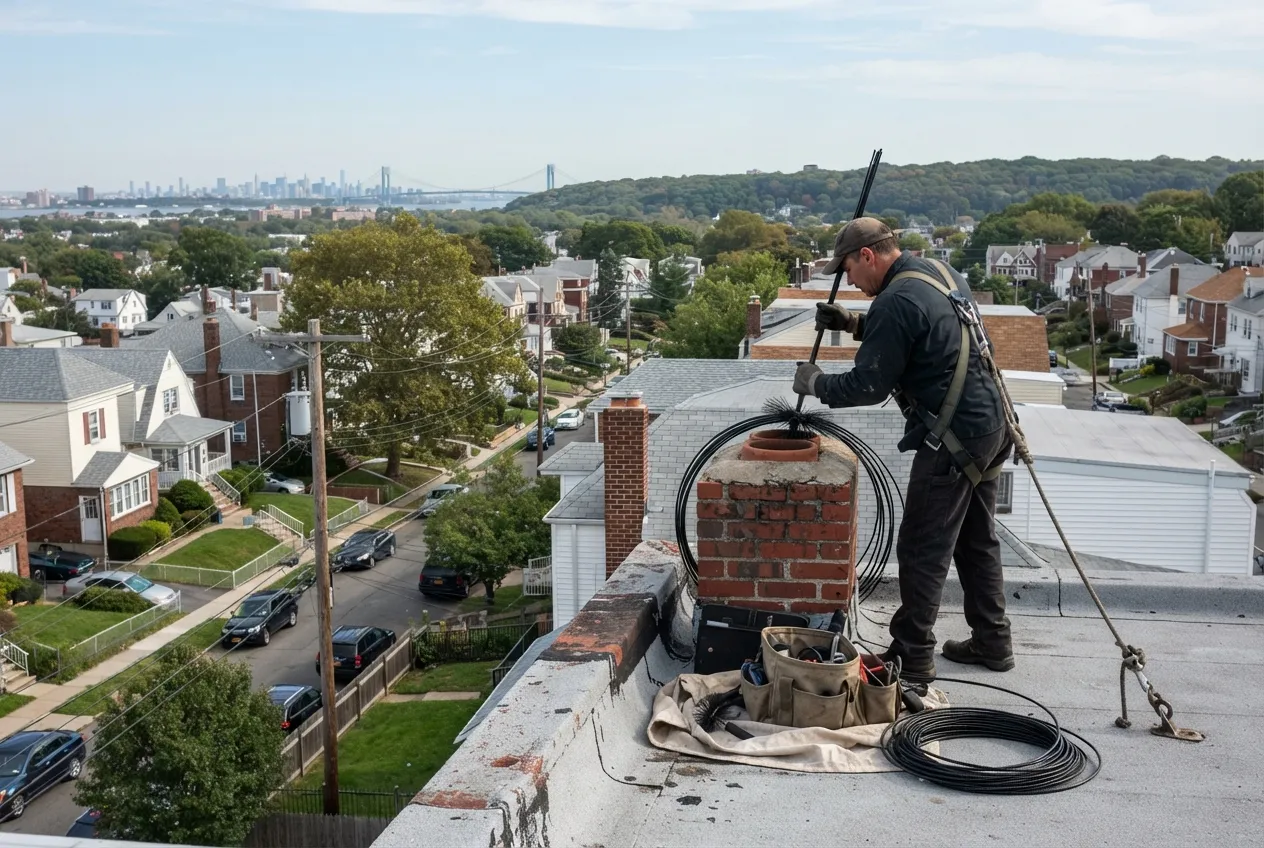
Inside, we lay drop cloths from the door to the fireplace and cover the hearth before anything is opened. We use HEPA vacuums to control soot and dust, and we clean the flue with rotary brushes when buildup has to come out before repairs or a camera inspection. The camera lets us see the full length of the liner and show you any cracks or gaps on screen, so you are not taking our word for it.
On the roof, we set up safe access, protect shingles and gutters where we work, and check the crown, cap, flashing and every face of the masonry. Old mortar and debris are bagged and removed, not left in your gutters or yard. Before we leave, we walk you through the finished work and the photos.
Time for your annual chimney check?
The standard we follow
Our inspections and repair recommendations are based on NFPA 211, the national standard that calls for chimneys, fireplaces and vents to be inspected once a year. Chimney professionals use three inspection levels. Level 1 is used when nothing has changed with the system. Level 2 applies when the system changes, such as a new appliance or a switch of fuel, or when the home is being sold. Level 3 is needed when a hidden hazard can only be reached by opening part of the chimney or building.
Fuel changes matter here. When a New York City building converts its boiler from oil to gas, the chimney has to be evaluated as part of the work, and a new liner is often needed because gas exhaust produces acidic condensate that can corrode a masonry flue. If you rent out part of your house, keep in mind that the city's heat season runs from October 1 through May 31, so it makes sense to schedule heating-flue repairs before it starts.
What affects the price
We give you a clear quote after the inspection, once we know the actual condition of the chimney. The main factors are:
- Chimney height, roof pitch and how easy it is to reach the chimney safely
- Fuel type: wood, gas or oil, and whether the fuel is changing
- Flue size, shape and the condition of the existing liner
- How much soot or creosote buildup has to be cleared before repairs
- Whether a camera inspection is needed to see inside the flue
- The extent of the damage, from a few joints of repointing to rebuilding the crown or relining the flue
How a visit works
You book a time and tell us what you have noticed, such as leaks, falling debris or a smell. Our technicians arrive, protect the room, and inspect the chimney inside and out. We show you photos or camera footage, explain what is wrong and why, and give you a written quote with the repair options.
Small repairs can sometimes be done the same day. Larger jobs, like crown rebuilding or relining, are scheduled once you approve the plan, and we explain how weather may affect timing. After the work, we clean up, review the finished repair with you, and leave a written summary for your records.
Chimney Repair by city
- Chimney Repair in Great Kills
- Chimney Repair in Eltingville
- Chimney Repair in Arden Heights
- Chimney Repair in Rossville
- Chimney Repair in Annadale
- Chimney Repair in Huguenot
- Chimney Repair in Prince’s Bay
- Chimney Repair in Woodrow
- Chimney Repair in Oakwood
- Chimney Repair in Richmondtown
- Chimney Repair in Tottenville
- Chimney Repair in Charleston