The short answer
BluePeak serves all of Great Kills (ZIP 10308), about a mile from our Staten Island office. We handle chimney sweeping, inspections, repairs and liners, plus dryer vent and air duct cleaning. Book your yearly inspection in late summer or early fall so any repairs are done before heat season starts October 1.
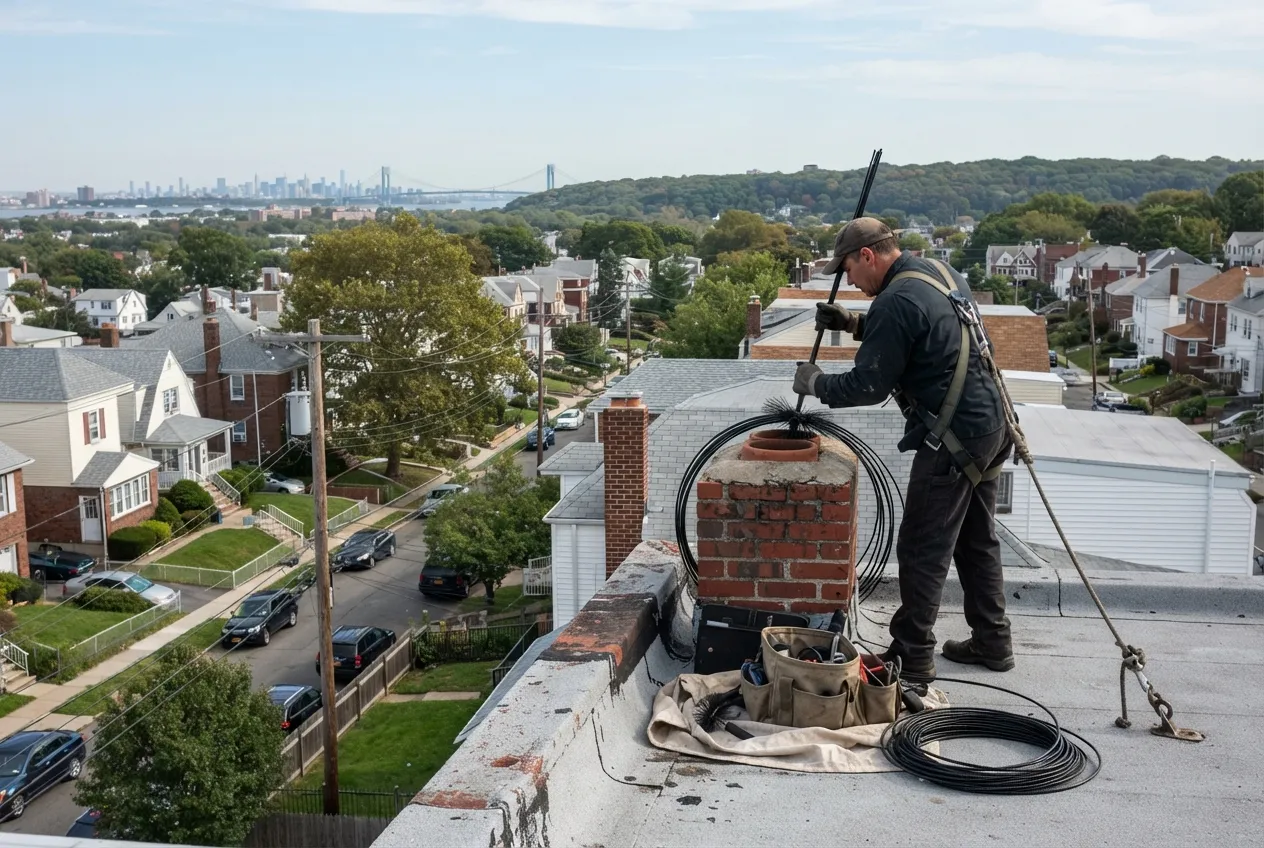
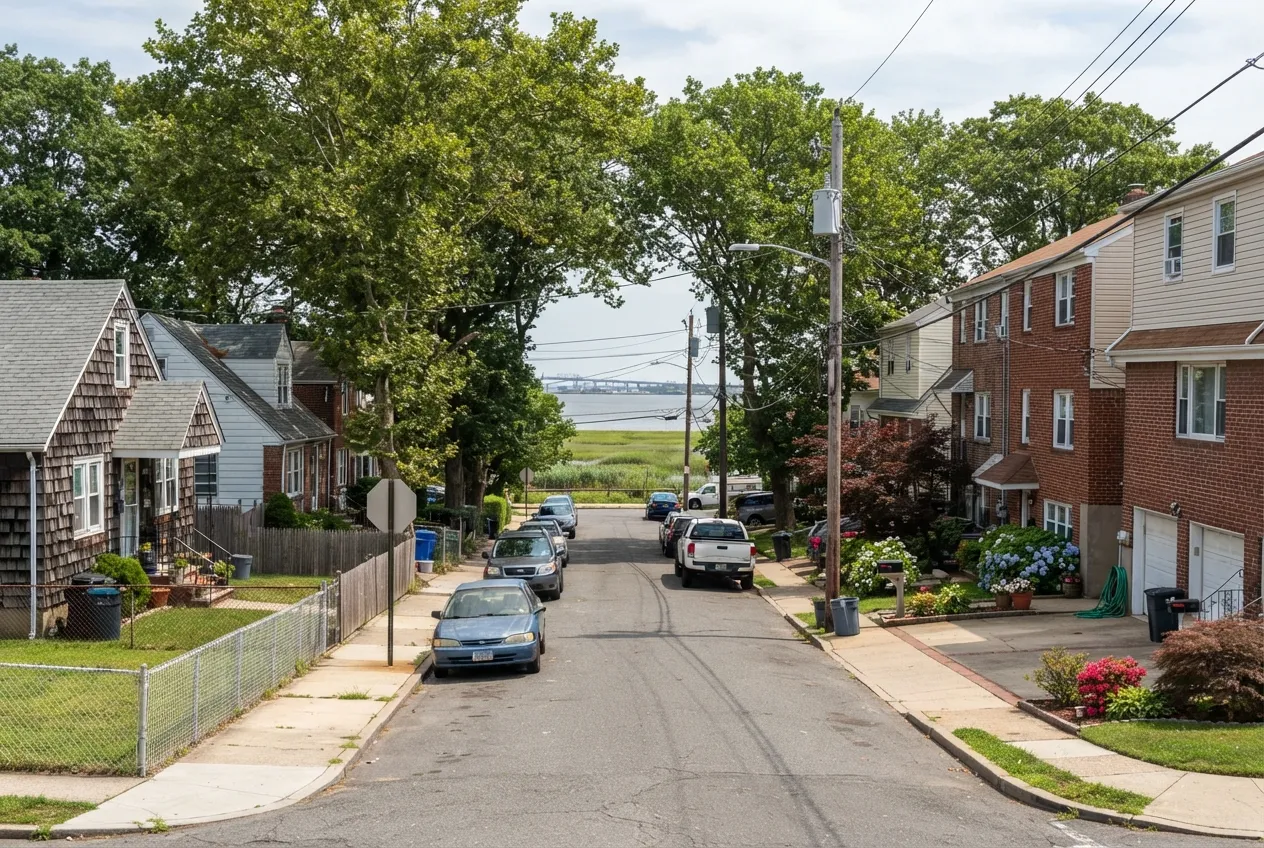
Great Kills is about a mile northeast of our Staten Island office, so it's one of the neighborhoods our crews reach most easily. Homes in 10308 are mostly detached houses, with some semi-attached and two-family homes mixed in. Many rely on a masonry chimney for a fireplace, a boiler, or both. Add dryer vents and forced-air ductwork, and a typical Great Kills house has a lot of venting that needs regular attention. BluePeak's certified technicians sweep, inspect, repair and reline chimneys, and clean dryer vents and air ducts throughout the neighborhood.
How South Shore Weather Wears on Chimneys
Staten Island's South Shore gets the full range of New York weather. Winters bring repeated freeze-thaw cycles, and coastal storms and nor'easters push rain sideways into brick and mortar joints. Water that soaks into masonry expands when it freezes. Over time, that loosens mortar, cracks crowns and makes brick faces flake off. Humid summers add their own problems. Damp flues hold onto creosote odors, and moisture can rust dampers and metal chase covers.
Most of the chimney repairs we see start with water. The most practical ways to slow that damage are a properly fitted cap, a sound crown, and a breathable waterproofing treatment on the brick. Handling them early can keep a small problem from turning into rebuilding work. Watch for these signs:
- Crumbling mortar or gaps between bricks
- White staining (efflorescence) or flaking brick faces
- Water stains on a ceiling or wall near the chimney
- Rust on the damper, firebox or chase cover
- A strong, musty smell from the fireplace on humid days
Schedule Your Yearly Inspection Before Heat Season
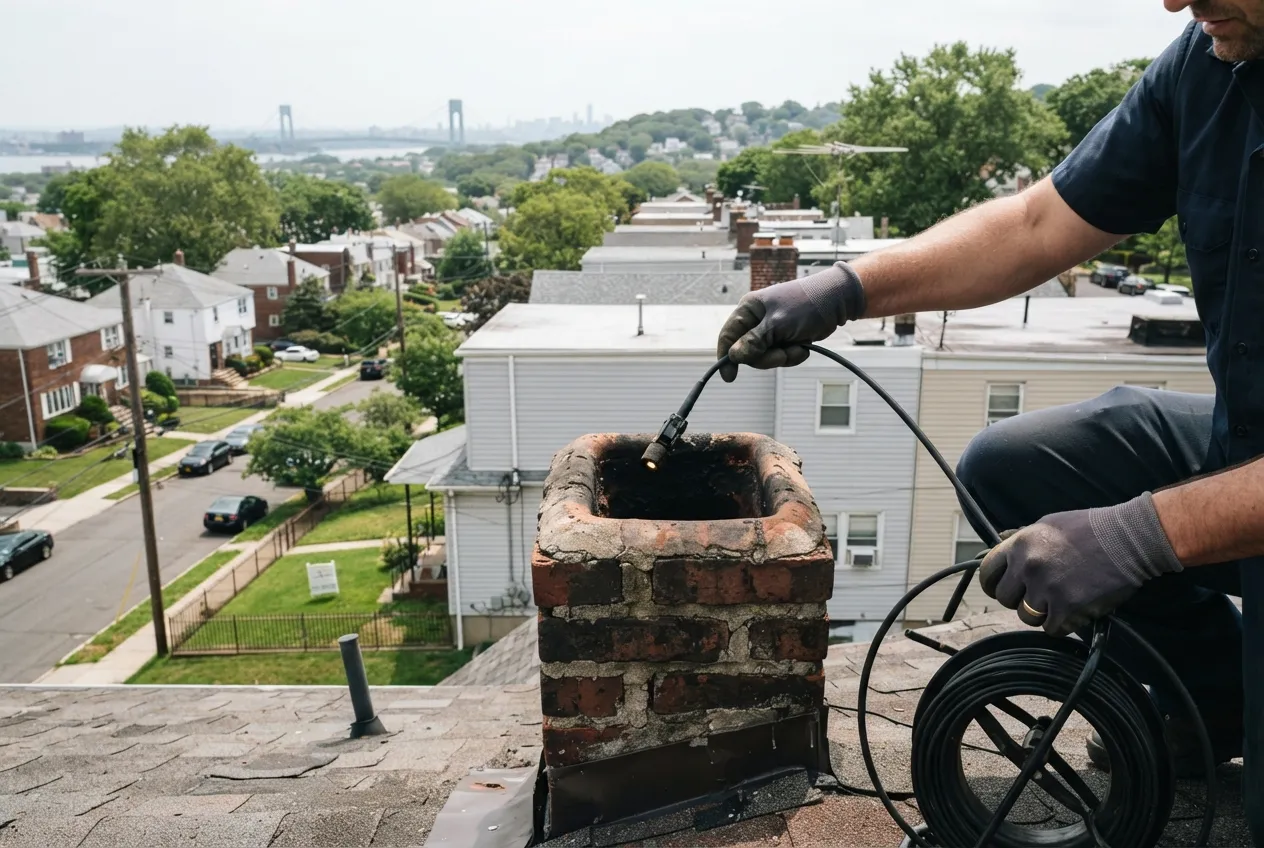
The NFPA 211 standard calls for chimneys, fireplaces and vents to be inspected once a year. For most Great Kills homeowners, that means a Level 1 inspection, which is the right level when nothing about the system has changed. A Level 2 inspection is appropriate when you've installed a new appliance or switched fuels, or when the home is being sold. Level 3 is for situations where a hidden hazard can only be reached by opening part of the chimney or the building.
Timing matters. New York City's heat season runs from October 1 through May 31. During those months, owners of a two-family home with a rental unit must keep the apartment heated to the city's minimum temperatures. If you book a sweep and inspection in late summer or early fall, you'll have time to handle any repairs before the boiler is running every day.
Switching From Oil to Gas in Great Kills
Some homes in the area still heat with oil, and owners who convert to gas need to plan for the chimney. When a New York City building converts its boiler from oil to gas, the chimney has to be evaluated as part of the work. A new liner is often needed because gas exhaust produces acidic condensate, which can corrode a masonry flue from the inside.
We inspect the existing flue, check that it suits the new appliance, and install a liner when one is needed. That way, your heating contractor isn't held up by the chimney.
Time for your annual chimney check?
Dryer Vents and Air Ducts
According to the U.S. Fire Administration, failure to clean is the leading factor contributing to clothes dryer fires in homes. Long vent runs, crushed foil hoses and lint-packed exterior hoods are common in houses that have been renovated over the years. If clothes take more than one cycle to dry, or the laundry room feels hot, the vent is due for cleaning.
For air ducts, we follow the U.S. EPA's guidance for consumers. Cleaning makes sense when there is substantial visible mold growth, vermin, or excessive dust and debris. The EPA also notes that duct cleaning hasn't been shown to prevent health problems, so we won't tell you it will. We explain the process before we start. We use chemical treatments only when there's a clear reason and you've agreed to them.
Services in Great Kills and Nearby Neighborhoods
We serve all of ZIP code 10308 and the surrounding South Shore neighborhoods, including Eltingville, Oakwood, Richmondtown, Arden Heights and Rossville. Our services include:
- Chimney sweep: removing creosote and soot from fireplace and appliance flues
- Chimney inspection: yearly checks and inspections before a sale or appliance change
- Chimney repair: repointing, crown repair and fixing leaks
- Chimney liner installation, including relining for oil-to-gas conversions
- Chimney cap and chase cover installation and replacement
- Chimney waterproofing to protect brick from wind-driven rain
- Fireplace and damper repair
- Chimney rebuilding when masonry is too far gone to repair
- Dryer vent cleaning
- Air duct cleaning
ZIP codes we serve
- 10308
Services in Great Kills
- Chimney Sweep in Great Kills
- Chimney Inspection in Great Kills
- Chimney Repair in Great Kills
- Air Duct Cleaning in Great Kills
- Chimney Liner Installation in Great Kills