
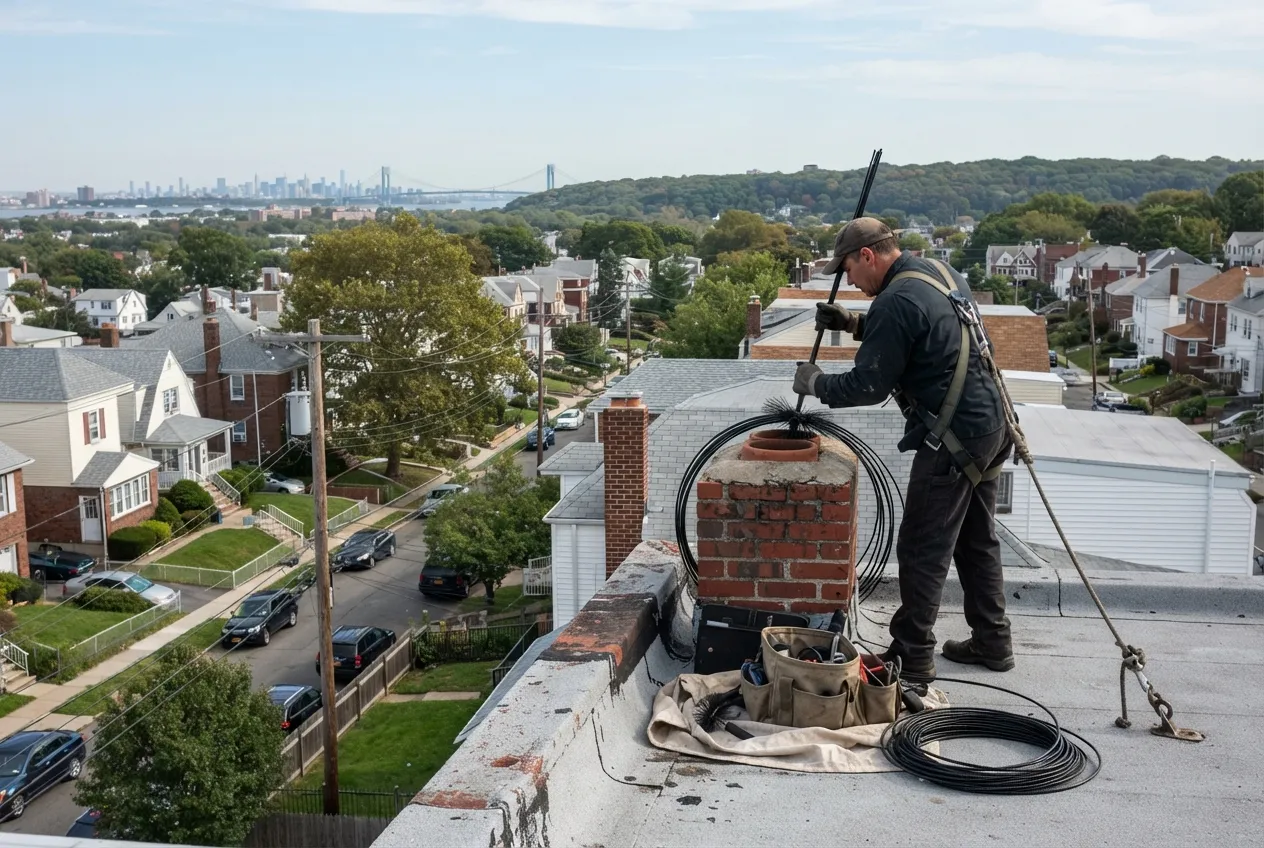
Chimney Inspection Levels: What Level 1, 2 and 3 Mean for Your Home
Serving Staten Island and nearby cities.
- Diagnosis before any repair
- Photos of every finding
- Written price before we start
A chimney looks simple from the street, but the flue, liner, smoke chamber, damper and connections all have to work together to carry smoke and exhaust safely out of your house. The NFPA 211 standard calls for chimneys, fireplaces and vents to be inspected once a year. Chimney professionals use three inspection levels so the depth of the inspection matches your situation. This guide explains what each level covers, when you need it, what you receive afterward, and how to get ready for a visit from BluePeak's certified technicians in Staten Island.
Why a Yearly Chimney Inspection Matters
Problems in a chimney usually develop out of sight. Creosote builds up inside the flue, mortar joints wear down, liners crack, and animals or debris can block the opening. None of this is easy to spot from your living room. A yearly inspection catches these issues while they are still small and before they affect how your fireplace, furnace or boiler vents.
Timing helps. New York City's heat season runs from October 1 through May 31, and most heating systems work hardest during those months. Scheduling your inspection in late summer or early fall gives you time to take care of any sweeping or repairs before you need steady heat.
Level 1 Inspection: The Annual Check
A Level 1 inspection is the right choice when your chimney has been in regular use and nothing about the system has changed. It covers the parts of the chimney and fireplace that can be reached without special tools or opening anything up.
Our technician looks at the readily accessible parts of the chimney exterior and interior, along with the appliance and its connection to the flue. The goal is to confirm the chimney is structurally sound, free of blockages and buildup, and ready to use.
- Firebox, damper and smoke chamber condition
- Visible sections of the flue for creosote, soot and obstructions
- Chimney exterior, crown and cap where accessible
- Connection between the appliance and the chimney
- Signs of water entry or deterioration
Level 2 Inspection: When Something Changes
A Level 2 inspection includes everything in Level 1, plus a closer look at accessible areas such as attics, crawlspaces and basements where the chimney passes through. It also includes a camera inspection inside the flue so we can see the full length of the liner and its joints.
The NFPA 211 standard calls for a Level 2 inspection when the system changes or the home is sold. We also recommend one after events that may have caused damage you can't see from below.
- You install a new furnace, boiler, water heater, stove or fireplace insert
- You switch fuels, such as converting an oil boiler to gas
- You are buying or selling a home
- After a chimney fire, even a small one
- After a severe storm, lightning strike or other event that may have damaged the chimney
- When an earlier inspection found a problem that needs a closer look
Oil-to-Gas Conversions in New York City
Many Staten Island homeowners are converting boilers from oil to gas. When a New York City building makes that switch, the chimney has to be evaluated as part of the work. Gas exhaust produces acidic condensate that can corrode a masonry flue, so a new liner is often needed. A Level 2 inspection shows whether your existing flue can handle the change or whether a chimney liner installation should be part of your conversion plan.
Level 3 Inspection: Reaching Hidden Hazards
A Level 3 inspection is the most involved. It is used when a serious hazard is suspected in a part of the chimney that can only be reached by removing certain components of the chimney or the building, such as part of a chase, a section of interior wall or the chimney crown.
Level 3 is not routine. It usually follows a Level 1 or Level 2 inspection that pointed to a concealed problem, such as structural damage after a chimney fire. Before we open anything, we explain what needs to be removed, why, and what restoration may be needed afterward, so you can make an informed decision.
What You Receive and How to Prepare
After every inspection, you get a written report describing what we found, with photos of the areas that matter. For Level 2 and Level 3 inspections, we also provide video from inside the flue. The report notes any recommended work, such as a chimney sweep, chimney repair, waterproofing, a new chimney cap or chase cover, damper repair, or rebuilding, and explains the reasons in plain terms.
A little preparation helps the visit go smoothly.
- Don't use the fireplace or stove the night before, so the firebox is cool
- Clear the area around the fireplace and move fragile items off the mantel
- Make sure we can reach the attic, basement or boiler room if needed
- Keep pets in a separate room
- Have past inspection reports and appliance details on hand
- Write down any problems you've noticed, like smoke smells, drafts or water stains
Inspections
Three levels of chimney inspection
The NFPA 211 standard calls for a yearly inspection. Which level you need depends on what has changed since the last one.
-
Level 1
Annual check
For a chimney and appliance that have not changed and will be used the same way: the readily accessible parts of the chimney, the flue and the connection, checked for soundness, blockages and deposits.
-
Level 2
Camera inspection
When something changed — a new stove, insert or boiler, a fuel switch such as oil to gas, the sale of the home, or a chimney fire, storm or quake. Adds a video scan of the whole flue and the accessible attic, roof and crawl spaces.
-
Level 3
Concealed areas
Only when a Level 1 or 2 points to a hidden hazard that cannot be checked any other way: parts of the chimney or building are opened to reach it.
FAQ
Common questions
How often should my chimney be inspected?
The NFPA 211 standard calls for chimneys, fireplaces and vents to be inspected once a year, even if you rarely use your fireplace.
Which inspection level do I need?
If nothing has changed, a Level 1 inspection is usually enough. If you've added or replaced an appliance, switched fuels, or are buying or selling a home, you need a Level 2. Level 3 is only used when a hidden hazard must be reached by opening part of the chimney or building.
Do I need an inspection when selling my house?
Yes. The NFPA 211 standard calls for a Level 2 inspection when a home is sold. It gives both buyer and seller a clear record of the chimney's condition.
Is an inspection the same as a chimney sweep?
No. An inspection evaluates the condition of the chimney, while a sweep removes creosote, soot and debris. Your inspection report will tell you whether a sweep is needed.
Will a Level 3 inspection damage my home?
A Level 3 inspection does involve removing certain components to reach the problem area. We explain exactly what will be opened and what restoration may be needed before any work begins.
Does my gas furnace or boiler chimney need inspecting?
Yes. NFPA 211 covers vents as well as chimneys and fireplaces. Gas exhaust can corrode a masonry flue, so lined and unlined chimneys serving gas appliances both benefit from a yearly check.
Schedule a Chimney or Vent Inspection
Tell us what you're noticing, whether that's a smell, a leak, a slow dryer or a home you're about to buy. We'll inspect it, show you what we find, and give you a written price before any work begins.