The short answer
Clean your dryer vent when drying times get longer, the laundry room runs hot, or you notice lint at the outside hood or a burning smell. According to the U.S. Fire Administration, failure to clean is the leading factor contributing to home clothes dryer fires. A professional cleaning clears the whole duct, not just the lint screen.
A dryer pushes hot, damp, lint-filled air through a duct to the outside of your home. The lint screen catches some of that lint, but not all of it. Over months and years, the rest settles inside the duct, especially at bends, low spots, and the exterior hood. As it builds up, the dryer has to work harder, clothes take longer to dry, and the lint itself becomes fuel sitting right next to a heat source. BluePeak Chimney Service cleans dryer vents for homeowners in Staten Island and nearby communities. Our certified technicians clear the full run from the back of the dryer to the outside termination, check the parts that commonly fail, and tell you plainly what they found. This page explains the signs that a vent needs attention, what a cleaning includes, how our crew works in your home and on your roof, what affects the cost, and what to expect on the day of the visit.
Signs you need it
Most clogged dryer vents give some warning before they become a real problem. Homeowners usually notice a change in how the dryer performs or something unusual near the vent opening outside. If any of these sound familiar, it is time to have the vent cleaned and checked.
- Clothes need two cycles, or more time than they used to, to come out dry
- The dryer or the laundry room gets noticeably hot while it runs
- A burning or scorched smell when the dryer is on
- Lint or dust blowing out around the dryer, or collecting on the wall and floor behind it
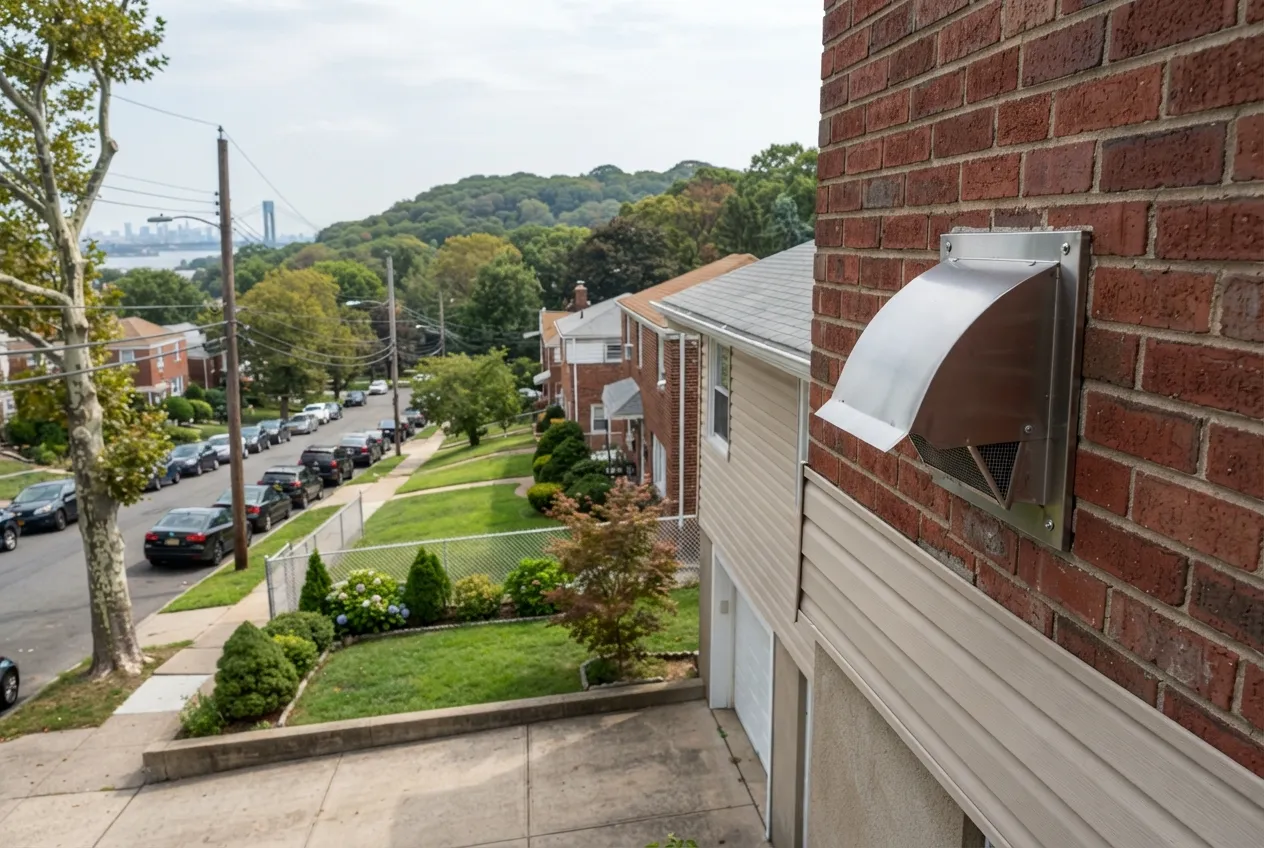
- Lint packed around the outside vent hood, or a flap that stays shut or barely opens when the dryer runs
- Chirping, scratching, or rustling from inside the vent, which often means a bird or rodent nest
- The dryer shuts off mid-cycle or shows a vent or airflow warning
What's included
Every dryer vent cleaning covers the full path the exhaust travels, not only the easy section behind the machine. Before we leave, you get a plain explanation of the vent's condition and any parts that should be repaired or replaced.
- Pull the dryer out carefully and disconnect the transition hose
- Inspect the transition hose for crushing, kinks, tears, or plastic and foil material that should be replaced
- Clean the full duct run with rotary brushes and strong airflow, pushing debris toward the collection point
- Clear the exterior vent hood, flap, and any screen or guard
- Remove bird or rodent nesting material when it is present
- Vacuum the lint cavity and the floor area behind the dryer
- Reconnect the dryer and run it to confirm strong airflow at the outside termination
- Camera check of long or hidden runs when needed
- Review findings with you, including any recommended repairs
How our crew works in your home and on the roof
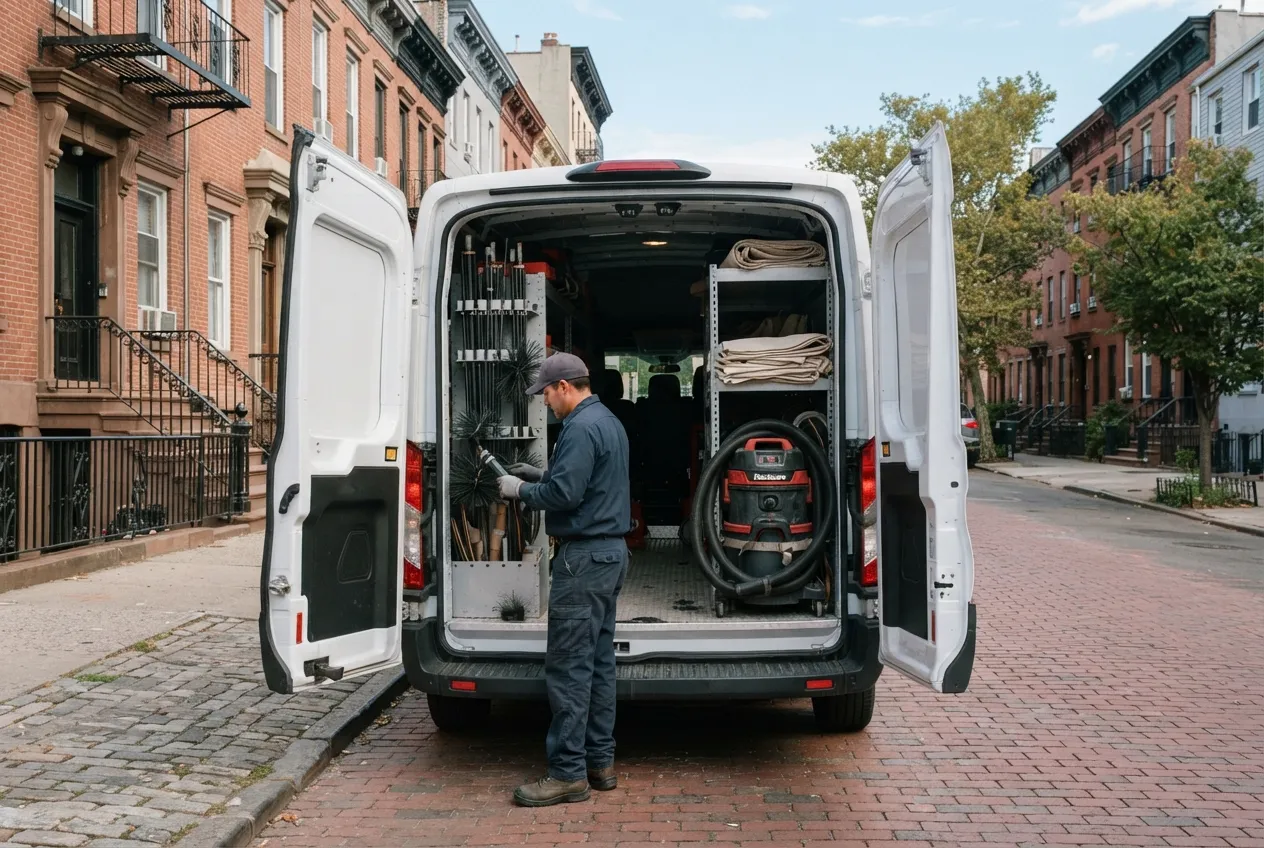
Inside, the crew lays drop cloths along the path from the door to the laundry area and around the dryer before anything is moved. When the dryer is pulled out, we protect the floor and avoid straining the gas line or power cord. During cleaning, a HEPA vacuum collects lint and dust at the connection point so it is not blown into the room. Rotary brushes sized to the duct are fed through the run to break loose packed lint at bends and joints.
Many Staten Island homes have dryer vents that run through a basement ceiling, inside a wall, or up through the attic. When a run is long or hidden, we use a camera to see what the brushes cannot show us, such as a disconnected joint, a crushed section, or a nest. That way we can tell you where the problem is instead of guessing.
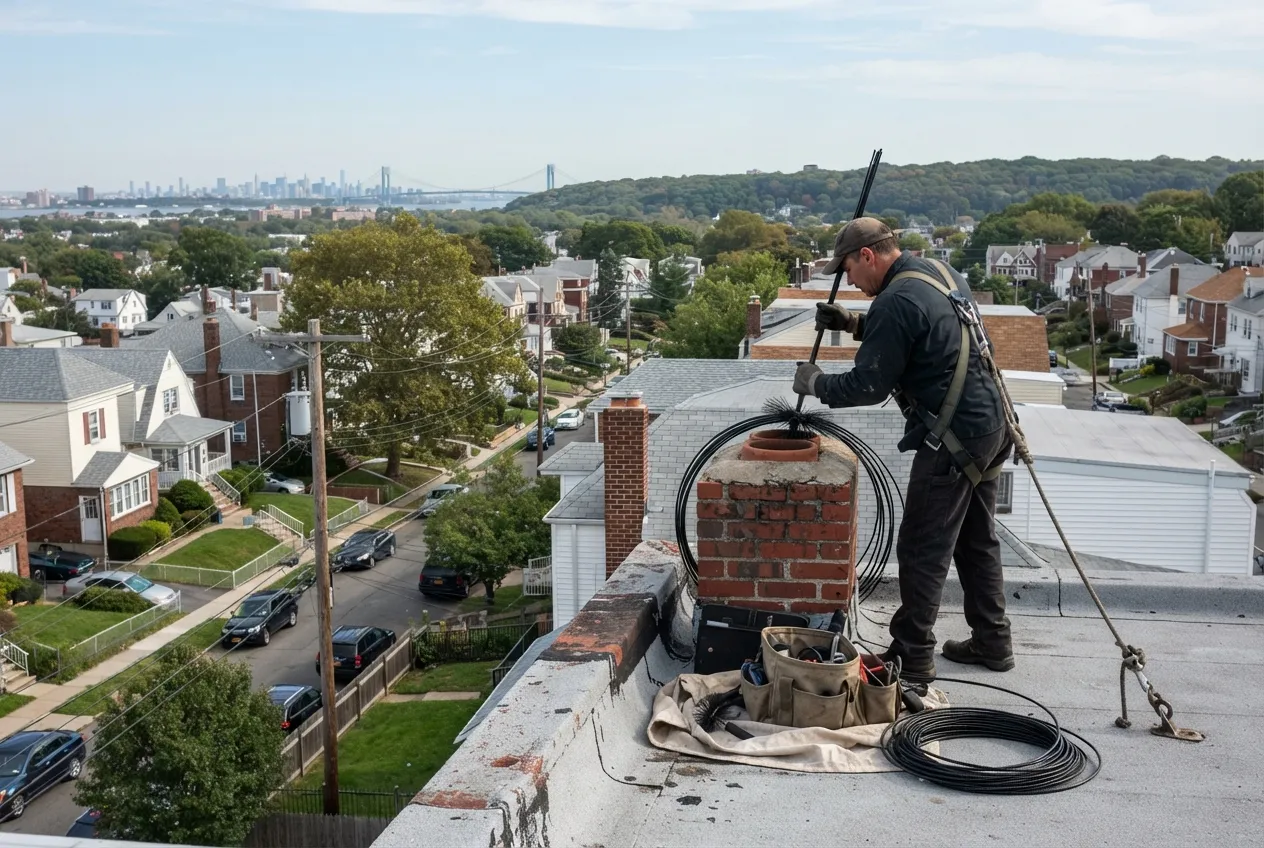
Some vents end on the roof rather than a side wall. Roof terminations tend to clog faster because lint has to travel upward, and screens or caps can trap it at the top. When we work on the roof, the crew uses proper ladders and footing, clears the cap, and makes sure the flap opens freely. If a roof cap is damaged or uses a screen that catches lint, we will show you and explain the options.
Time for your annual chimney check?
Why dryer vent cleaning matters
According to the U.S. Fire Administration, failure to clean is the leading factor contributing to clothes dryer fires in homes. Lint is light and catches fire easily, and a clogged duct traps heat close to it. Cleaning the lint screen after every load helps, but it does not reach the lint that settles deeper in the duct.
Airflow matters for performance, too. A restricted vent makes the dryer run longer to do the same job, which adds wear on the machine. For gas dryers, a blocked vent also means exhaust is not leaving the home the way it should. If your home has a chimney or fuel-burning heating appliance, keep in mind that the NFPA 211 standard calls for chimneys, fireplaces, and vents to be inspected once a year, and we can look at those during a separate visit.
What affects the price
We quote each job after we know the details, because dryer vents vary a lot from one house to the next. The main factors are:
- Length of the duct run and the number of bends
- Where the vent ends: a ground-level wall, an upper story, or the roof, and how easy it is to reach
- Whether the dryer is gas or electric, which affects how carefully it must be moved and reconnected
- Duct size, material, and condition, including crushed or disconnected sections
- How much lint has built up, and whether there is nesting material to remove
- Whether a camera inspection is needed to see a hidden run
- Any repairs, such as a new transition hose, a replacement hood, or a reconnected joint
How a visit works
When you contact us, we ask a few questions: where the dryer sits, where the vent exits, whether it is gas or electric, and what you have noticed. This helps the crew bring the right brushes, ladders, and parts.
On arrival, the technicians walk the route with you, set up drop cloths, and look at both ends of the vent before cleaning. They clean the full run, clear the outside termination, and reconnect and test the dryer. Before leaving, they show you what came out of the duct, explain anything that needs repair, and answer your questions. Nothing beyond the cleaning is done without your approval.