The short answer
Air duct cleaning makes sense when you can see substantial dust or debris in the ducts, find signs of pests, see visible mold growth, or have just finished a dusty renovation. BluePeak's certified technicians clean supply and return ducts, registers, and blower parts using HEPA vacuums, rotary brushes, and drop cloths, and a camera where it helps. We do not claim duct cleaning improves health.
The ducts in a forced-air home carry every breath of heated and cooled air from the furnace or air handler to each room. Over time they can collect dust, construction debris, pet hair, and sometimes nests or droppings from mice and insects. BluePeak Chimney Service cleans residential air duct systems for homeowners in Staten Island and nearby areas. Our certified technicians clean the supply and return ducts, registers, and the parts of the air handler that move air through the house. This page explains when cleaning makes sense, what we do on a visit, and what affects the cost. It also explains when we may tell you cleaning isn't needed.
Signs you need it
Most homeowners call us after they notice something they can see, hear, or smell. Dust alone isn't always a reason to clean, since every house has some. These are the signs that usually point to a real buildup or a problem inside the ductwork.
- Dust blowing from vents when the heat or air conditioning first kicks on
- A gray film that settles on furniture soon after you dust, especially near registers
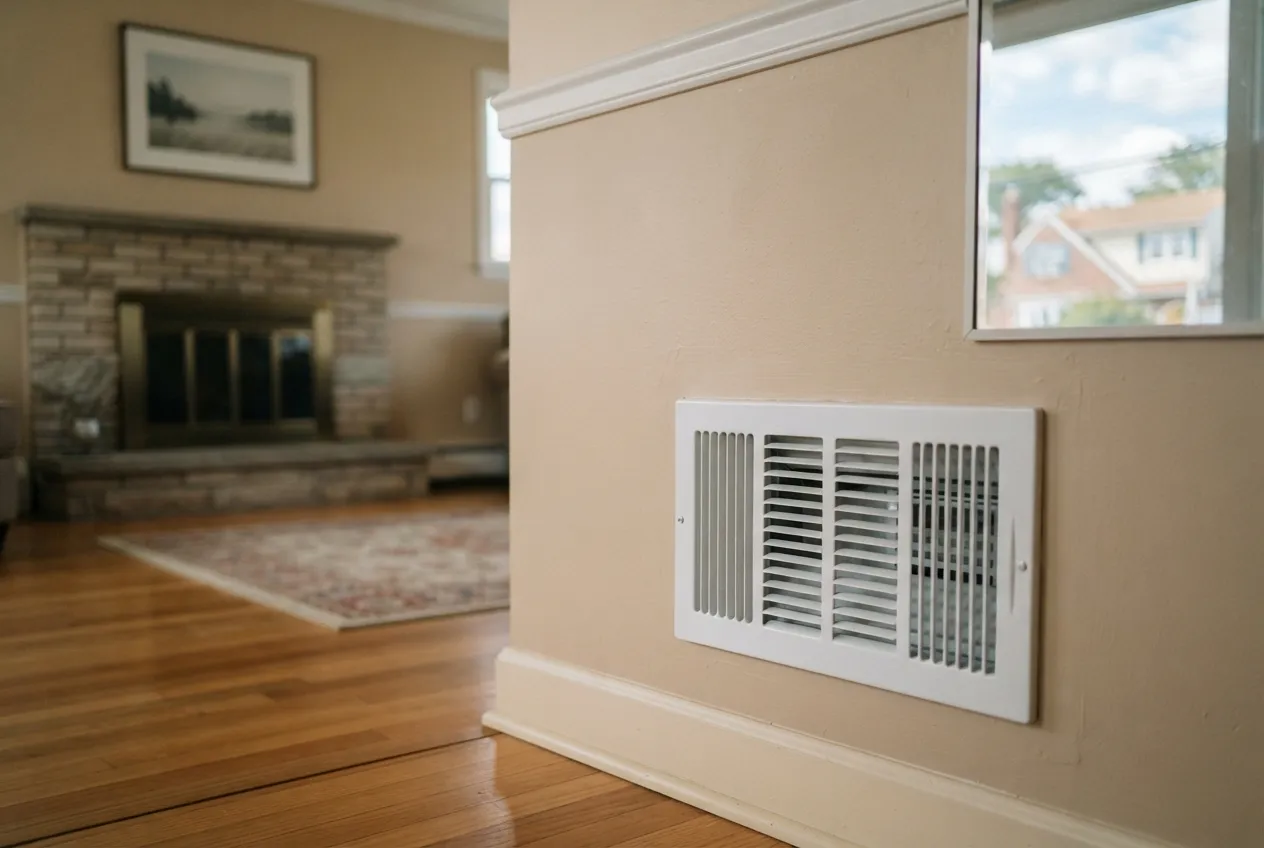
- Clumps of dust, lint, or debris visible just inside the register covers
- Drywall dust, sawdust, or plaster debris left behind after a renovation
- Scratching, scurrying, or chirping sounds coming from inside the walls or ducts
- Droppings, nesting material, or insect remains found at a register or return
- A musty or stale odor that gets stronger when the system runs
- Rooms that get noticeably less airflow than they used to
What's included in a duct cleaning
Every visit covers the full air path, not just the register covers you can see. If we find a problem we can't fix during the cleaning, such as a crushed or disconnected duct, we show you and explain your options before doing anything more.
- Walkthrough of the system and a check of each supply and return register
- Cleaning of supply ducts that feed each room
- Cleaning of return ducts and the main return trunk
- Removal, washing, and reinstallation of register and grille covers
- Cleaning of the blower compartment and accessible blower parts
- Check of the air filter, with replacement if you have a new one on hand
- Camera look inside sections of duct where buildup or damage is suspected
- Before-and-after photos and a short report of what we found
How our crew works inside your home
We treat your house like a job site that people still live in. Before any equipment comes in, the crew lays drop cloths along the path from the door to the furnace and at each register we'll be working on. Shoe covers go on at the door.
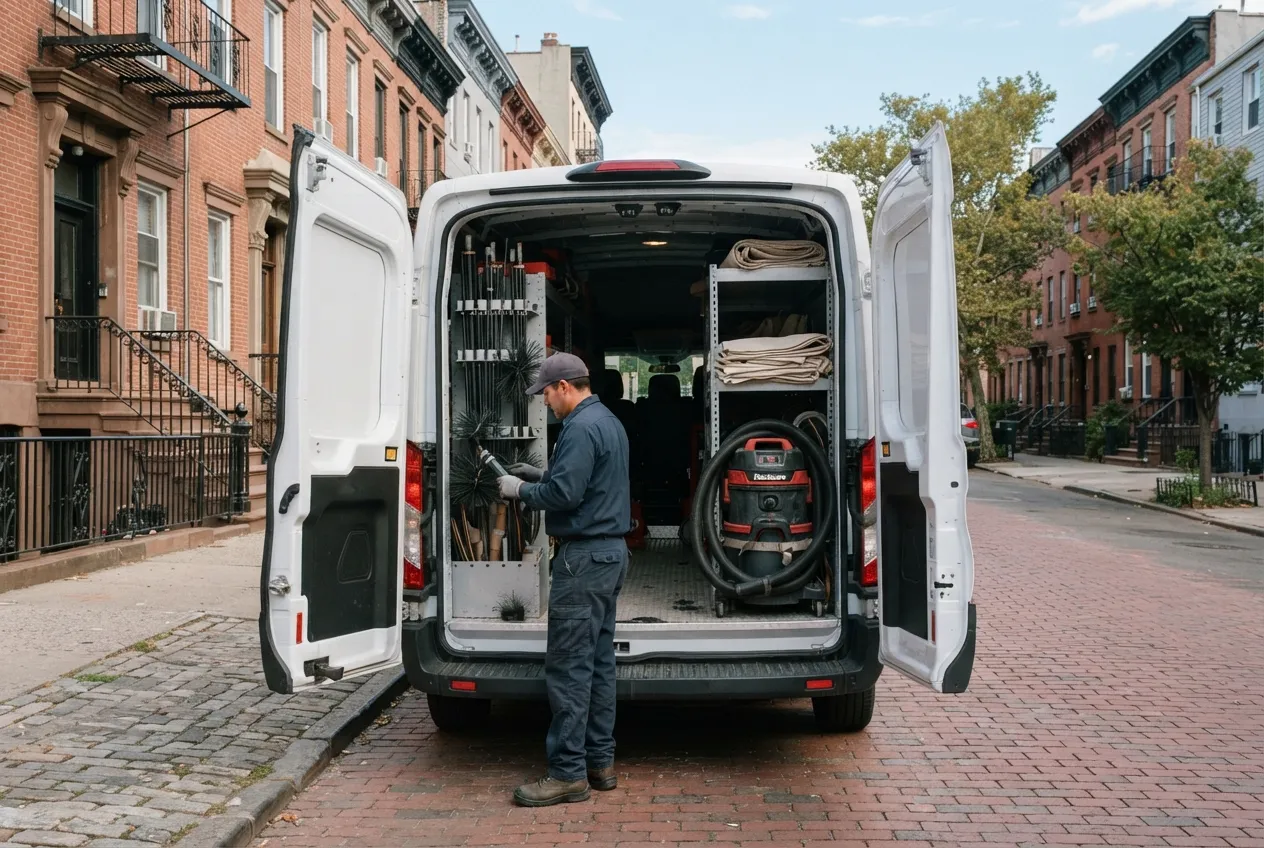
The cleaning itself uses negative pressure. We connect a HEPA-filtered vacuum to the duct system so that loosened dust is pulled toward the vacuum and captured, instead of blowing back into your rooms. With the vacuum running, the technician feeds rotary brushes and air whips through each run to knock dust and debris off the duct walls. Registers are sealed off as we go so the airflow stays where we want it.
In many Staten Island homes the furnace or air handler sits in a basement, attic, or crawlspace, and that is where much of the work happens. We don't need to go on the roof for most duct jobs. Where a rooftop or exterior unit is part of the system, we inspect the accessible connections from a safe position. When we're finished, we vacuum our work areas and pick up the drop cloths.
Time for your annual chimney check?
The guidance we follow
There is no yearly inspection rule for home air ducts the way there is for chimneys. We follow the U.S. Environmental Protection Agency's guidance instead. The EPA advises cleaning ducts when there is substantial visible mold growth, vermin, or excessive dust and debris. It also says duct cleaning has not been shown to prevent health problems. That is why we talk about dust, debris, pests, odors, and airflow, and make no promises about allergies or breathing.
The EPA also warns homeowners to research the process before responding to very cheap advertised offers, and to be careful with chemical treatments. We don't spray sanitizers or coatings inside your ducts as part of a standard cleaning. If you ask about a chemical product, we'll explain what it is and what it isn't meant to do, so you can decide for yourself.
If you see what looks like mold, we'll note it with photos. Moisture that keeps returning usually has a cause, such as condensation or a leak, and that cause needs attention or the growth will come back.
What affects the price
Every home's system is different, so we price the job after we understand what's involved. These are the main factors:
- Size of the home and the number of supply and return registers
- How many heating and cooling systems the house has
- Where the equipment sits and how easy it is to reach, such as a tight attic, crawlspace, or finished basement
- Type and condition of the ductwork, including flexible duct, sheet metal, or older lined duct
- How much dust, debris, or nesting material has built up
- Whether a camera inspection is needed to locate a problem
- Whether repairs are needed, such as resealing joints or reconnecting a loose run
How a visit works
When you contact us, we'll ask about your home, your heating and cooling system, and what you've noticed. When you schedule, we'll let you know when to expect the crew.
On the day of the visit, the technician walks the house with you, looks at the registers and equipment, and explains what the cleaning will cover before work starts. Most of the work is done with the system turned off, so plan for the heat or air conditioning to be off during the cleaning.
When we finish, we turn the system back on, check the airflow at the registers, and go over the photos with you. If we noticed anything that needs attention later, we put it in writing. Many homeowners like to schedule duct cleaning before the city's heat season begins on October 1, so the system is clean before it runs for months.
Air Duct Cleaning by city
- Air Duct Cleaning in Great Kills
- Air Duct Cleaning in Eltingville
- Air Duct Cleaning in Arden Heights
- Air Duct Cleaning in Rossville
- Air Duct Cleaning in Annadale
- Air Duct Cleaning in Huguenot
- Air Duct Cleaning in Prince’s Bay
- Air Duct Cleaning in Woodrow
- Air Duct Cleaning in Oakwood
- Air Duct Cleaning in Richmondtown
- Air Duct Cleaning in Tottenville
- Air Duct Cleaning in Charleston