The short answer
A chimney inspection checks your flue, firebox, damper, crown, cap, and connections for damage, blockages, and buildup that can cause fires or let exhaust into your home. The NFPA 211 standard calls for an inspection once a year, and the right inspection level depends on whether anything about your system has changed.
A chimney can look fine from the yard and still have a cracked flue liner, a loose damper, or a nest blocking the top. A chimney inspection checks the whole venting system, from the firebox to the cap, so you know whether it is safe to use and what, if anything, needs attention. BluePeak Chimney Service inspects fireplaces, wood stoves, and chimneys serving oil and gas heating appliances for homeowners in Staten Island and nearby communities. Our certified technicians explain what they find in plain terms and show you the evidence, so you can decide on next steps without pressure.
Signs You Need a Chimney Inspection
Most homeowners call us because something seems off. Some problems are obvious, like water on the hearth. Others are subtle, like a fire that never quite draws well. If you notice any of the following, schedule an inspection before your next fire or before the heating system runs hard for the season.
- A smoky or creosote smell in the room, especially on humid days or when the fireplace is not in use
- Poor draft: smoke rolling into the room, fires that are hard to start, or a fire that dies down quickly
- Debris, brick flakes, or pieces of clay tile falling into the firebox
- White staining (efflorescence) on the chimney brick, inside or out, which points to moisture moving through the masonry
- Scratching, chirping, or flapping sounds from the chimney, which usually means an animal or nest
- Water, drips, or rust in the firebox or on the damper
- You are switching fuels, adding a new stove or insert, or buying or selling a home
What's Included in Our Chimney Inspection
Every inspection follows the same checklist, so nothing is skipped. Afterward you receive a written summary with photos of anything that needs attention, ranked by urgency.
- Firebox: cracks, missing or loose mortar, and damaged firebrick
- Damper: opens, closes, and seals properly
- Smoke chamber and smoke shelf: buildup, debris, and parging condition
- Flue liner: visible cracks, gaps, spalling, and obstructions
- Creosote and soot: how much has built up and what type
- Connections: stovepipe or appliance vent connectors and their clearances to combustibles
- Exterior masonry: brick, mortar joints, and signs of moisture damage
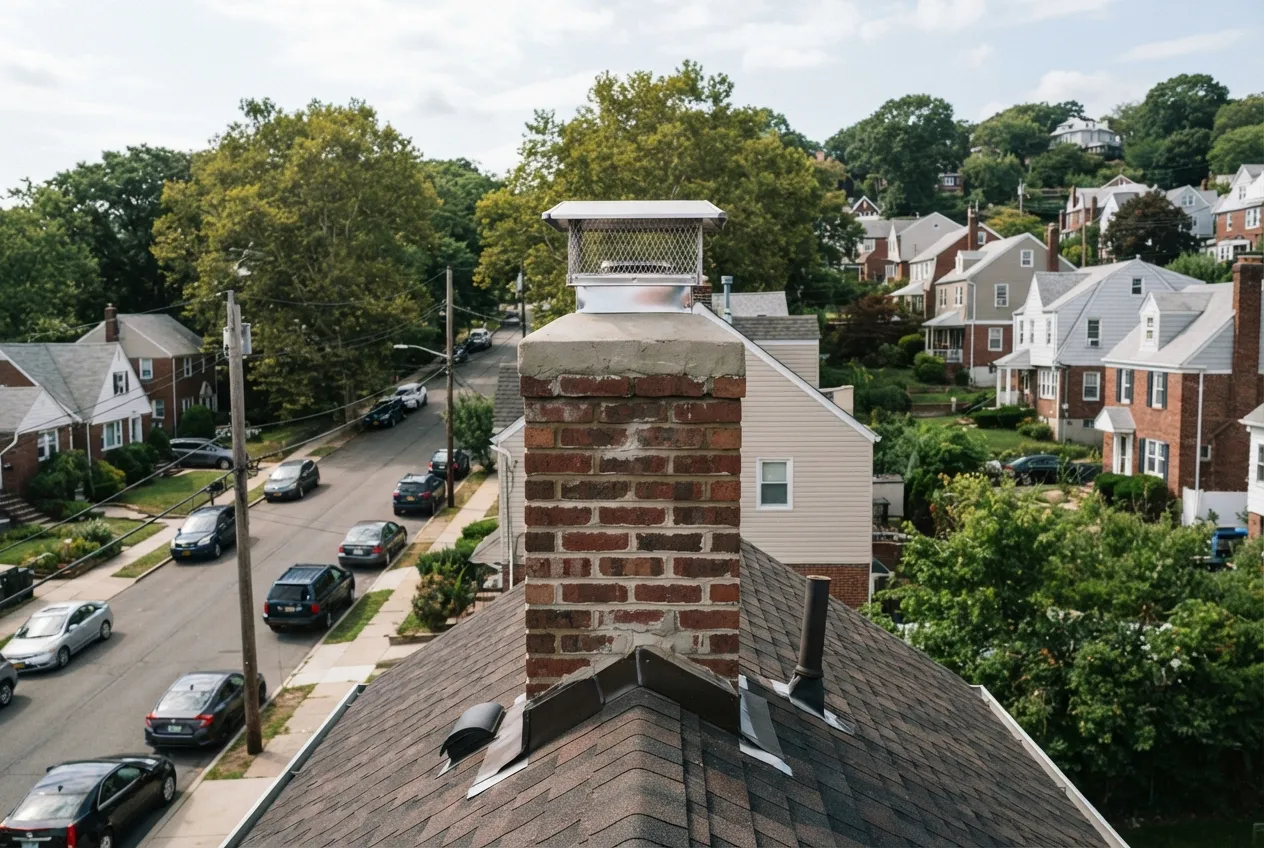
- Crown, cap, and spark screen: cracks, rust, gaps, and animal entry points
- Flashing where the chimney meets the roof: lifted, rusted, or failed seals
- Clearances to nearby wood framing, mantels, and trim where they can be seen
How Our Crew Works in Your Home and on the Roof
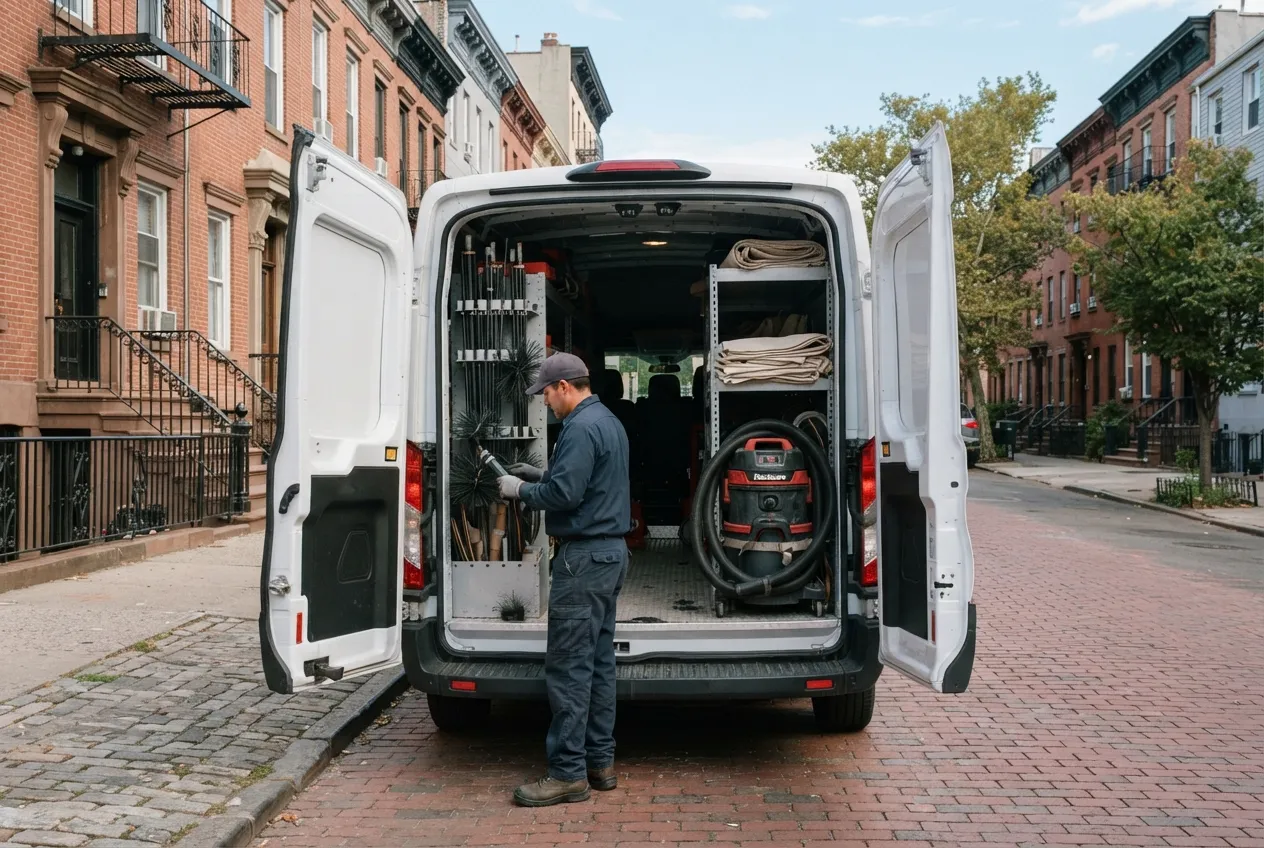
Inside, we lay drop cloths from the door to the fireplace and cover the hearth before opening anything. We keep a HEPA vacuum running at the fireplace opening while we work, so soot and dust stay in the chimney instead of drifting into your living room. When we leave, the area should look the way we found it.
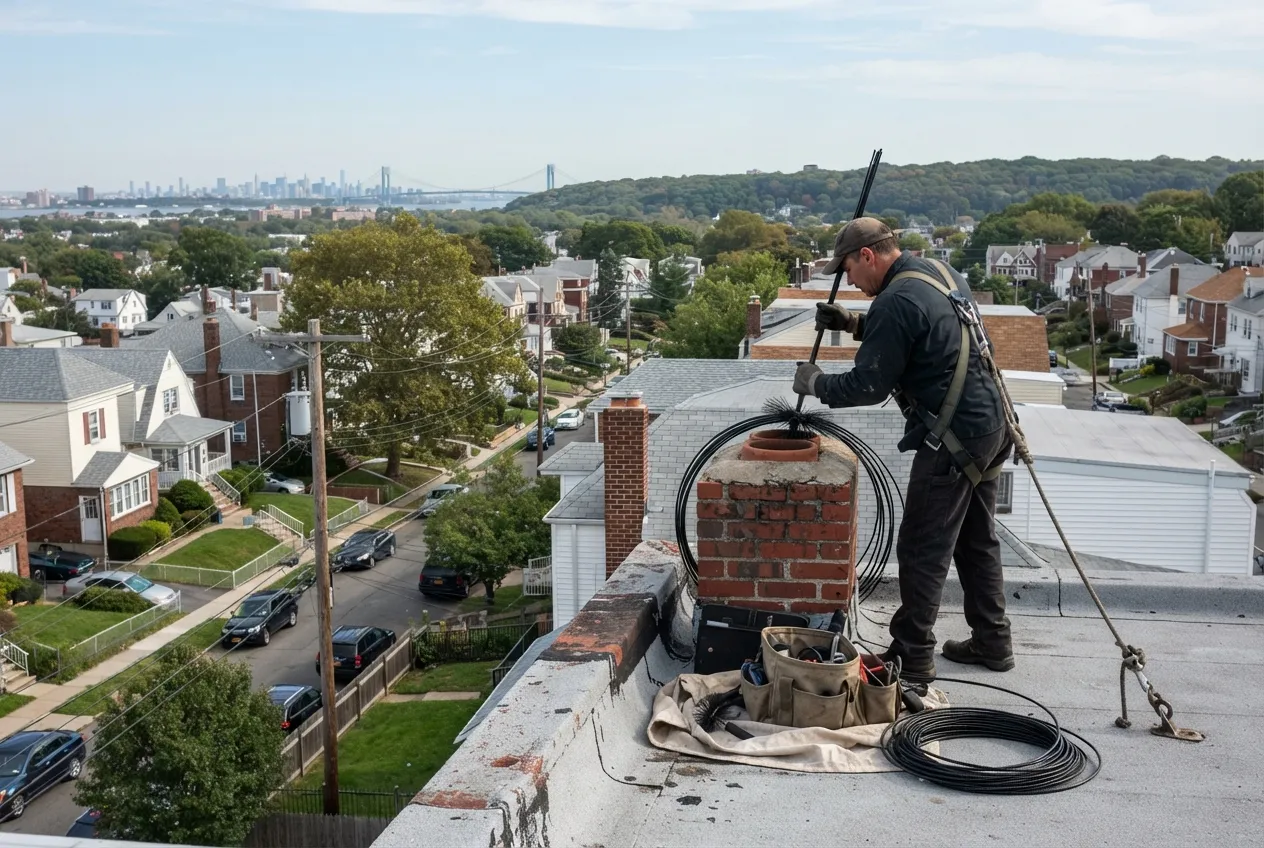
We inspect the flue with strong lighting and, when a closer look is needed, a chimney camera that we feed up the flue. The camera records the liner from the inside, which lets us show you cracks or gaps you would never see from the firebox. If heavy creosote or debris blocks the view, we will tell you, and we may recommend a sweeping with rotary brushes first so the liner can be properly evaluated.
On the roof, we check the crown, cap, flashing, and exterior brick up close. We only go up when conditions are safe; if it is icy, very wet, or windy, we will reschedule the roof portion rather than take chances.
Time for your annual chimney check?
The Standard We Follow: NFPA 211 and the Three Inspection Levels
We follow the NFPA 211 standard, which calls for chimneys, fireplaces, and vents to be inspected once a year. Chimney professionals use three inspection levels, and we will tell you which one fits your situation before we start.
A Level 1 inspection is for a system that has not changed and is used as before. It covers the readily accessible parts of the chimney and appliance. A Level 2 inspection is needed when the system changes, such as a new appliance or a switch of fuel, or when the home is sold. It adds a camera inspection of the flue and a look at accessible areas like the attic. A Level 3 inspection is only used when a hidden hazard has to be reached by opening part of the chimney or building.
Fuel changes matter here in particular. When a New York City building converts its boiler from oil to gas, the chimney has to be evaluated as part of the work, and a new liner is often needed because gas exhaust produces acidic condensate that can corrode a masonry flue.
What Affects the Price of a Chimney Inspection
We give you a clear quote before any work begins. The main factors are:
- Chimney height and how easy or difficult the roof is to access
- Fuel type: wood, oil, or gas, and the appliances connected
- Flue size, number of flues, and the liner's condition
- How much creosote or debris has built up
- Whether a camera inspection is needed, as with a Level 2 inspection
- Whether repairs are needed, which are always quoted separately
How a Visit Works
When you book, we ask what you burn, how often you use the chimney, and whether anything has changed, so we can plan the right inspection level. Please let the fireplace or stove cool completely for at least a day before we arrive, and clear the area in front of the hearth.
On the day of the visit, the technician walks through the plan with you, protects your floors, completes the inside and roof checks, and then reviews the findings with you in person. You receive the written report with photos afterward. If repairs are recommended, we explain why, what can wait, and what should not.
Many homeowners schedule before New York City's heat season, which runs from October 1 through May 31, so heating appliances are checked before they start running every day.
Chimney Inspection by city
- Chimney Inspection in Great Kills
- Chimney Inspection in Eltingville
- Chimney Inspection in Arden Heights
- Chimney Inspection in Rossville
- Chimney Inspection in Annadale
- Chimney Inspection in Huguenot
- Chimney Inspection in Prince’s Bay
- Chimney Inspection in Woodrow
- Chimney Inspection in Oakwood
- Chimney Inspection in Richmondtown
- Chimney Inspection in Tottenville
- Chimney Inspection in Charleston