The short answer
Replace a chimney cap or chase cover if you see water in the firebox, rust or white stains on the chimney, or hear animals in the flue. We measure the flue, remove the failed part, install a properly sized cap or custom cover, and check the top of the chimney while we are on the roof.
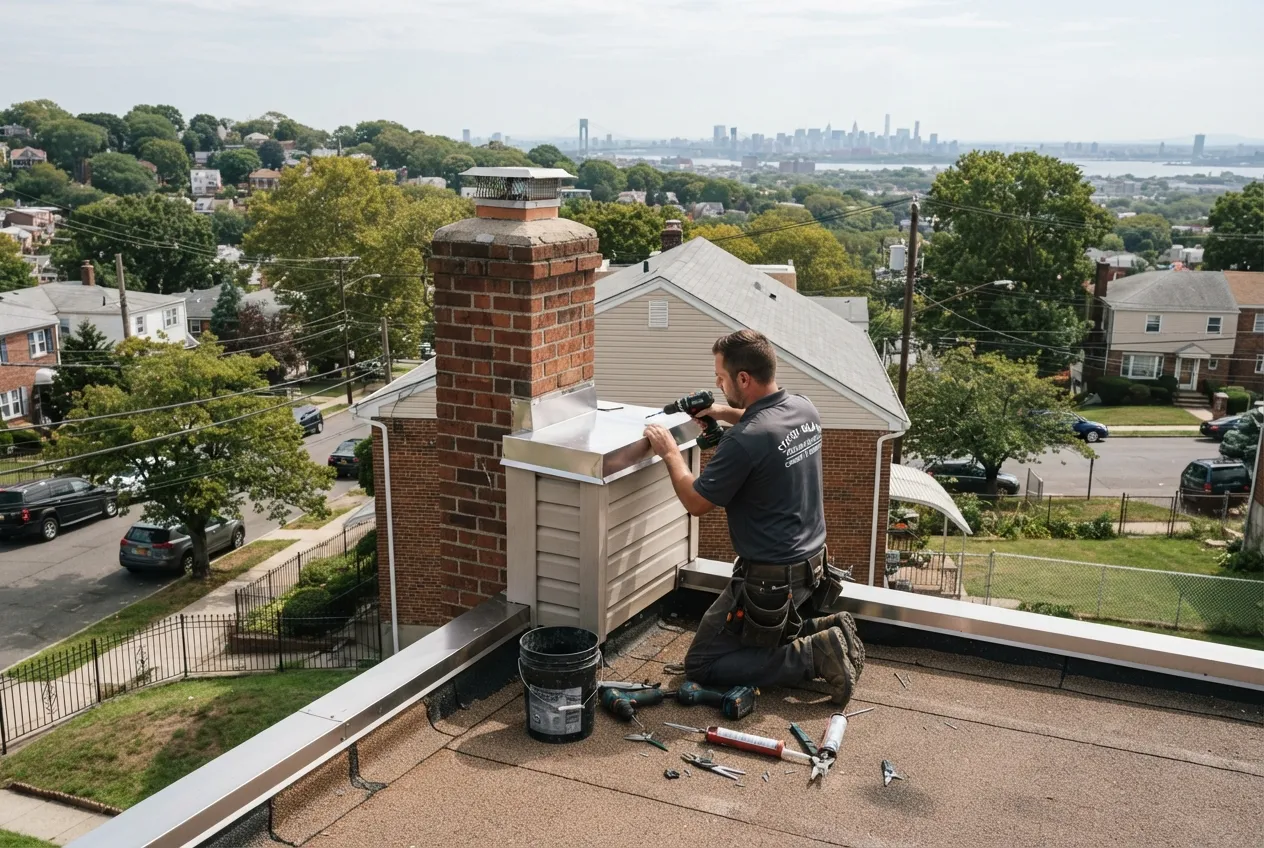
A chimney cap sits on top of the flue and keeps rain, animals, leaves and stray sparks where they belong. A chase cover is the metal panel that seals the top of a framed chimney chase, the boxed-in chimney you see on many prefab fireplaces and newer homes. When either one is missing, rusted through, or the wrong size, water and animals find their way in, and the damage usually shows up inside the house before anyone spots it from the street. BluePeak Chimney Service measures, replaces and installs chimney caps and chase covers for homeowners in Staten Island and nearby communities. While we are on the roof, we also look over the top of the chimney so you know what is happening beyond the cap itself.
Signs you need a new cap or chase cover
Most homeowners call us because something changed inside the house, not because they looked at the roof. A cap or chase cover rarely fails all at once. It rusts, loosens, or gets bent in a storm, and the problems build slowly. If you notice any of these, it is worth having the top of the chimney checked:
- Water in the firebox or dripping onto the damper after rain
- Rust streaks running down the siding or brick below a chase cover
- White staining on the brick, which often means water is soaking through the masonry
- Animal noises, scratching or nesting material in the flue
- Leaves, twigs or brick flakes landing in the firebox
- Poor draft or smoke puffing back into the room on windy days
- A cap that is visibly tilted, dented or missing after a storm
What's included
Every cap or chase cover visit follows the same checklist, so you know what you are paying for before we start.
- Measuring each flue and the chase top so the new part fits correctly
- Removing the old, damaged or undersized cap or cover
- Clearing any nests, leaves or debris from the top of the flue where it can be reached safely
- Installing a cap with mesh sized to keep animals out without choking the draft
- Fitting a chase cover with a slope and drip edge so water runs off instead of pooling
- Sealing and fastening the cap or cover so wind cannot lift it
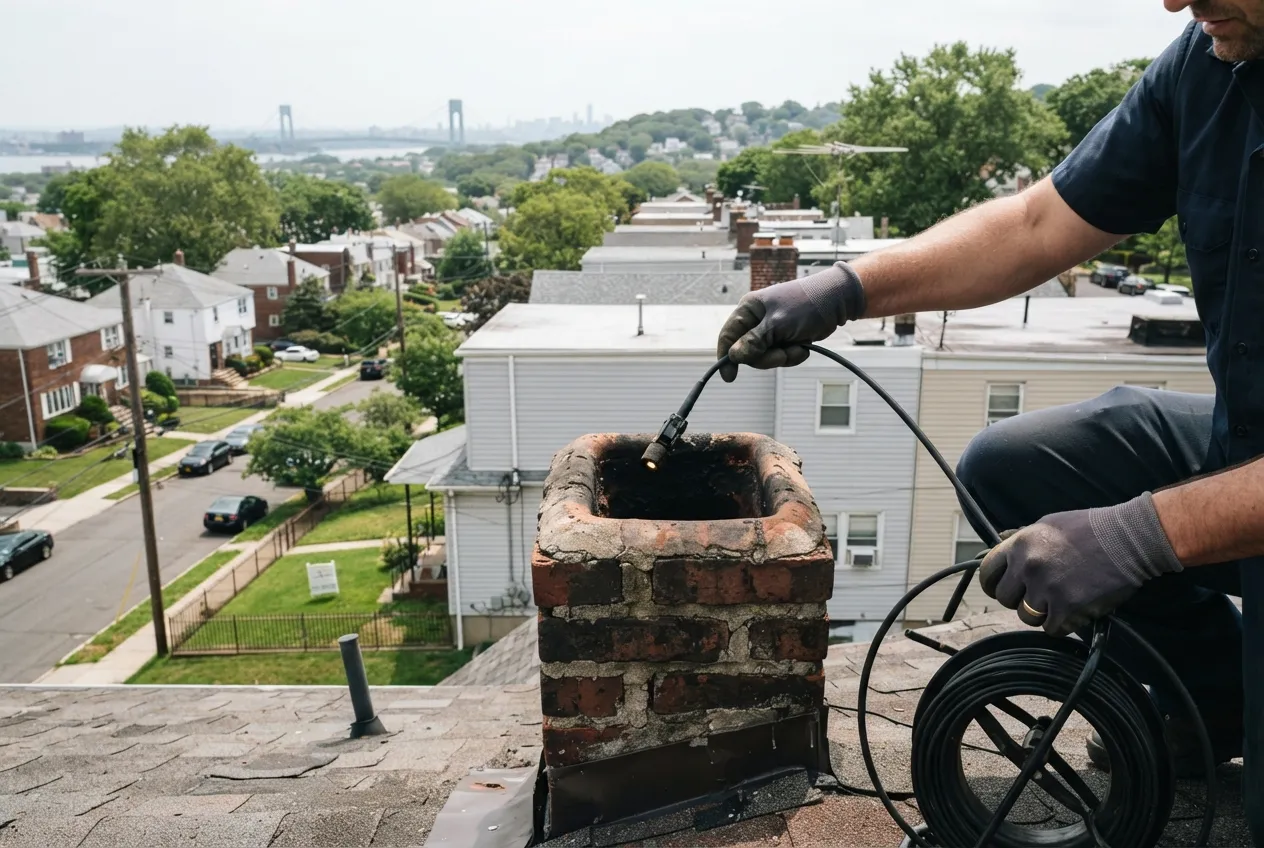
- A visual check of the crown, flue tile and flashing near the top
- Photos of the before and after, plus notes on anything else we saw
How our crew works in your home and on the roof
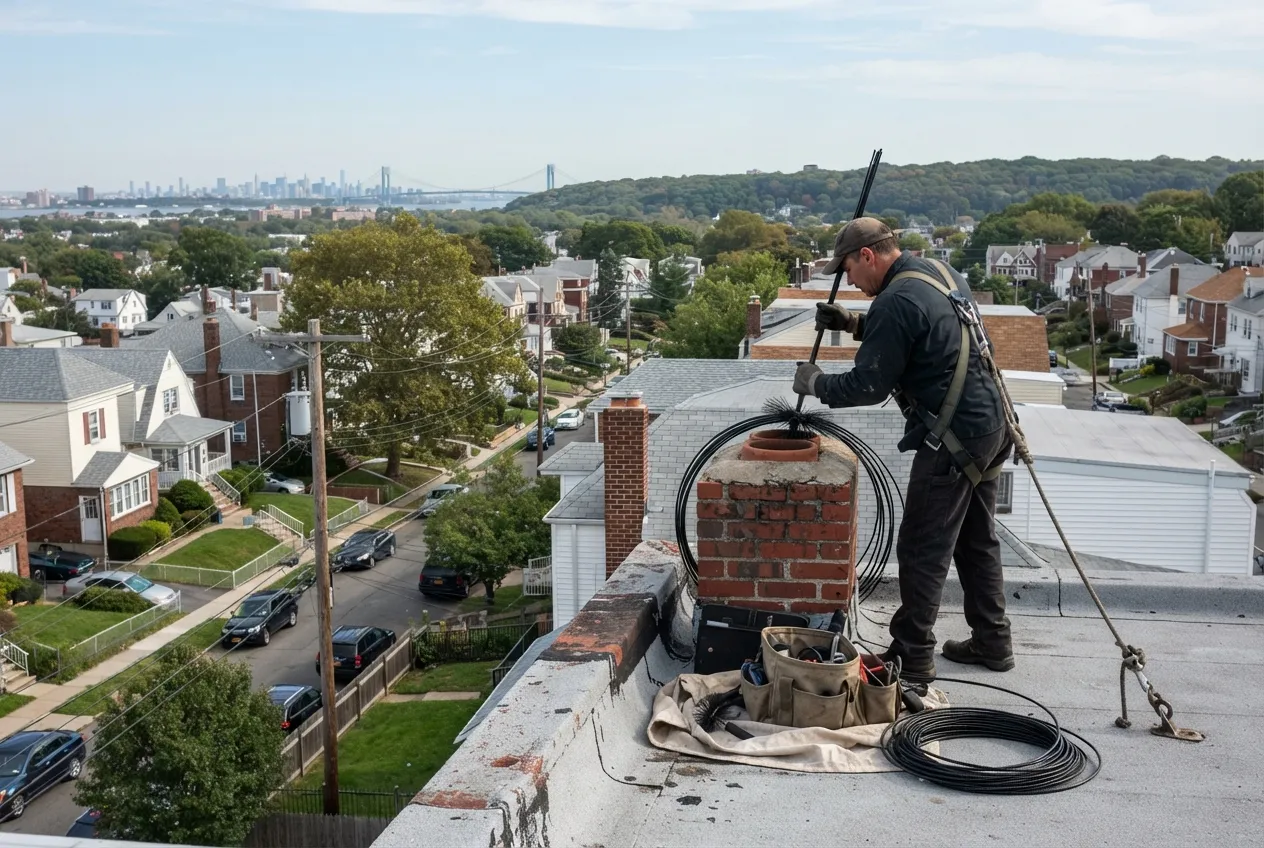
Most of this job happens on the roof, but we usually need to look in from the fireplace too. Inside, our certified technicians lay drop cloths from the door to the hearth and use HEPA vacuums for any soot or debris that comes down when we clear the top of the flue. If there is a lot of buildup or we suspect damage farther down, we can run rotary brushes through the flue and use a camera to show you the inside of the liner on a screen.
On the roof, we set ladders and roof protection carefully, work around shingles and gutters, and bring the parts we need so we are not making repeat trips across your roof. If debris has piled up on a smoke shelf or damper, we clean it out before we leave. When an animal is still living in the flue, we will talk with you about the safest way to handle it before we seal anything off.
Time for your annual chimney check?
The standard we follow
The NFPA 211 standard calls for chimneys, fireplaces and vents to be inspected once a year. Chimney professionals use three inspection levels: Level 1 when nothing has changed, Level 2 when the system changes, such as a new appliance, a switch of fuel or the sale of the home, and Level 3 when a hidden hazard can only be reached by opening part of the chimney or building.
A cap replacement is a good time for that yearly look, since we are already on the roof. If your building is switching its boiler from oil to gas, the chimney has to be evaluated as part of that work in New York City, and a new liner is often needed because gas exhaust creates acidic condensate that can wear down a masonry flue. A new liner usually means a different cap, so it makes sense to plan both together.
What affects the price
We give you a clear quote after we see the chimney. The main factors are:
- Chimney height, roof pitch and how easy it is to reach the top safely
- Fuel type and whether the flue serves a fireplace, wood stove, or oil or gas appliance
- How many flues need covering and their size and shape
- Whether a chase cover is a standard size or has to be custom made
- How much debris, nesting material or creosote has to come out first
- Whether a camera inspection or repairs to the crown, flashing or liner are needed
How a visit works
When you reach out, we ask a few questions about what you are seeing, such as leaks, noises or rust, and set up a time. On the day of the visit, the technician walks through the job with you, protects the room around the fireplace, and checks the flue from below before going up on the roof.
After measuring, we explain the options and the price before any work begins. Many caps and standard chase covers can be installed the same day. Custom chase covers are fabricated to your measurements and installed on a return trip. Before we leave, we clean up, show you photos, and point out anything else that should be watched or repaired. Since New York City's heat season runs from October 1 through May 31, booking in late summer or early fall gets the chimney ready before you need it most.