The short answer
You likely need fireplace or damper repair if smoke spills into the room, the damper sticks or won't seal, or the firebox shows cracked brick, loose mortar or water. BluePeak's certified technicians inspect the firebox, damper and smoke chamber, repair what's failing and leave the room clean, following the NFPA 211 standard.
A fireplace only works well when the firebox, damper and flue work together. A cracked firebox, a damper that sticks open or a rusted plate that no longer seals can push smoke into the room, pull cold air down the chimney all winter and let heat reach parts of the house it shouldn't. BluePeak Chimney Service repairs fireplaces and dampers for homeowners in Staten Island and nearby cities. Our certified technicians find out why the problem is happening, explain what they see in plain terms and fix it with as little disruption to your home as possible. Below you'll find the warning signs to watch for, what a repair visit includes, how we work and what affects the cost.
Signs you need it
Most fireplace and damper problems start small and get worse with each heating season. If you notice any of the signs below, stop using the fireplace until it has been checked. A small repair now is usually simpler than rebuilding a firebox or smoke chamber later.
- Smoke or a strong creosote smell in the room, especially on humid days or when the fireplace isn't in use
- Poor draft: fires are hard to start, burn weakly or push smoke out the front of the fireplace
- Brick flakes, crumbling mortar or debris collecting on the firebox floor
- White staining on the firebox or fireplace brick, which points to moisture moving through the masonry
- Water or damp ash in the firebox after rain or snow
- A damper handle that is stuck, loose or won't fully open or close
- Cold drafts coming from the fireplace when it's closed
- Scratching or bird noises above the damper, a sign animals are getting into the flue
What's included in a fireplace and damper repair
Every repair starts with an inspection so we fix the cause, not just the symptom. Before any work begins, you'll get a clear explanation of what we found and what we recommend. A typical visit covers the following:
- Inspection of the firebox walls, floor and mortar joints for cracks, gaps and loose brick
- Check of the damper plate, frame, hinge, handle and seal for rust, warping and fit
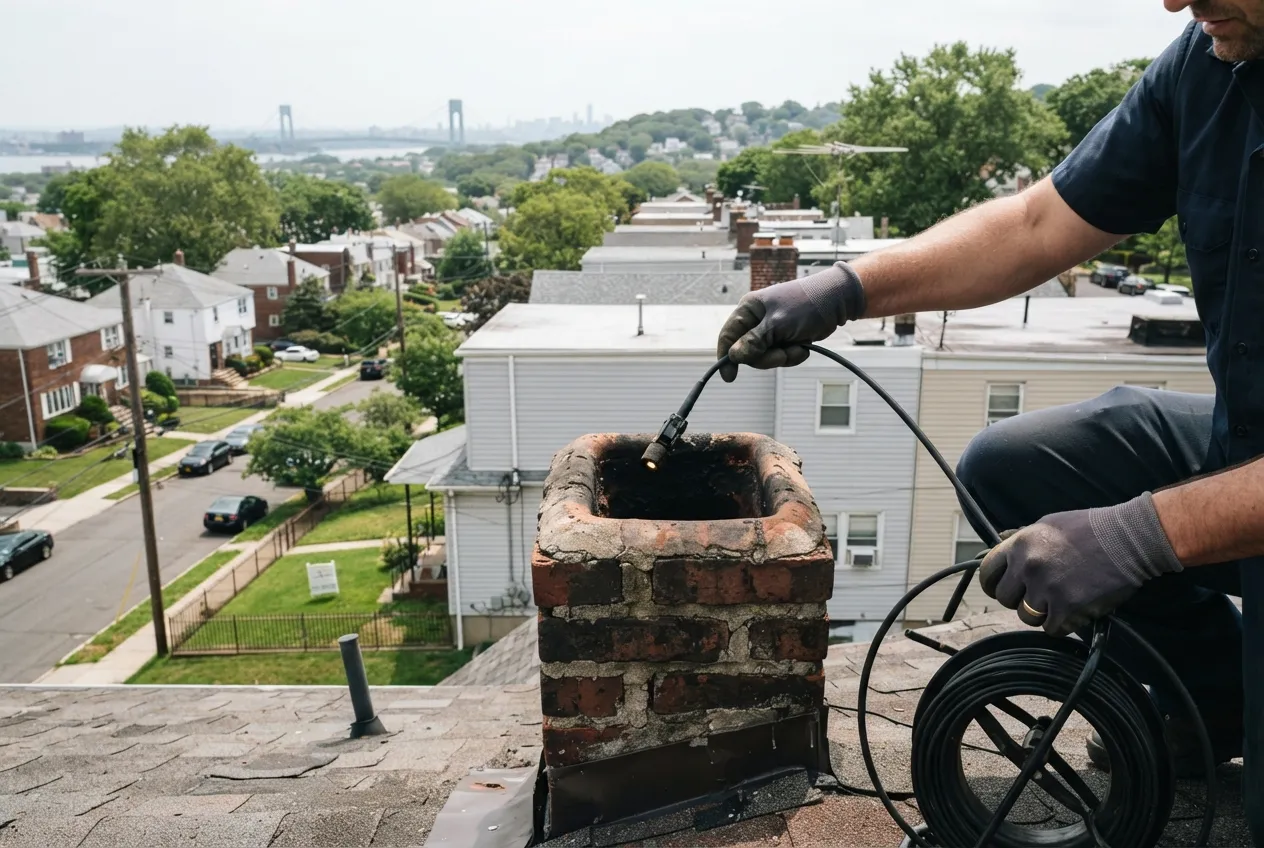
- Camera look at the smoke chamber and lower flue where the area can't be seen directly
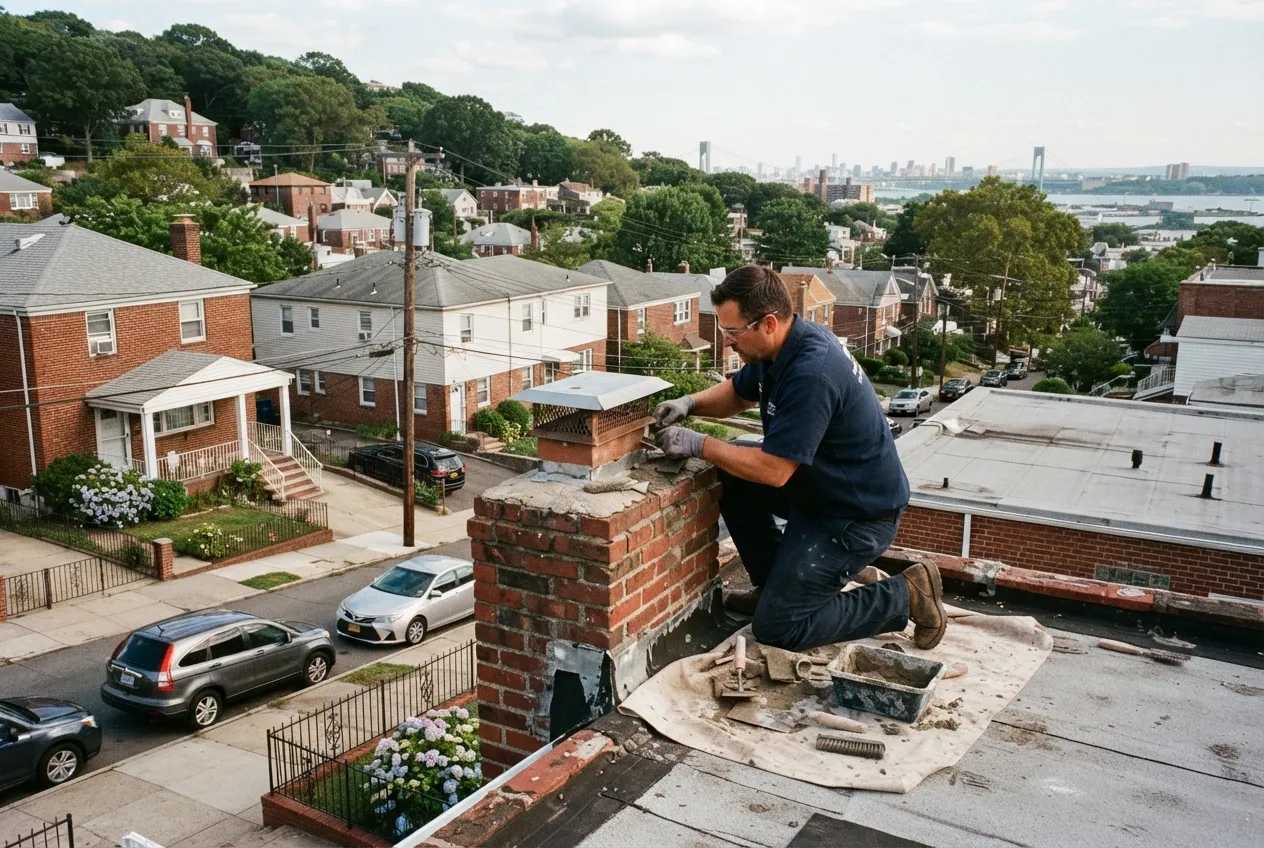
- Repointing of failed mortar joints with heat-rated mortar
- Replacement of damaged firebrick or cracked refractory panels in prefabricated fireplaces
- Repair or replacement of the throat damper, or installation of a top-sealing damper at the top of the flue
- Check of the chimney cap and crown for gaps that let in water or animals
- Photos of the problem areas and a full cleanup of the work area before we leave
How our crew works in your home and on the roof
Inside, we protect the room before we touch the fireplace. The crew lays drop cloths from the door to the hearth and covers nearby furniture and flooring. A HEPA vacuum runs during the work to capture soot and dust at the fireplace opening, so it doesn't drift into the rest of the house.
Masonry repairs need clean surfaces to bond, so we use rotary brushes to remove soot and creosote from the firebox and smoke chamber before any mortar goes on. When we need to see above the damper or into the flue, we use a camera and show you the footage so you can see the condition for yourself rather than taking our word for it.
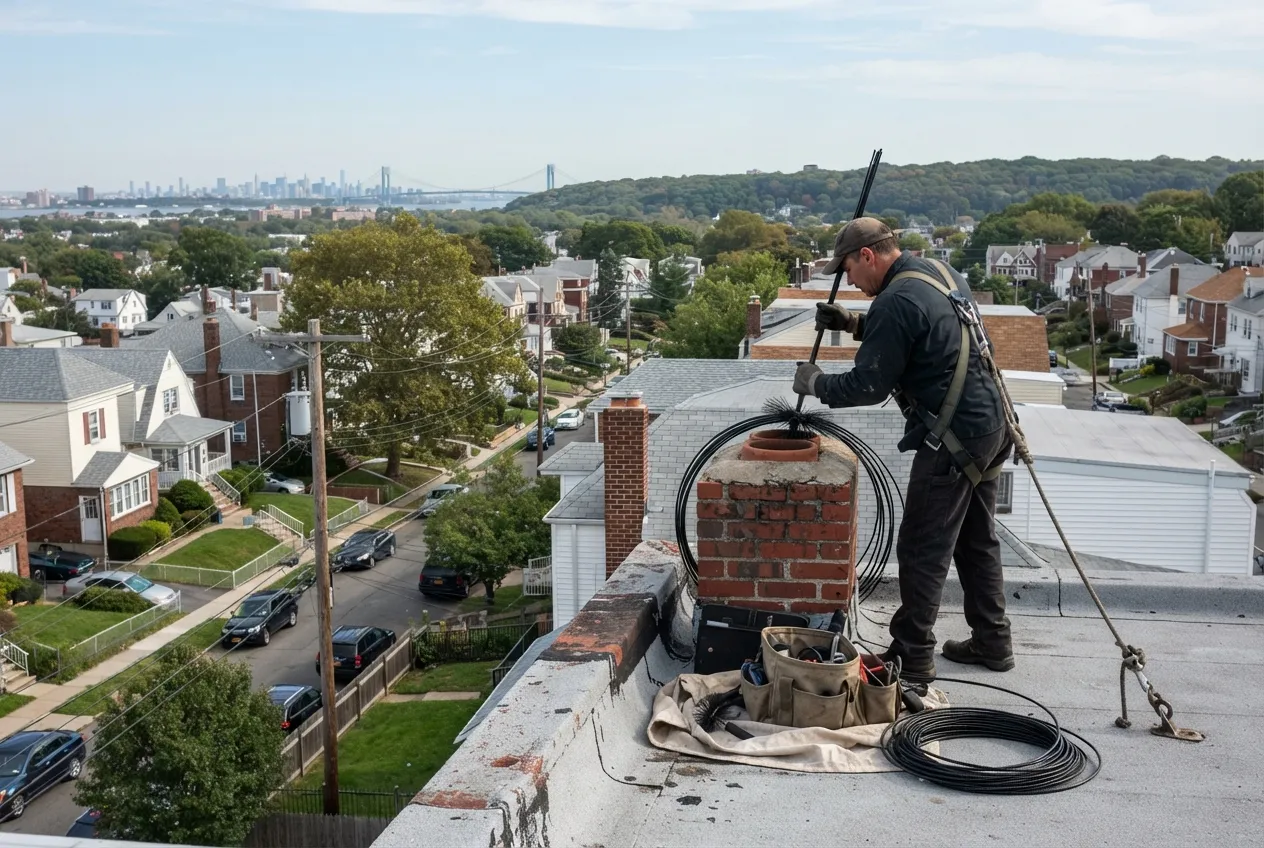
On the roof, the crew checks the crown, cap and top of the flue, and that's where a top-sealing damper is installed if it's the right choice for your chimney. We use ladders and fall protection suited to the roof pitch, and we keep tools and debris contained so nothing ends up in your gutters or yard.
Time for your annual chimney check?
The standard we follow
Our work follows the NFPA 211 standard, which calls for chimneys, fireplaces and vents to be inspected once a year. Chimney professionals use three inspection levels. A Level 1 inspection fits when nothing about the system has changed. A Level 2 inspection applies when the system changes, such as a new appliance or a switch of fuel, or when the home is sold. A Level 3 inspection is used when a hidden hazard can only be reached by opening part of the chimney or the building.
Most fireplace and damper repairs start with a Level 1 or Level 2 inspection. If we find damage that can't be fully assessed without opening a wall or the chimney, we'll explain why before recommending anything more.
What affects the price
No two fireplaces are the same, so the cost depends on what we find. The main factors are:
- Chimney height and how easy the roof is to reach
- Fuel type, whether wood-burning, gas logs or a converted system
- Flue size and the condition of the flue and smoke chamber
- How much soot and creosote buildup has to be removed before repairs
- Whether a camera inspection is needed to see hidden areas
- How much repair is needed, from a few mortar joints to a new damper or firebox rebuild
How a visit works
When you contact us, we'll ask what you've noticed and when it started, then schedule a time that works for you. Many Staten Island homeowners book before the cold weather sets in, so it's worth calling early if you plan to use the fireplace this winter.
On the day of the visit, the technician protects the room, inspects the fireplace and damper, and walks you through the findings with photos or camera footage. You'll get a clear recommendation before any repair starts. Simple fixes can often be handled the same day; larger jobs such as a firebox rebuild are scheduled as a follow-up. Before we leave, we clean the work area and tell you when it's safe to use the fireplace again.