The short answer
A chimney sweep clears creosote, soot and blockages from your flue so smoke and exhaust leave the house the way they should. The NFPA 211 standard calls for chimneys, fireplaces and vents to be inspected once a year, and a sweep is often recommended at the same visit.
A chimney sweep removes the creosote, soot and debris that build up inside a flue every time you burn wood, oil or gas. On Staten Island, many homes have masonry chimneys and heating systems that run steadily from fall through spring. Over a season that buildup can narrow the flue, weaken draft and become fuel for a chimney fire. BluePeak Chimney Service sends certified technicians to clean fireplace and heating appliance flues for homeowners across Staten Island and nearby communities. This page covers the signs that your chimney needs attention, what a sweep includes, how our crew protects your home, and what to expect from booking to the final report.
Signs you need a chimney sweep
Most chimney problems show up gradually, so it helps to know what to watch for. If you notice any of the following, schedule a sweep and inspection before you light another fire or start the heating season. Some of these signs point to buildup. Others point to moisture, animals or damaged masonry that the technician will check for while cleaning.
- A smoky or tar-like creosote smell, especially on humid days or when the air conditioning is running
- Poor draft: smoke rolls into the room, fires are hard to start, or the fire burns weakly
- Debris, soot chunks or flakes of brick and mortar collecting in the firebox
- White, chalky staining on the brick inside or outside, a sign that water is moving through the masonry
- Scratching, chirping or rustling inside the chimney, which usually means birds or animals have moved in
- Water, rust or damp ash in the firebox after rain
What's included in a BluePeak chimney sweep
Every sweep follows the same checklist so you know exactly what was done. If the technician finds something outside the scope of a standard cleaning, they will explain it and let you decide on any next steps before more work is done.
- Walkthrough with you to hear about recent problems, the fuel you burn and how often you use the fireplace or appliance
- Protection of the hearth, floor and nearby furniture with drop cloths
- Cleaning of the flue from top to bottom with rotary brushes sized to your flue
- Cleaning of the firebox, smoke chamber and smoke shelf
- Removal of nests and debris where they can be safely reached
- Damper check to confirm it opens, closes and seals
- Exterior look at the crown, cap, flashing and masonry from the roof when access is safe
- HEPA vacuum cleanup of soot and dust
- Written summary of findings, with photos where they help explain a problem
How our crew works inside your home and on the roof
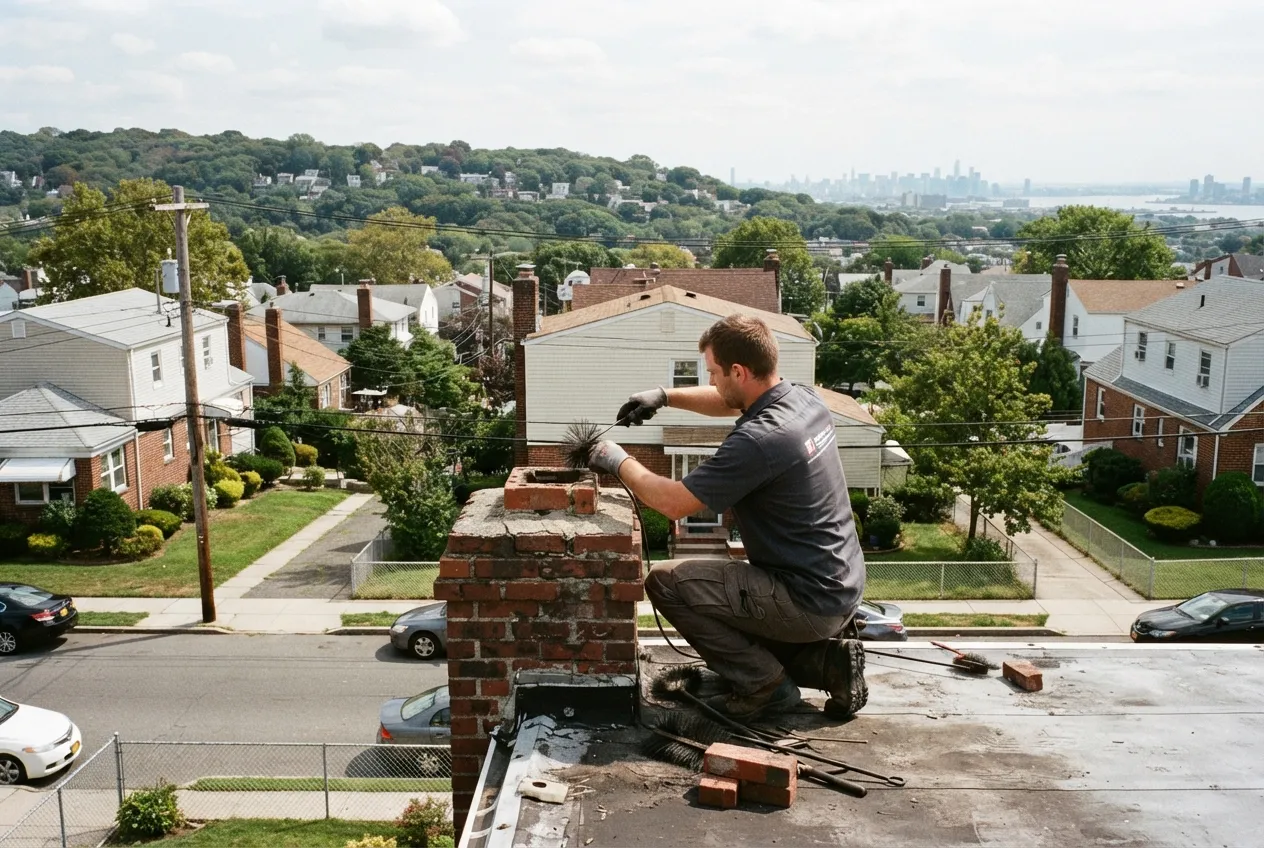
Inside, the crew lays drop cloths from the door to the fireplace and covers the hearth before any tools come out. A HEPA vacuum runs throughout the cleaning to keep negative pressure at the firebox, so soot is pulled into the machine instead of drifting into the room. Rotary brushes on flexible rods scrub the flue walls and break loose glazed or stubborn deposits that a standard brush can miss.
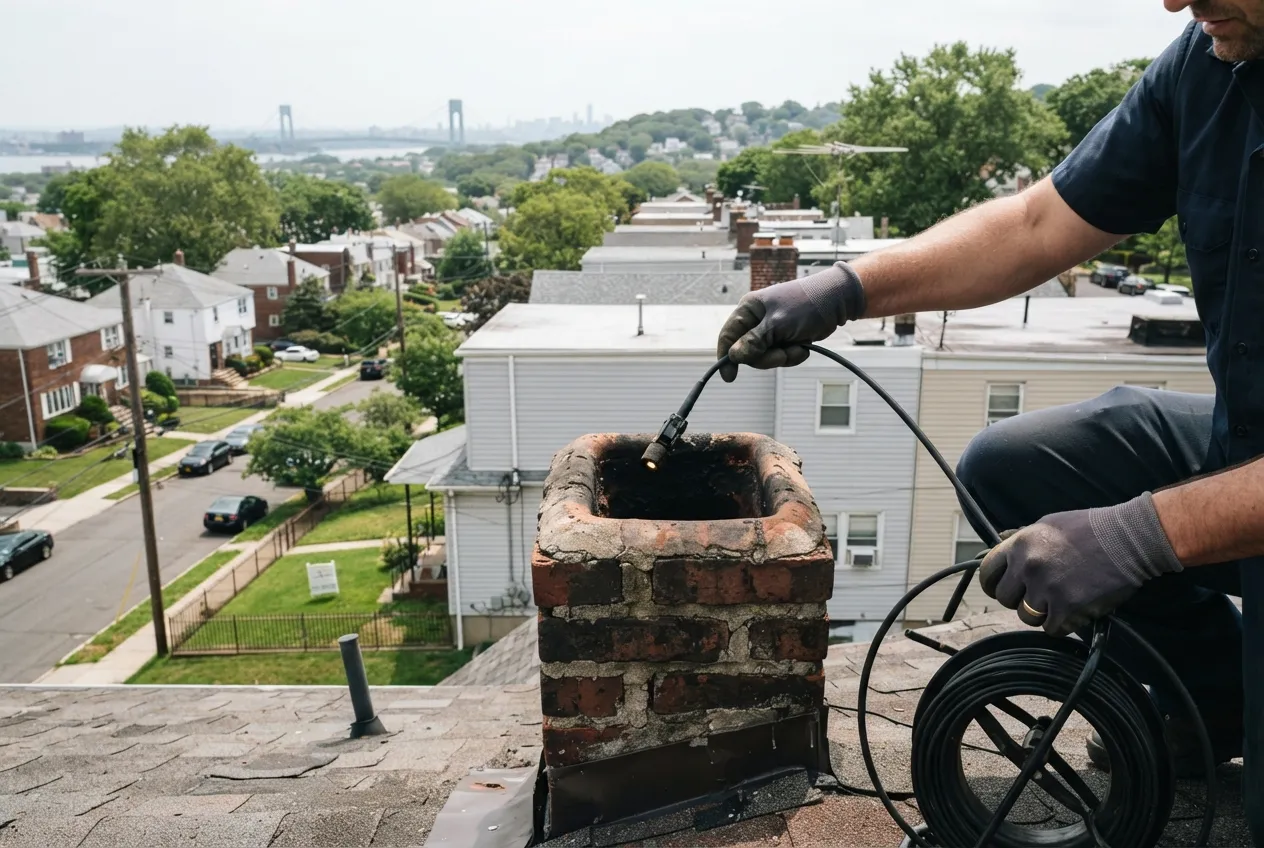
When the flue needs a closer look, the technician runs a camera up the liner to check for cracks, gaps between tiles, missing mortar and hidden blockages. You can watch the footage on site.
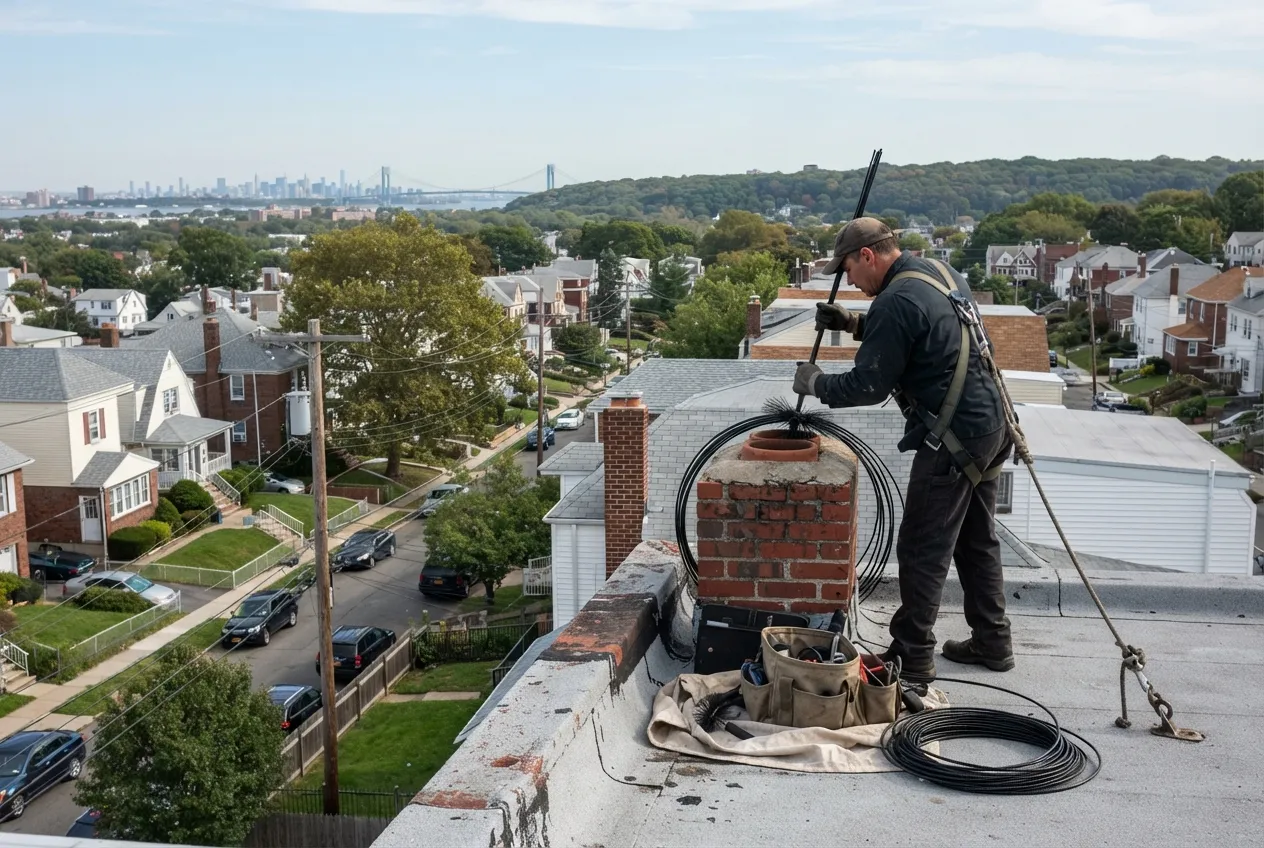
On the roof, the crew uses ladders and fall protection suited to the pitch and height of your home. From there they check the cap and screen, the crown, the flashing where the chimney meets the roof, and the condition of the brick and mortar. If the roof is too steep or wet to work on safely, we will tell you and reschedule that part of the job.
Time for your annual chimney check?
The standard we follow: NFPA 211 and the three inspection levels
The NFPA 211 standard calls for chimneys, fireplaces and vents to be inspected once a year. Chimney professionals use three inspection levels. A Level 1 inspection fits when nothing about your system has changed. A Level 2 inspection applies when the system changes, for example a new appliance or a switch of fuel, or when the home is being sold. A Level 3 inspection is needed when a hidden hazard can only be reached by opening part of the chimney or building.
Fuel changes deserve special attention here. When a New York City building converts its boiler from oil to gas, the chimney has to be evaluated as part of the work. A new liner is often needed because gas exhaust produces acidic condensate that can corrode a masonry flue. If you are planning a conversion, schedule a sweep and evaluation early so liner work does not hold up the project.
Timing matters too. New York City's heat season runs from October 1 through May 31. If you rent out part of your house, the heating system has to keep tenants at the city's minimum temperatures during that period. Booking your sweep in late summer or early fall avoids the rush and keeps your heat running when you need it.
What affects the price of a chimney sweep
We give you a clear quote before work begins. These are the main factors that change the scope of a job:
- Chimney height and roof access, including roof pitch and whether extra equipment is needed
- Fuel type: wood, oil and gas each leave different kinds of deposits
- Flue size, shape and condition, and how many flues the chimney contains
- How much buildup is present, especially hardened or glazed creosote
- Whether a camera inspection is needed to evaluate the liner
- Any repairs found during the visit, such as a cap, damper or crown work
How a visit works
When you call, we ask about your chimney, your fuel type and any problems you've noticed, then set an arrival window. Please let any fires burn out at least a day ahead so the firebox is cool when we arrive.
On the day of the visit, the technician walks through with you, sets up drop cloths and the HEPA vacuum, and sweeps the system. They inspect the interior and the roof and run a camera if one is needed. Before leaving, they clean up the work area and go over what they found. You receive a written summary you can keep with your home records. If repairs are recommended, we explain why and what the options are so you can decide without pressure.
Chimney Sweep by city
- Chimney Sweep in Great Kills
- Chimney Sweep in Eltingville
- Chimney Sweep in Arden Heights
- Chimney Sweep in Rossville
- Chimney Sweep in Annadale
- Chimney Sweep in Huguenot
- Chimney Sweep in Prince’s Bay
- Chimney Sweep in Woodrow
- Chimney Sweep in Oakwood
- Chimney Sweep in Richmondtown
- Chimney Sweep in Tottenville
- Chimney Sweep in Charleston