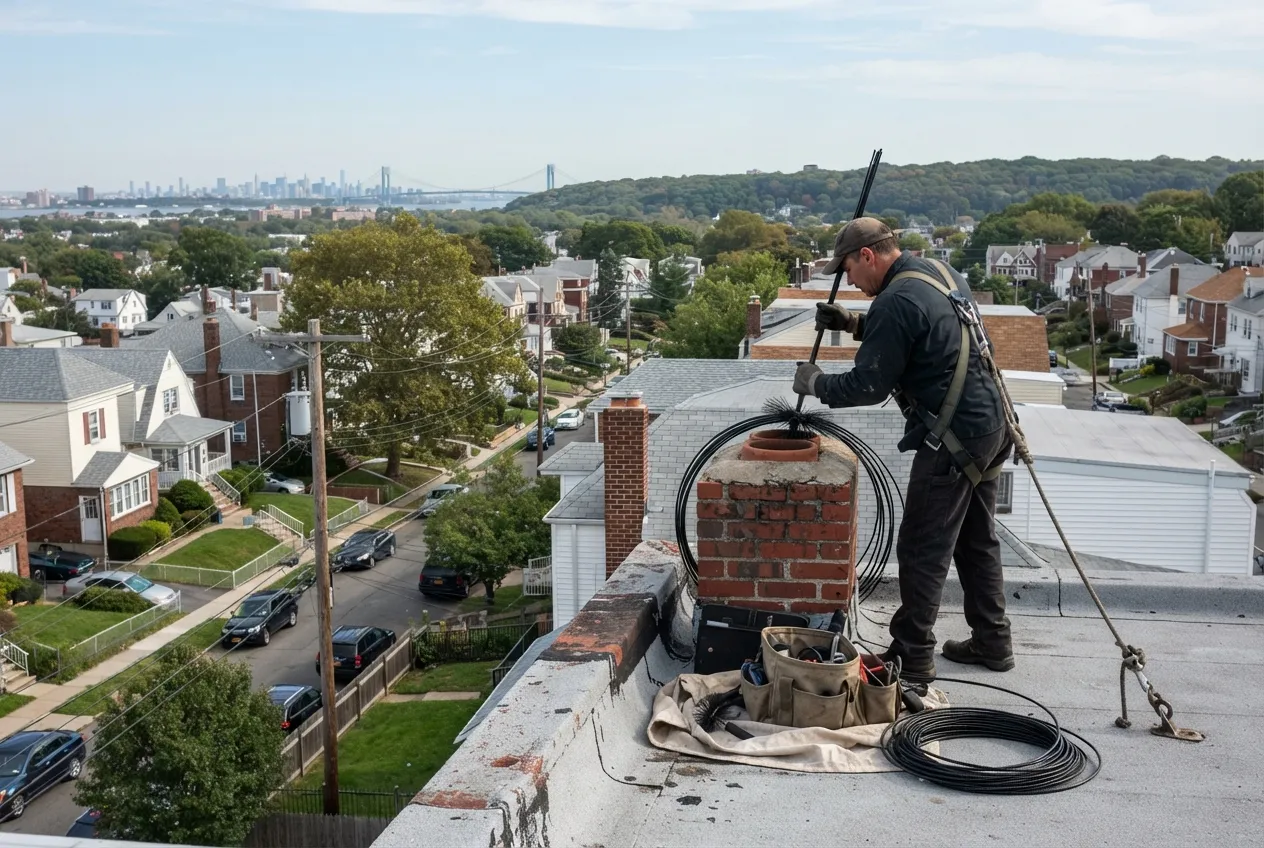
The short answer
A chimney liner keeps heat, exhaust and acidic condensate away from the masonry and framing around your flue. Annadale homes usually need one after a damaged clay lining is found or when a boiler is converted from oil to gas. BluePeak inspects the flue first, then installs a liner sized to your appliance.
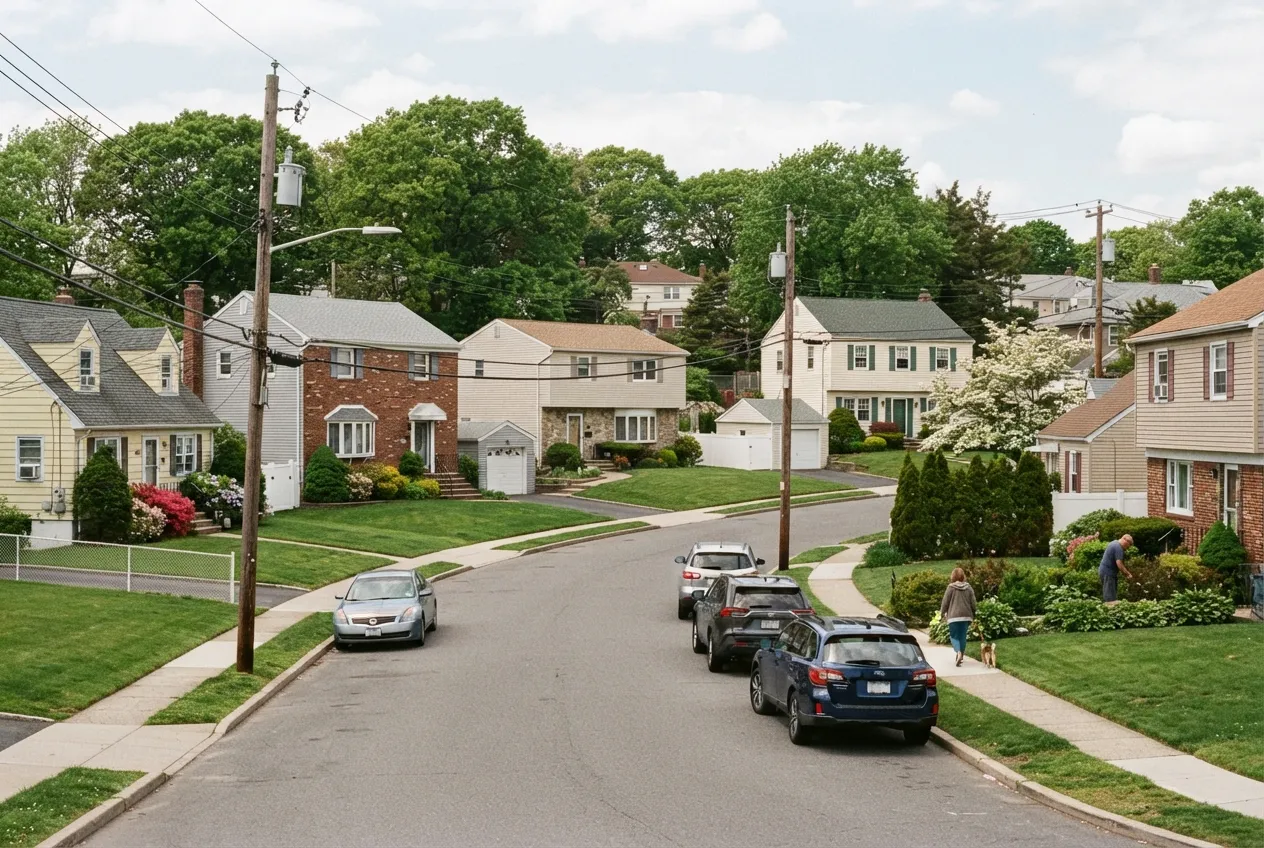
Annadale is mostly detached and semi-attached homes, many with masonry chimneys venting a gas furnace, an oil or gas boiler, a water heater or a wood-burning fireplace. When the lining inside that chimney cracks, crumbles or no longer suits the appliance connected to it, a new liner is how the chimney gets back to venting safely. Our office is about a mile northeast of Annadale. Our certified technicians can inspect your flue, show you what they find and install a liner sized for the appliance you actually use.
Why Annadale Chimneys End Up Needing a Liner
Many chimneys in Annadale's detached homes were built with clay tile flue liners. Clay holds up well for years, but freeze-thaw cycles, chimney fires, settling and water getting in from the top can crack tiles or open the mortar joints between them. Once that happens, exhaust and heat can reach brick and nearby wood, and gases can leak where they shouldn't.
A liner can also be a problem simply because it is the wrong size. A flue that was sized for an old oil burner is often far too large for a newer, more efficient appliance. Exhaust cools as it travels up an oversized flue. The appliance can draft poorly and leave moisture behind.
- Pieces of tile or crumbling mortar collecting at the base of the chimney or in the cleanout
- Water stains, rust or flaking near the boiler or furnace connection
- White staining or damp spots on interior chimney walls
- A fireplace or appliance that smokes back into the room or has trouble drafting
- Cracked or missing tiles noted during an inspection
Oil-to-Gas Conversions and Your Chimney
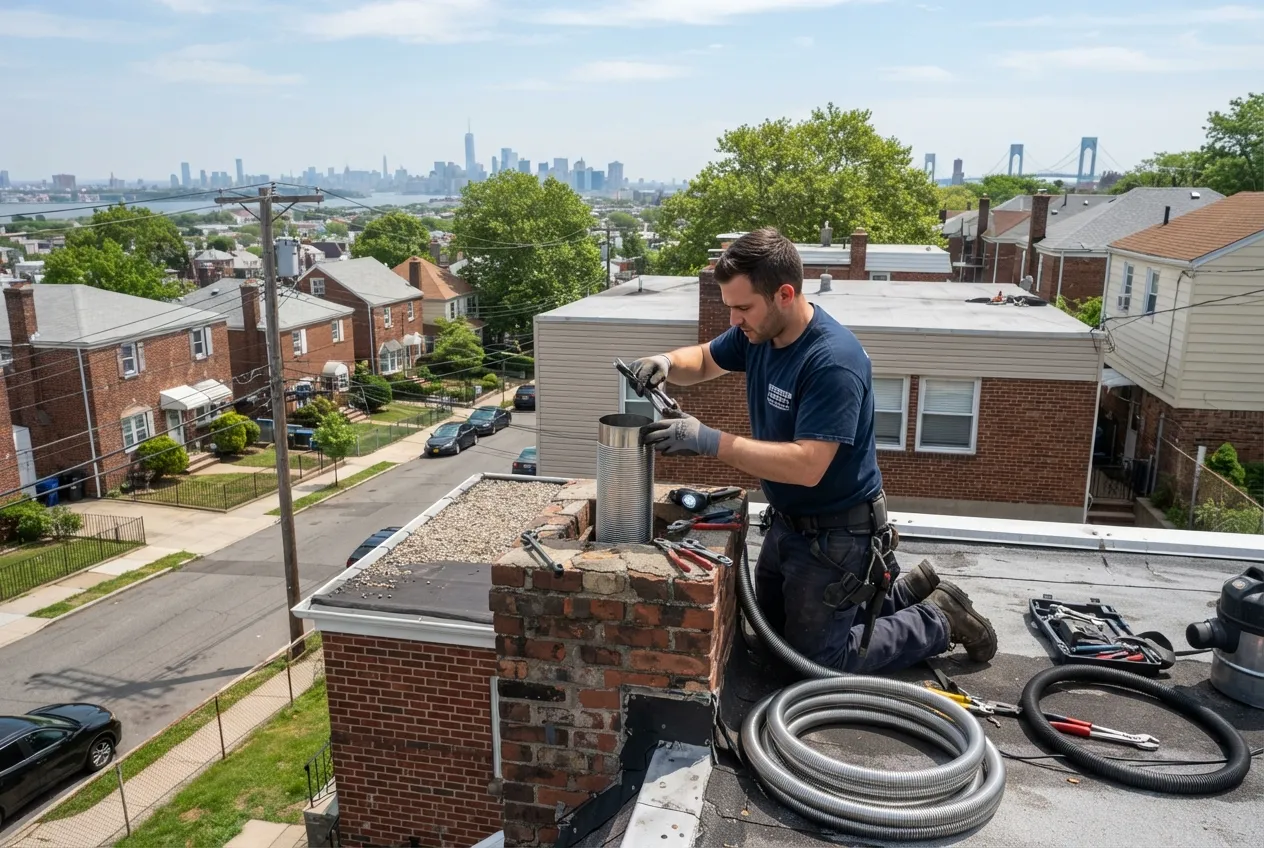
Some Annadale homeowners are switching their boilers from oil to gas. When a New York City building converts its boiler from oil to gas, the chimney has to be evaluated as part of the work. A new liner is often needed because gas exhaust produces acidic condensate that can corrode a masonry flue.
If a conversion is planned, it helps to bring us in early. We can look at the existing flue, tell you whether it can be reused and coordinate the liner work with your heating contractor's schedule, so the new boiler isn't waiting on the chimney.
Matching the Liner to the Appliance
There is no single liner that fits every chimney. The right choice depends on the fuel, the appliance's venting requirements and the size and condition of the existing flue. For most gas and oil appliances we install stainless steel liners sized to the appliance's needs. Wood-burning fireplaces and stoves need liners rated for the higher temperatures of solid fuel, and insulation is often part of that installation.
When a chimney serves more than one appliance, such as a boiler and a water heater, we check how they share the flue and whether each needs its own vent. We also confirm that the liner connects properly at the bottom and is capped at the top to keep rain and animals out.
Time for your annual chimney check?
How a Liner Installation Works
Most liner jobs follow the same basic steps, though the details depend on what the inspection turns up.
- Inspect the chimney, including a camera look inside the flue when needed
- Clean the flue so the new liner goes into a clear passage
- Measure the flue and confirm the liner size the appliance calls for
- Install the liner from the top and connect it to the appliance at the bottom
- Fit a cap or top plate to seal the chimney crown area
- Check draft and walk you through what was done
Timing, Inspections and Heat Season
The NFPA 211 standard calls for chimneys, fireplaces and vents to be inspected once a year. A more detailed Level 2 inspection applies when the system changes, such as a new appliance or a switch of fuel, or when a home is sold. That makes it the usual starting point before a liner goes in.
New York City's heat season runs from October 1 through May 31, and most households want their heat working without interruption during those months. Scheduling liner work in late spring or summer gives you room to plan. We also handle urgent liner problems found during the heating months. Along with Annadale, we serve nearby Huguenot, Prince's Bay, Woodrow, Arden Heights and Rossville.
More services in Annadale
- Chimney Sweep in Annadale
- Chimney Inspection in Annadale
- Chimney Repair in Annadale
- Air Duct Cleaning in Annadale