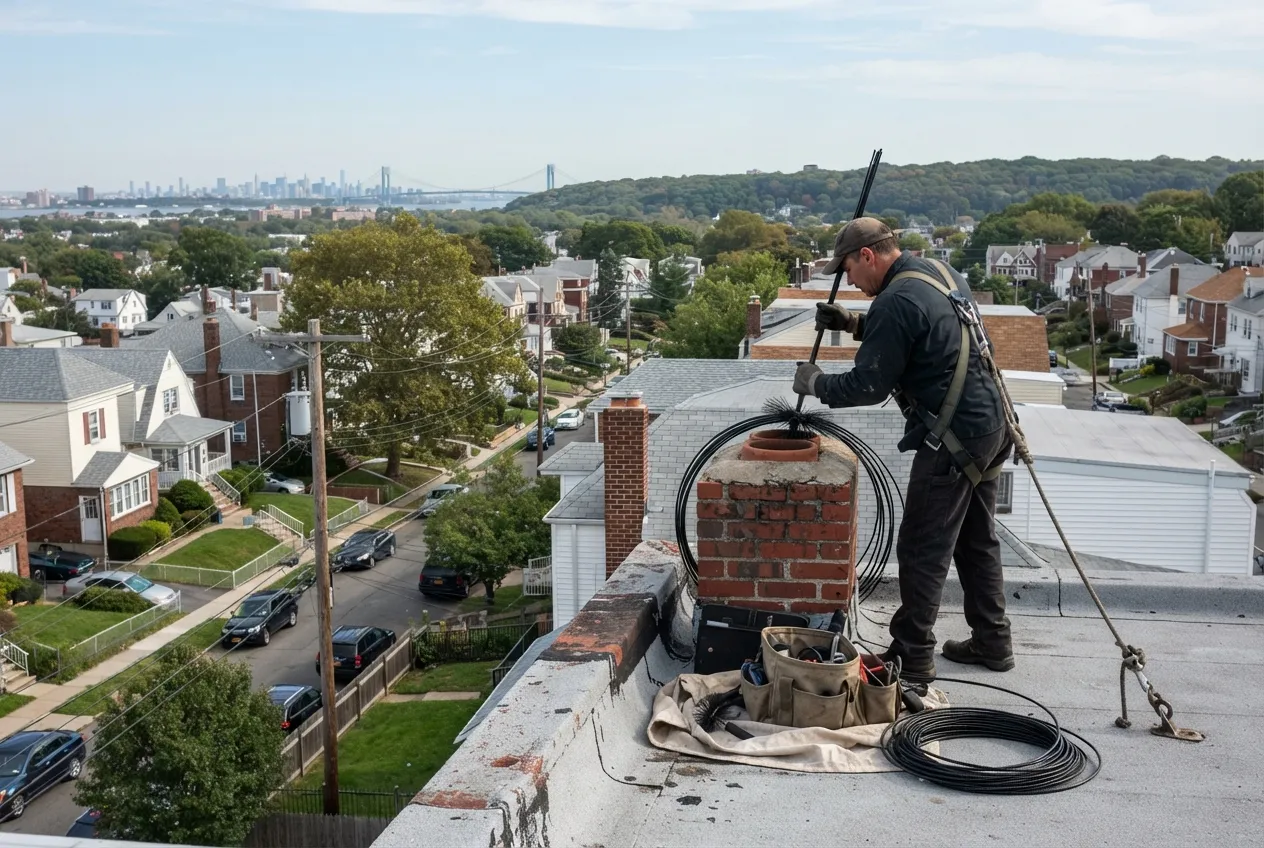
The short answer
Richmondtown homes usually need a new chimney liner when the existing flue is cracked or deteriorated, or when a boiler or furnace switches from oil to gas. BluePeak inspects the chimney first, then sizes and installs a liner matched to your appliance or fireplace.
A chimney liner is the protective channel inside your flue that carries smoke and exhaust gases out of the house and keeps heat and corrosive byproducts away from the surrounding masonry and framing. In Richmondtown (ZIP 10306), many homes are detached houses built over several decades, and plenty of them have chimneys that have served more than one heating system. When a liner cracks, deteriorates, or no longer matches the appliance it serves, the chimney stops doing its job safely. BluePeak Chimney Service installs chimney liners for Richmondtown homeowners from our Staten Island office, about 3 miles to the southwest. Our certified technicians inspect the flue first, explain what we find, and recommend a liner only when the chimney actually needs one.
Why Richmondtown Chimneys Often Need Relining
Richmondtown's housing is mostly detached and semi-detached homes, with a mix of older houses and newer construction. Older chimneys were often built with clay tile liners, or in some cases with no liner at all. Over time, heat cycles, moisture, and settling can crack clay tiles or open gaps between them. Those gaps let heat and exhaust reach brick, mortar, and nearby wood framing.
Changes inside the house matter too. A chimney that once served a single oil boiler may now vent a gas appliance, a water heater, or both. Each appliance has its own requirements for flue size and material, and a liner that worked for the old setup may be the wrong size or material for the new one.
Oil-to-Gas Conversions and Your Chimney
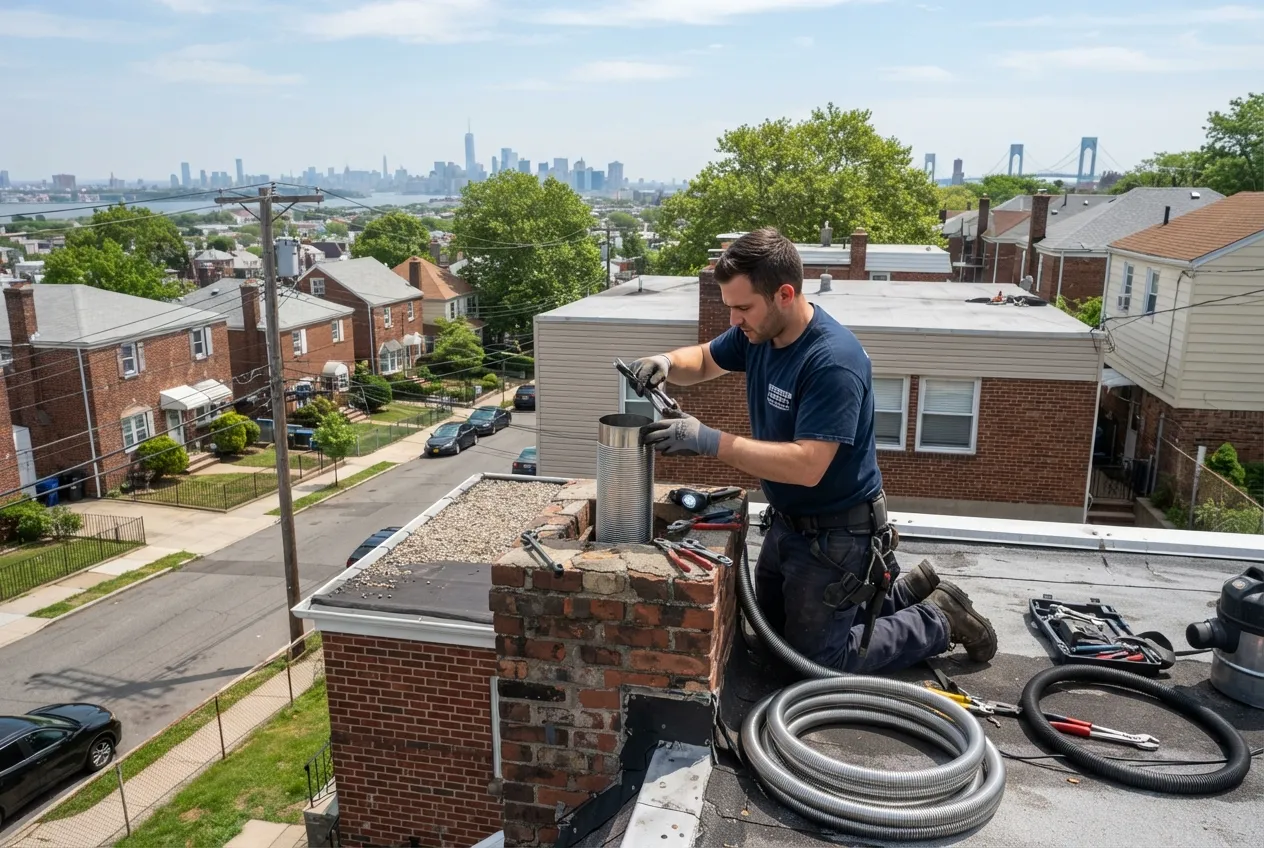
When a New York City building converts its boiler from oil to gas, the chimney has to be evaluated as part of the work. A new liner is often needed because gas exhaust produces acidic condensate that can corrode a masonry flue. Left unlined or poorly lined, that condensate can break down mortar joints and clay tiles from the inside, often without visible signs until damage is advanced.
If you are planning a conversion in Richmondtown, it helps to bring us in early. We can inspect the existing flue, confirm whether relining is needed, and coordinate the liner work with your heating contractor's schedule so the new system can run as intended.
How We Install a Chimney Liner
Every liner job starts with an inspection. The NFPA 211 standard calls for chimneys, fireplaces and vents to be inspected once a year, and it describes three inspection levels. A Level 2 inspection applies when the system changes, such as a new appliance or a switch of fuel, or when the home is sold. A Level 3 inspection is used when a hidden hazard has to be reached by opening part of the chimney or building.
After the inspection, we walk you through the findings and the options. A typical installation includes these steps:
- Cleaning the existing flue so the liner goes into a clear passage
- Measuring the flue and confirming the correct liner size for the appliance or fireplace
- Installing the liner from the top of the chimney down to the connection point
- Connecting the liner to the appliance or smoke chamber and sealing the top with a proper cap
- Checking the finished system and reviewing it with you before we leave
Time for your annual chimney check?
Choosing the Right Liner Type
There is no single liner that fits every chimney. The right choice depends on what the chimney vents, the shape and condition of the existing flue, and how the home is heated.
Stainless steel liners are a common choice for gas and oil appliances and for many wood-burning fireplaces, and they can be routed through flues with offsets. For some masonry chimneys, a poured or cast-in-place liner may make sense where the flue walls need reinforcement. Clay tile replacement is sometimes possible but usually means more masonry work. We explain why we recommend a particular option for your house rather than defaulting to one product.
Timing Around Staten Island's Heating Season
New York City's heat season runs from October 1 through May 31. For homeowners who also rent out an apartment, keeping heat running during those months is a legal requirement, so a chimney problem discovered in midwinter can create real pressure. Scheduling inspections and liner work in late spring or summer gives you time to decide on options without rushing.
We also serve neighbors in Oakwood, Great Kills, Eltingville, Arden Heights, and Rossville, so if you have family or rental property nearby, we can look at those chimneys too.
More services in Richmondtown
- Chimney Sweep in Richmondtown
- Chimney Inspection in Richmondtown
- Chimney Repair in Richmondtown
- Air Duct Cleaning in Richmondtown