The short answer
Oakwood homes usually need a new chimney liner when the old clay tiles are cracked, the home is converting from oil to gas, or a new boiler, furnace or fireplace insert is being installed. BluePeak's certified technicians inspect the flue first, then size and install a liner that matches the appliance.
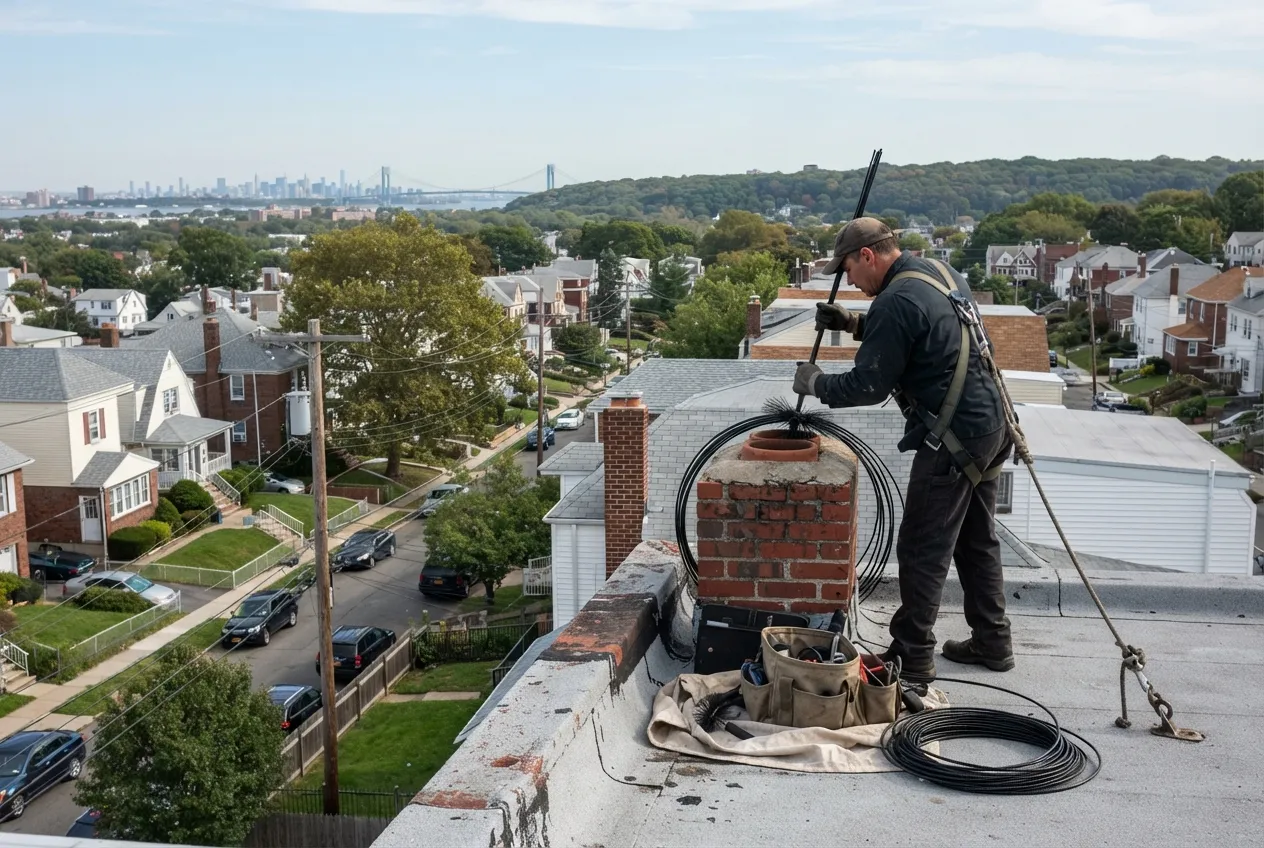
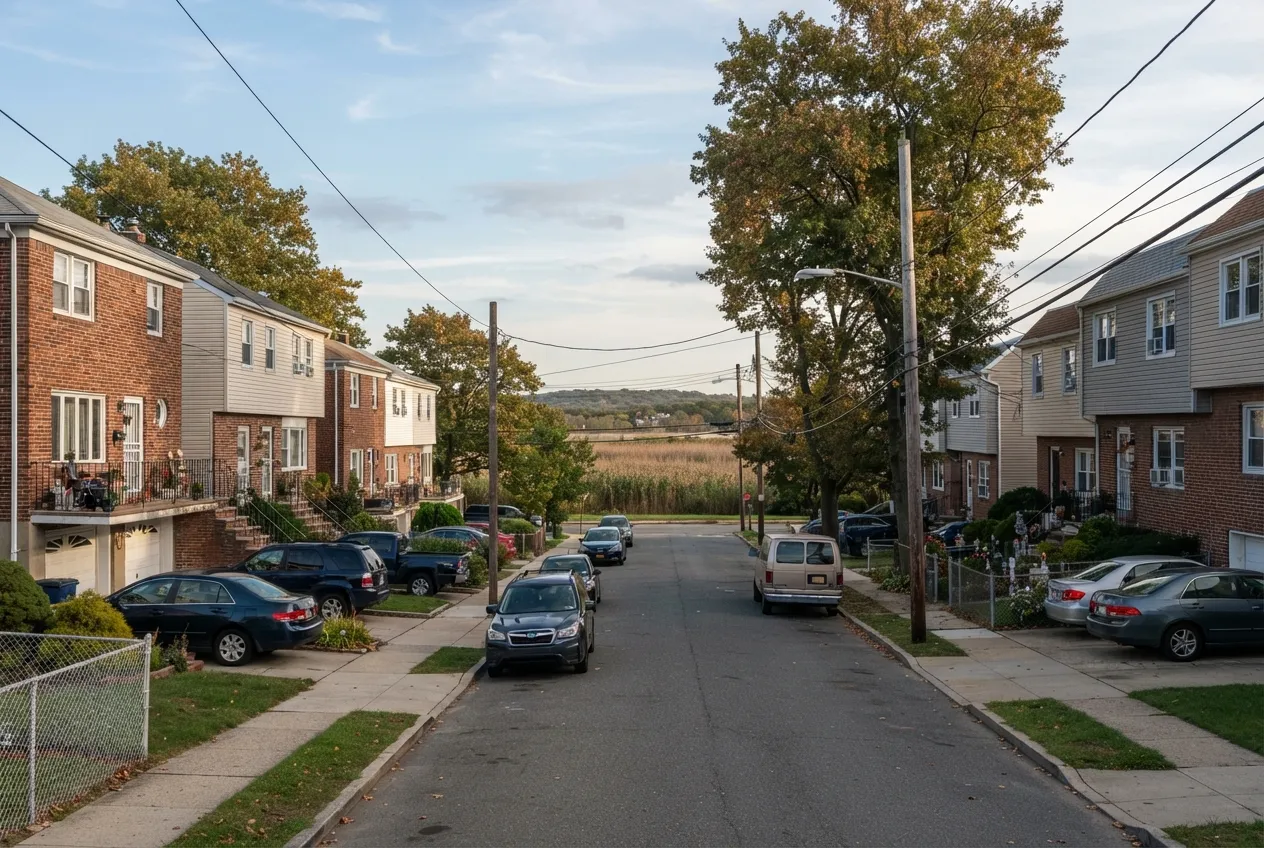
A chimney liner is the protective channel inside the flue. It carries smoke and exhaust out of the house and keeps heat and corrosive byproducts away from the surrounding brick, mortar and framing. In Oakwood, many homes are detached or semi-attached houses with a boiler, furnace or fireplace venting through a masonry chimney. In those homes, the liner is often the first part to wear out, or it no longer matches the equipment connected to it. BluePeak Chimney Service installs chimney liners for homeowners throughout Oakwood and the 10306 ZIP code. Every job starts with an inspection, so the liner we recommend fits both your chimney and the appliance it serves.
Why Oakwood Homes End Up Needing a New Liner
Many masonry chimneys in this part of Staten Island were built with clay tile liners. Over decades of heating seasons, those tiles can crack from heat and moisture, and the mortar joints between them can erode. Once that happens, exhaust and condensation can reach the brick behind the liner and the wood framing near the chimney.
A liner can also become the wrong size or material even when it isn't damaged. Newer high-efficiency boilers and water heaters often produce cooler exhaust than older equipment. A flue that is too large for that exhaust can let it cool and condense on the way up instead of venting cleanly. Adding a wood or gas fireplace insert to an open fireplace also usually calls for a liner sized to the insert.
- Pieces of tile, flakes of masonry or a gritty residue at the base of the chimney or in the cleanout
- Damp spots, white staining or crumbling brick on the chimney, inside or outside
- A boiler or furnace replacement or an upgrade in the works
- A planned switch from oil to gas heat
- Exhaust smells or backdrafting near the appliance or fireplace
Converting From Oil to Gas in Oakwood
Plenty of Oakwood homeowners are trading an oil burner for gas heat. When a New York City building converts its boiler from oil to gas, the chimney has to be evaluated as part of the work. A new liner is often needed, because gas exhaust produces acidic condensate that can corrode a masonry flue.
We inspect the chimney before or alongside the conversion and tell you plainly whether the existing flue can be reused. If it can't, we coordinate the liner installation so it fits the new appliance's venting needs and your heating contractor's schedule.
How We Choose and Size Your Liner
We don't pick a liner off a shelf. A chimney inspection comes first. Under the NFPA 211 standard, a change to the system, such as a new appliance or a switch of fuel, calls for a more thorough Level 2 inspection, which typically includes a camera look at the inside of the flue. That tells us the flue's actual dimensions, its condition, any offsets or bends, and whether more than one appliance shares the chimney.
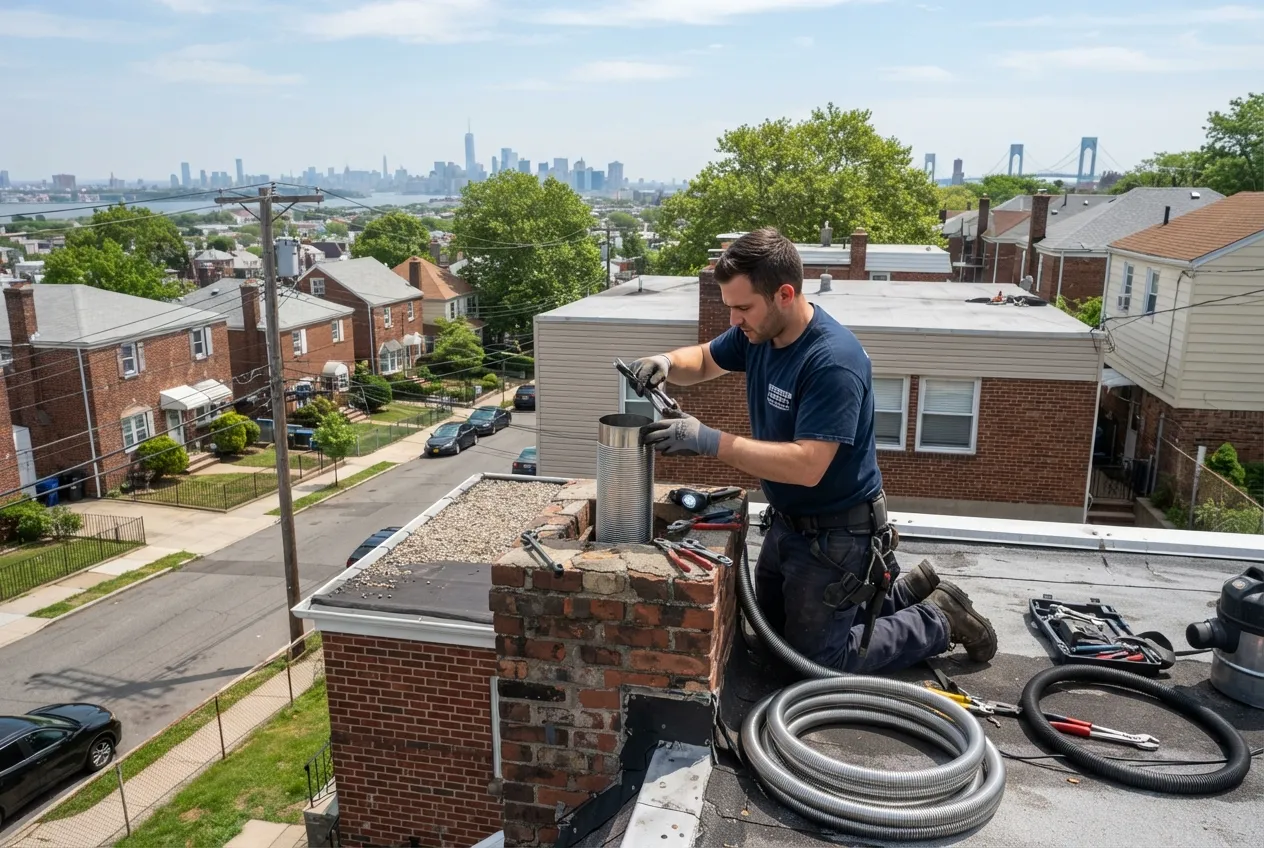
From there, we match the liner to the job. For most gas and oil boilers, furnaces and water heaters, that means a stainless steel liner sized to the appliance's vent requirements. Wood-burning fireplaces and inserts get a liner suited to higher temperatures, and insulation is added where the chimney layout calls for it. We'll explain the choice in plain terms before any work begins.
Time for your annual chimney check?
What Installation Day Looks Like
Most liner installations in single-family and two-family homes follow the same basic sequence, and we keep you informed at each step.
- Protect floors and the area around the appliance or fireplace
- Clean the existing flue and remove broken tile or debris where needed
- Feed the new liner down from the top of the chimney and connect it to the appliance
- Install a top plate and rain cap to seal the chimney and keep out water and animals
- Check the connection and walk you through what was done
Planning Around Heat Season and Yearly Inspections
New York City's heat season runs from October 1 through May 31, and many Oakwood homeowners don't want their boiler offline in the middle of it. That's especially true in a two-family house with a tenant upstairs, since building owners must keep apartments heated to the city's minimum temperatures during those months. If you know a liner is needed, late spring and summer are the easiest times to schedule the work.
After installation, keep the chimney on a yearly schedule. NFPA 211 calls for chimneys, fireplaces and vents to be inspected once a year, and a routine Level 1 inspection is usually enough once the system stays the same.
Serving Oakwood and Nearby Neighborhoods
Oakwood is a short drive from our Staten Island office, about three miles away. We also install chimney liners in nearby Richmondtown, Great Kills, Eltingville, Arden Heights and Rossville. Wherever you are on this side of the island, the process is the same: inspect first, recommend only what the chimney needs, and install it cleanly.
More services in Oakwood
- Chimney Sweep in Oakwood
- Chimney Inspection in Oakwood
- Chimney Repair in Oakwood
- Air Duct Cleaning in Oakwood