The short answer
Woodrow homes usually need a new chimney liner when the original clay tile flue is cracked or deteriorated, or when a heating appliance changes, especially in an oil-to-gas conversion. BluePeak inspects the flue, sizes a liner to the appliance, and installs it so exhaust is carried safely out of the home.
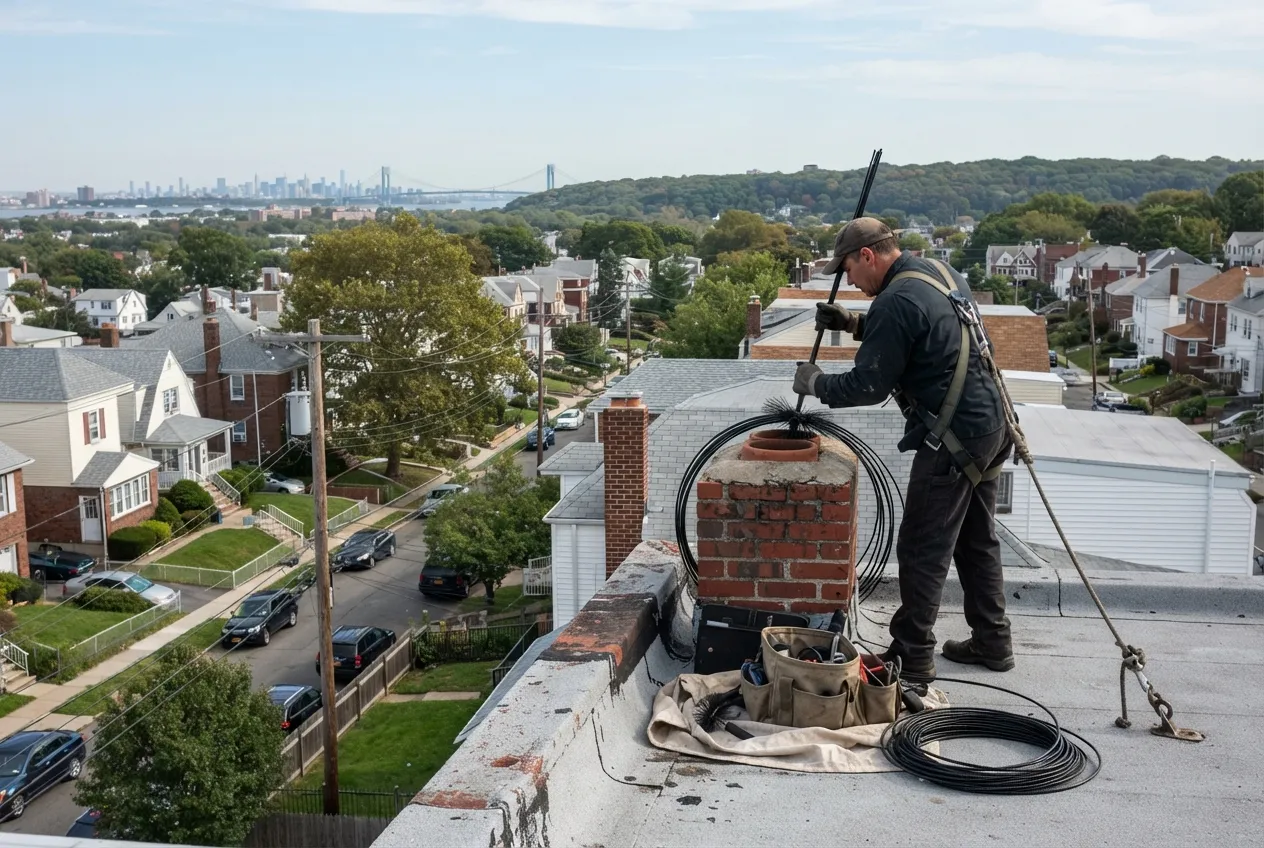
A chimney liner is the channel inside your chimney that carries smoke and exhaust gases up and out of the house. When that channel is cracked, missing, or the wrong size for the appliance attached to it, heat and combustion gases can reach the masonry and the framing around it. BluePeak Chimney Service installs chimney liners for homes in Woodrow, about a mile southwest of our Staten Island office, and throughout the 10309 and 10312 ZIP codes. Our certified technicians inspect the existing flue, match a new liner to the furnace, boiler, water heater, fireplace or stove that vents through it, and install it so the system works the way it should.
Why Woodrow Homes End Up Needing a New Liner
Most homes in Woodrow are detached or semi-detached houses, many with masonry chimneys that serve a boiler, furnace or water heater, and sometimes a fireplace. Over decades of heating seasons, clay tile flue liners can crack from heat stress, mortar joints between tiles can erode, and moisture can work its way into the brick. These problems are usually invisible from the street and often from inside the house, too.
A liner problem also shows up when the equipment changes. A new high-efficiency boiler or water heater may produce cooler exhaust and need a smaller flue than the old appliance did. If the flue is too large, exhaust can cool, condense and linger instead of rising, which can lead to poor draft and moisture damage inside the chimney.
- Cracked, shifted or missing clay flue tiles
- Flaking masonry or white staining on the chimney exterior
- Water stains or damp spots near the chimney inside the house
- A new or replacement heating appliance venting into an old flue
- Draft problems, such as exhaust smell near the boiler or fireplace
Oil-to-Gas Conversions and Your Chimney
Many Staten Island homeowners have switched or are thinking about switching their heating from oil to gas. In New York City, the chimney has to be evaluated as part of an oil-to-gas boiler conversion, and a new liner is often needed. The reason is chemistry: gas exhaust produces acidic condensate that can corrode an unlined or clay-lined masonry flue over time.
If you are planning a conversion, it helps to bring us in early. We can evaluate the chimney alongside your heating contractor's plans so the liner is sized for the new appliance and the work can be scheduled together rather than holding up the boiler installation.
Choosing the Right Liner for Your Appliance
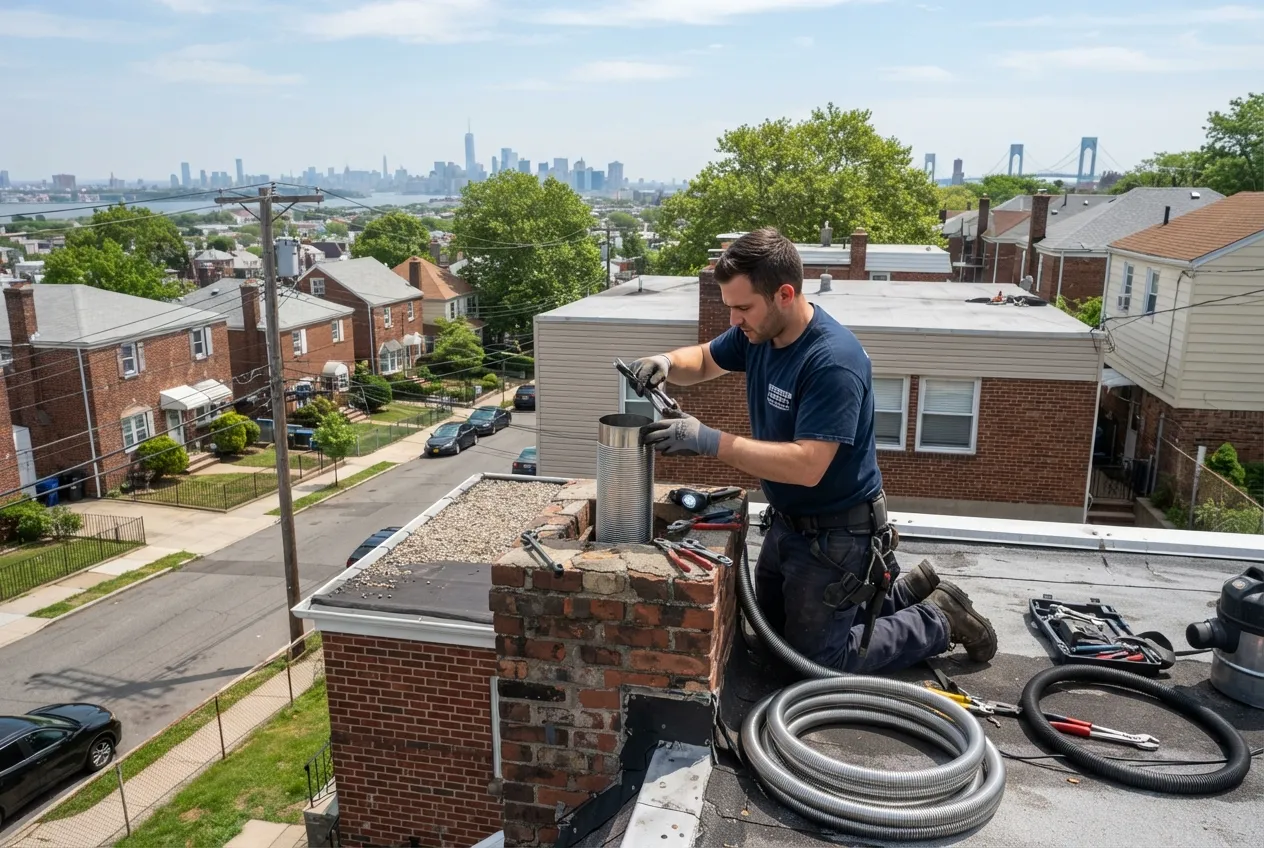
There is no single liner that fits every chimney. The right choice depends on what is venting through the flue, the size and shape of the existing chimney, and how many appliances share it. Stainless steel liners are the most common choice for relining because they handle the acidic condensate from gas appliances and can be fitted into chimneys with offsets or bends. Wood-burning fireplaces and stoves have different heat and clearance needs, and insulation is often part of the installation.
Our technicians measure the flue and look at the appliance specifications before recommending a liner. Sizing matters: a liner that is too large or too small for the appliance can cause draft problems, so we match it to the equipment rather than to the old opening.
Time for your annual chimney check?
What Liner Installation Involves
A typical relining job in Woodrow follows a clear sequence, and we walk you through each step before work begins.
- Inspection of the existing flue, including a camera look inside when needed
- Cleaning the chimney so the liner goes into a clear flue
- Measuring and selecting a liner sized to the appliance
- Installing the liner from the top of the chimney down to the appliance connection
- Connecting it to the appliance and fitting a top plate and cap to keep out rain and animals
- Checking draft and the connection once the system is running
Inspections and Timing
The NFPA 211 standard calls for chimneys, fireplaces and vents to be inspected once a year. When the system changes, such as a new appliance or a switch of fuel, or when a home is sold, a more thorough Level 2 inspection is the standard approach. That is usually the inspection that reveals whether a liner is needed.
Fall is the busiest time for heating work in New York City, since the city's heat season runs from October 1 through May 31. If your home or a building you own needs relining, scheduling in late spring or summer gives more flexibility. We also serve nearby Annadale, Huguenot, Prince's Bay, Arden Heights and Rossville.
More services in Woodrow
- Chimney Sweep in Woodrow
- Chimney Inspection in Woodrow
- Chimney Repair in Woodrow
- Air Duct Cleaning in Woodrow