The short answer
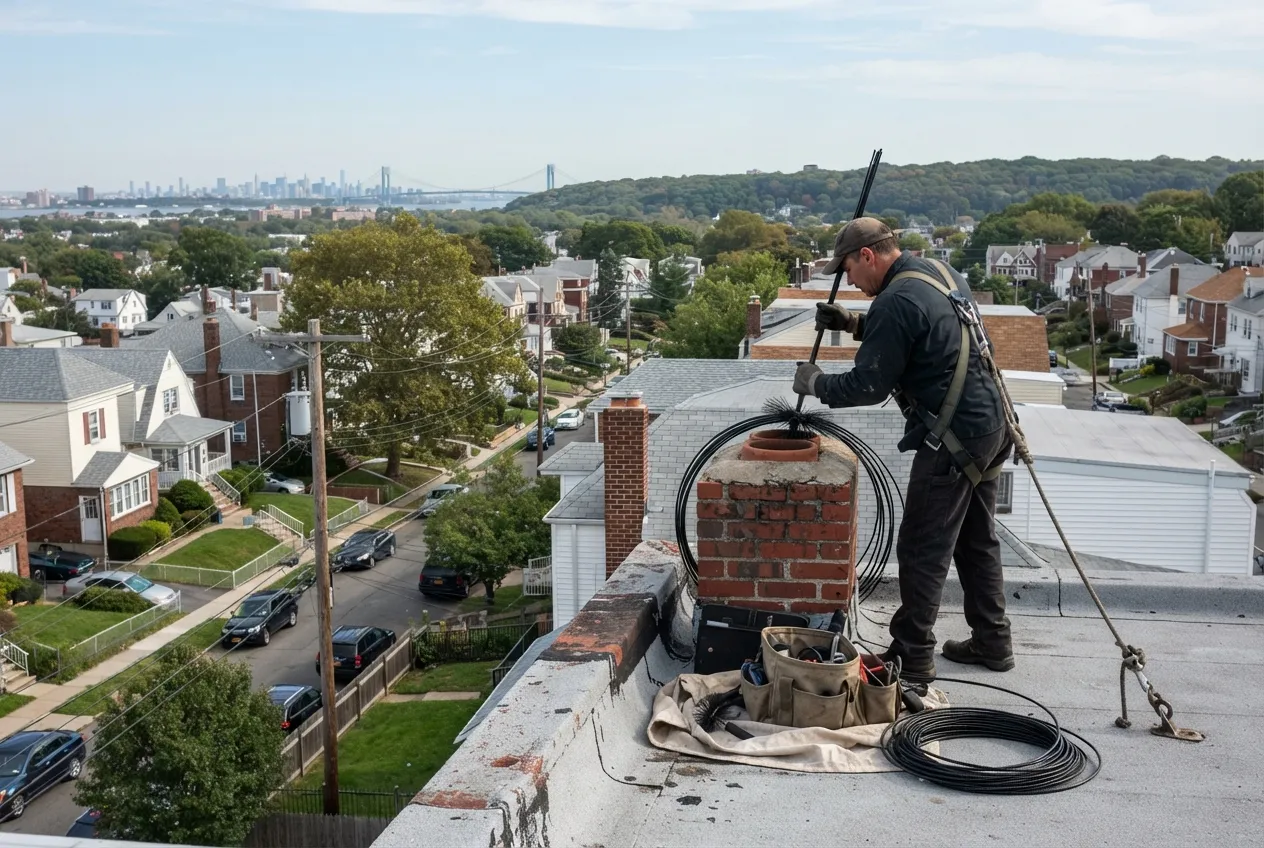
BluePeak Chimney Service repairs chimneys in Woodrow, Staten Island, including crowns, mortar joints, flashing, caps, dampers and flue liners. We inspect first, then explain which repairs matter for safety and which can wait before any work begins.
Woodrow sits on Staten Island's South Shore, about a mile southwest of our office. BluePeak Chimney Service can reach homes in the 10309 and 10312 ZIP codes quickly. The neighborhood is mostly detached and semi-attached houses, and many have brick chimneys that serve a fireplace, a boiler, a water heater or all three. Our certified technicians repair the parts that wear out first: crowns, mortar joints, flashing, caps, dampers and flue liners. Before any work starts, we explain what we found in plain language.
Signs a Chimney in Woodrow Needs Repair
Most chimney damage starts small and gets worse with water. Staten Island winters bring repeated freezing and thawing. Water that soaks into brick, mortar or a cracked crown expands when it freezes. Over a few seasons, that can turn a hairline crack into loose brick. Call for an inspection if you notice any of the following:
- Cracks in the concrete crown at the top of the chimney
- Missing, crumbling or recessed mortar between bricks
- Brick faces flaking or popping off (spalling)
- Water stains on a ceiling or wall next to the chimney
- Rust on the damper, firebox or a metal cap
- Pieces of tile or masonry falling into the fireplace or cleanout
- White, chalky residue on the outside brick
- Smoke or odors entering the room when the fireplace or heating appliance runs
Chimney Repairs We Handle
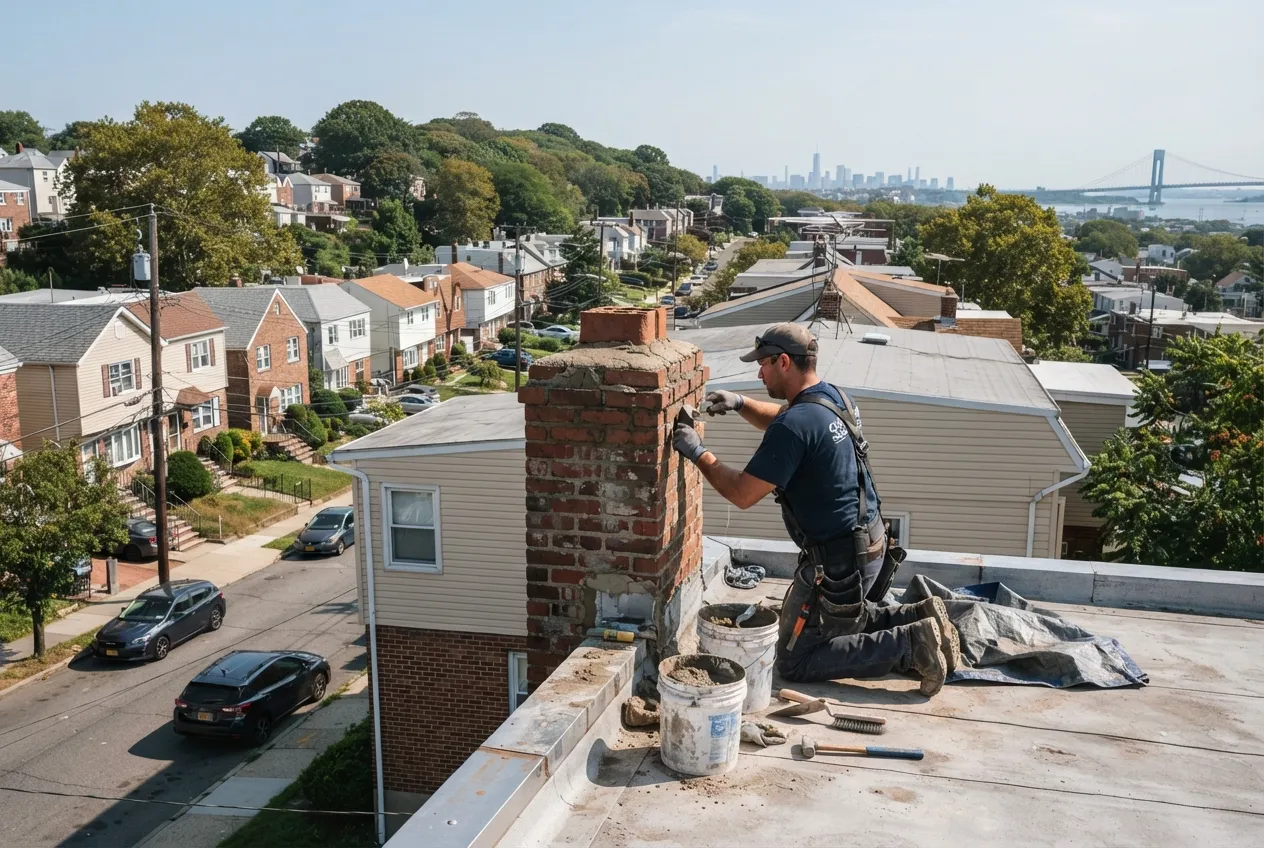
In Woodrow's detached and semi-attached homes, chimneys usually run up an exterior wall or through the roof. Both styles take direct weather. Most of our repair work here is about keeping water out and keeping the flue sound.
Crown repair or rebuild: A cracked crown lets water straight into the chimney. Small cracks can often be sealed. A crown that is broken up or poorly shaped may need to be rebuilt so it sheds water away from the flue.
Repointing and brick work: We grind out deteriorated mortar and replace it. Where spalling goes too deep to leave, we replace the damaged bricks.
Flashing: Failed flashing where the chimney meets the roof is one of the most common sources of leaks. We reseal or replace it so the joint stays watertight.
Caps, dampers and liners: A cap keeps out rain, animals and debris. We repair or replace stuck or rusted dampers. We also fix cracked or damaged flue liners, or install a new liner when the old one can't be saved.
Relining After an Oil-to-Gas Conversion
Many Staten Island homes that once heated with oil have switched to gas. In New York City, when a building converts its boiler from oil to gas, the chimney has to be evaluated as part of the work. A new liner is often needed. Gas exhaust produces acidic condensate, and that condensate can corrode a masonry flue that held up fine under oil.
If you're planning a conversion, or you finished one without having the chimney checked, we can inspect the flue. We'll tell you whether it needs a liner suited to the new appliance.
Time for your annual chimney check?
Why We Inspect Before We Repair
The NFPA 211 standard calls for chimneys, fireplaces and vents to be inspected once a year. An inspection is also the right starting point for any repair. Chimney professionals use three levels:
Level 1 covers the chimney when nothing has changed. Level 2 applies when the system changes, such as a new appliance or a switch of fuel, or when the home is sold. Level 3 is used when a hidden hazard can only be reached by opening part of the chimney or the building.
After the inspection, we walk you through what we found. We explain which repairs affect safety and which can wait, and we describe the work clearly before we begin.
Planning Repairs Around Heating Season
Masonry work goes best in mild, dry weather. It's also easier to schedule before your heating system runs every day. New York City's heat season runs from October 1 through May 31. If you rent out an apartment in your home, you must keep it heated to the city's minimum temperatures during those months. Repairing the chimney that serves your boiler or furnace in late spring or summer means you won't have to shut off heat when tenants depend on it.
Besides Woodrow, we also handle chimney repair in nearby Annadale, Huguenot, Prince's Bay, Arden Heights and Rossville.
More services in Woodrow
- Chimney Sweep in Woodrow
- Chimney Inspection in Woodrow
- Air Duct Cleaning in Woodrow
- Chimney Liner Installation in Woodrow