The short answer
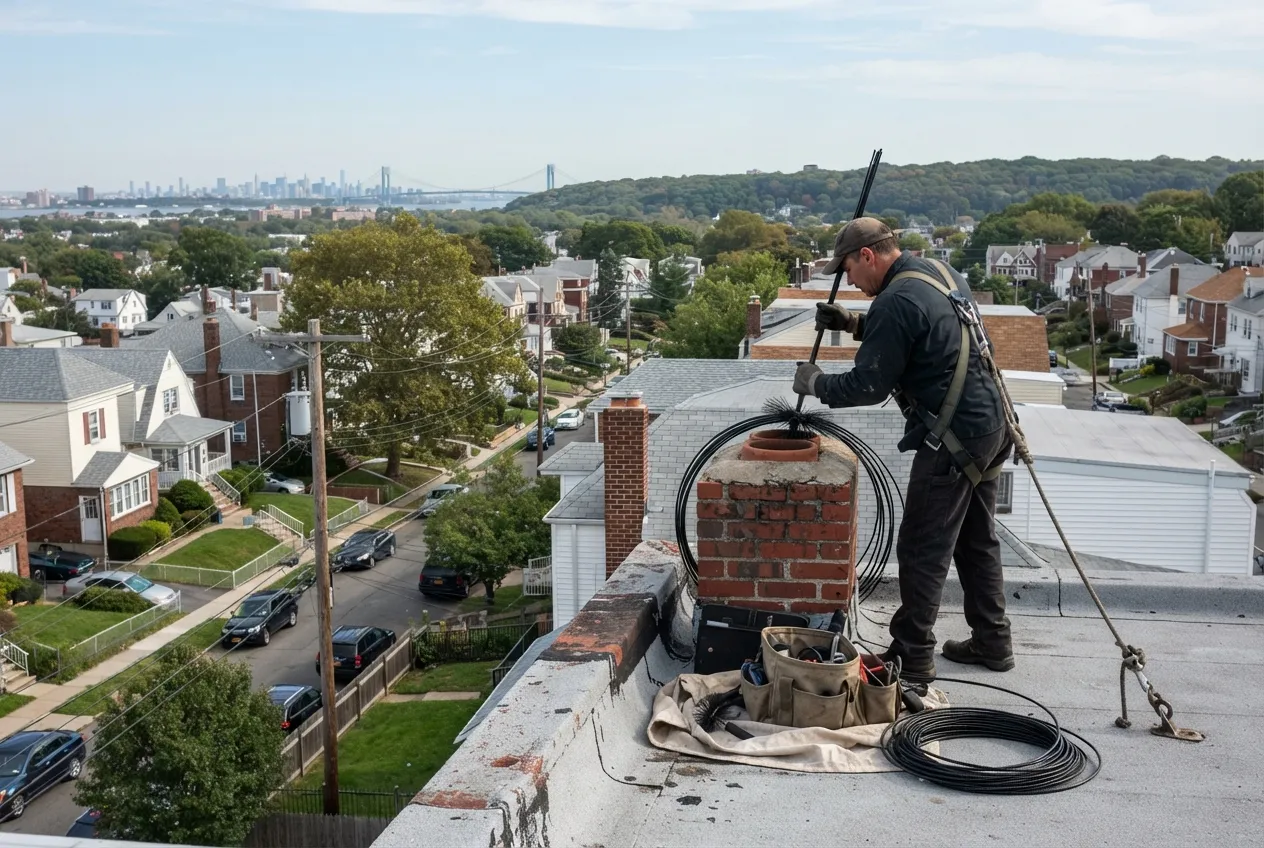
Chimney repair in Huguenot usually means stopping water from getting in through a cracked crown, failed flashing, worn mortar or a missing cap. A newer heating system may also need its flue relined. We inspect first, show you what we find, and then repair only what needs it.
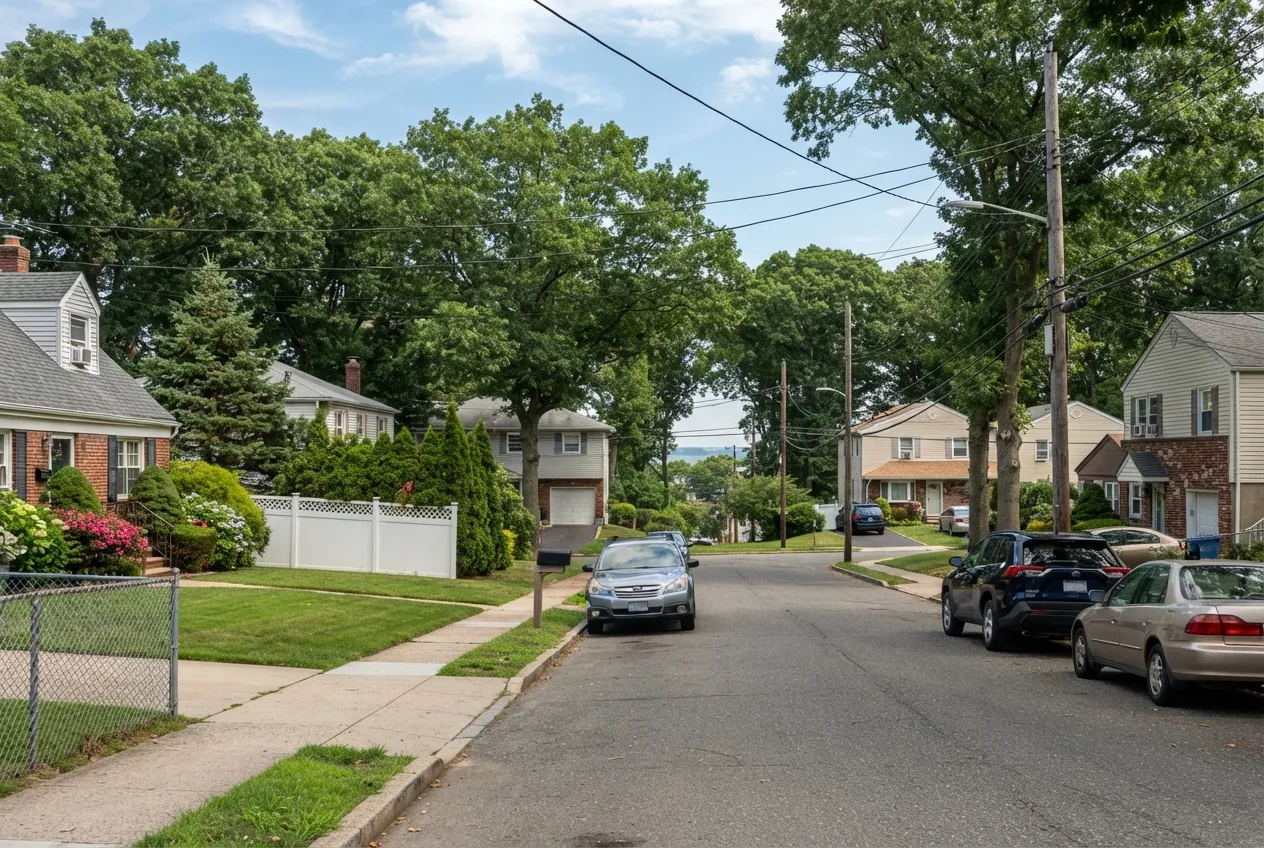
Huguenot is a short drive from our Staten Island office, about a mile to the southwest, so our crews work on chimneys here regularly. Most homes in the neighborhood are detached or two-family houses, from older frame homes to newer construction, and nearly every one has a masonry chimney, a metal flue, or both. Chimneys wear out from the top down. Weather hits the crown and cap first, water finds its way into brick joints and around roof flashing, and the damage often goes unnoticed until a stain appears on a ceiling or a fireplace starts to smell. Our certified technicians repair those problems on homes across the 10309 and 10312 ZIP codes. We aim to fix what is actually wrong and leave the parts that are still sound alone.
What Usually Goes Wrong With Huguenot Chimneys
Staten Island winters bring repeated freeze-thaw cycles. Water that soaks into brick or mortar expands when it freezes, and over a few seasons that pushes the surface of the brick off (spalling) and loosens joints. On the South Shore, wind-driven rain makes this worse, because it hits the exposed upper part of the chimney from the side.
In detached homes the chimney often runs up an exterior wall or through the roof ridge. That leaves a lot of masonry exposed and a long flashing seam where the roof meets the brick. Those two areas cause most of the leaks we're called about.
- Cracked or crumbling chimney crowns that let water into the flue and brick
- Loose, lifted or rusted flashing where the chimney meets the roof
- Eroded mortar joints and spalling brick on the upper stack
- Missing or damaged chimney caps that let in rain, leaves and animals
- Damaged clay flue tiles or a liner that no longer fits the appliance
- Dampers that stick, rust through or no longer seal
Repairs We Handle
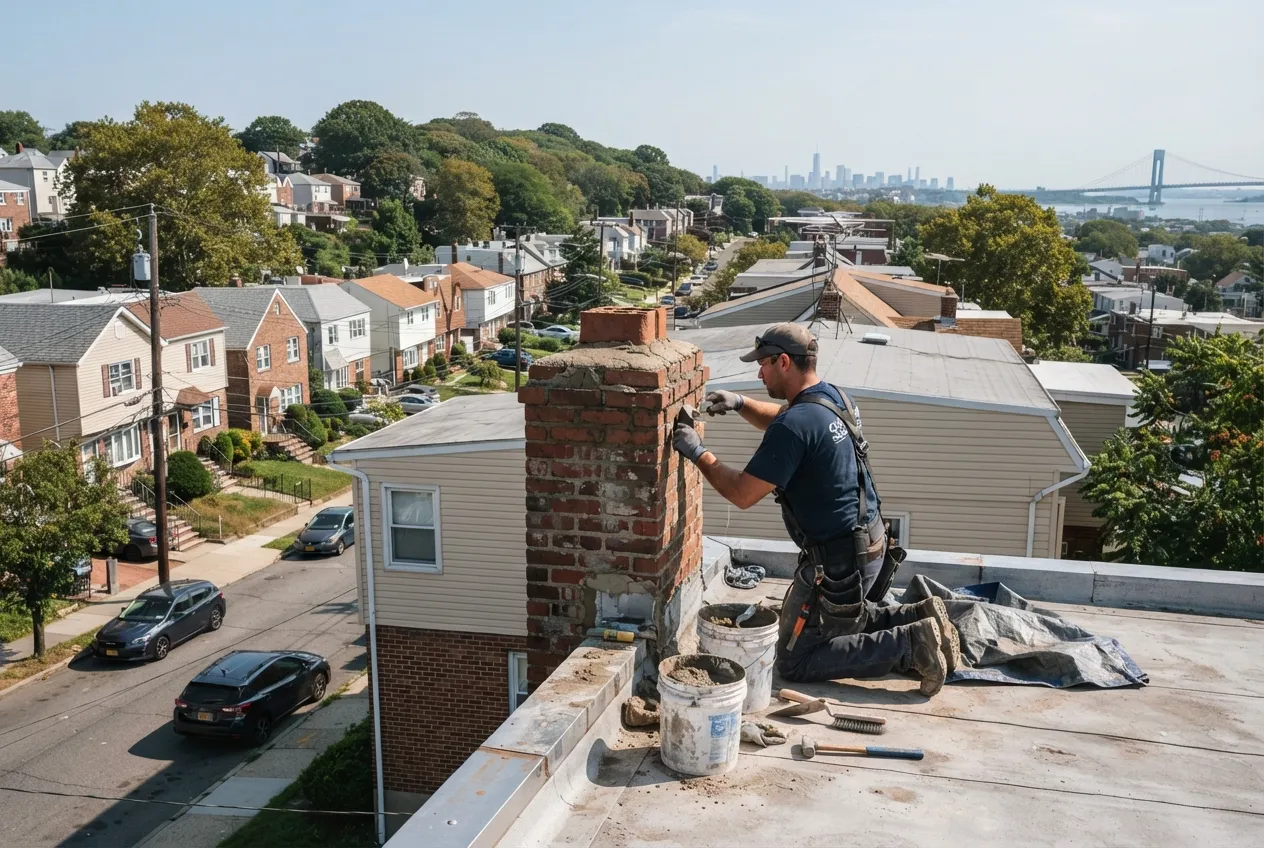
Many problems can be solved without rebuilding anything. A cracked crown can often be sealed or recast. Failed flashing can be replaced with new counter-flashing cut into the mortar joints. Worn joints can be repointed with mortar matched to the age of the brick, which matters on older homes because modern hard mortar can damage softer brick. When the top of a chimney is badly deteriorated, rebuilding the courses above the roofline is sometimes the more lasting fix, and we'll explain why if we recommend it.
Inside the chimney, we replace damaged flue tiles, install stainless steel liners, repair smoke chamber surfaces, and fit top-sealing dampers or new caps sized to the flue.
Oil-to-Gas Conversions and Relining
A number of Huguenot homes have switched their boilers or furnaces from oil to gas. In New York City, the chimney has to be evaluated as part of that conversion. A new liner is often needed because gas exhaust produces acidic condensate that can corrode a masonry flue from the inside. Signs of this include white staining on the outside brick, bits of tile or mortar collecting at the base of the flue, and water near the boiler connection.
If you are planning a conversion, or already finished one and never had the chimney checked, we can inspect the flue and tell you whether it can safely vent the new appliance or needs a properly sized liner.
Time for your annual chimney check?
How a Repair Visit Works
Every repair starts with an inspection. The NFPA 211 standard calls for chimneys, fireplaces and vents to be inspected once a year. It also calls for a more detailed Level 2 inspection when something changes, such as a new appliance, a fuel switch or the sale of a home. We use a camera to see inside the flue, check the exterior and roof connection, and take photos so you can see the problem yourself.
From there we explain the repair options, starting with the simplest one that will actually solve the problem. We don't push work that isn't needed, and we tell you if a problem can safely wait.
Timing Your Repair
Late spring through early fall is the easiest window for masonry and flashing work, because mortar and crown material cure best in mild weather. Booking then also means your heating system is ready before New York City's heat season starts on October 1. For homeowners who rent out part of a two-family house, that matters even more. Heat must be maintained through May 31, and a chimney problem in midwinter can force a heating shutdown at the worst time.
We also serve nearby Annadale, Prince's Bay, Woodrow, Arden Heights and Rossville.
More services in Huguenot
- Chimney Sweep in Huguenot
- Chimney Inspection in Huguenot
- Air Duct Cleaning in Huguenot
- Chimney Liner Installation in Huguenot