The short answer
A Tottenville chimney usually needs a new liner when the old flue tiles are cracked or missing, when a new heating appliance needs a different flue size, or when the home converts from oil to gas. BluePeak inspects the chimney, then installs a stainless steel liner sized to the appliance it serves.
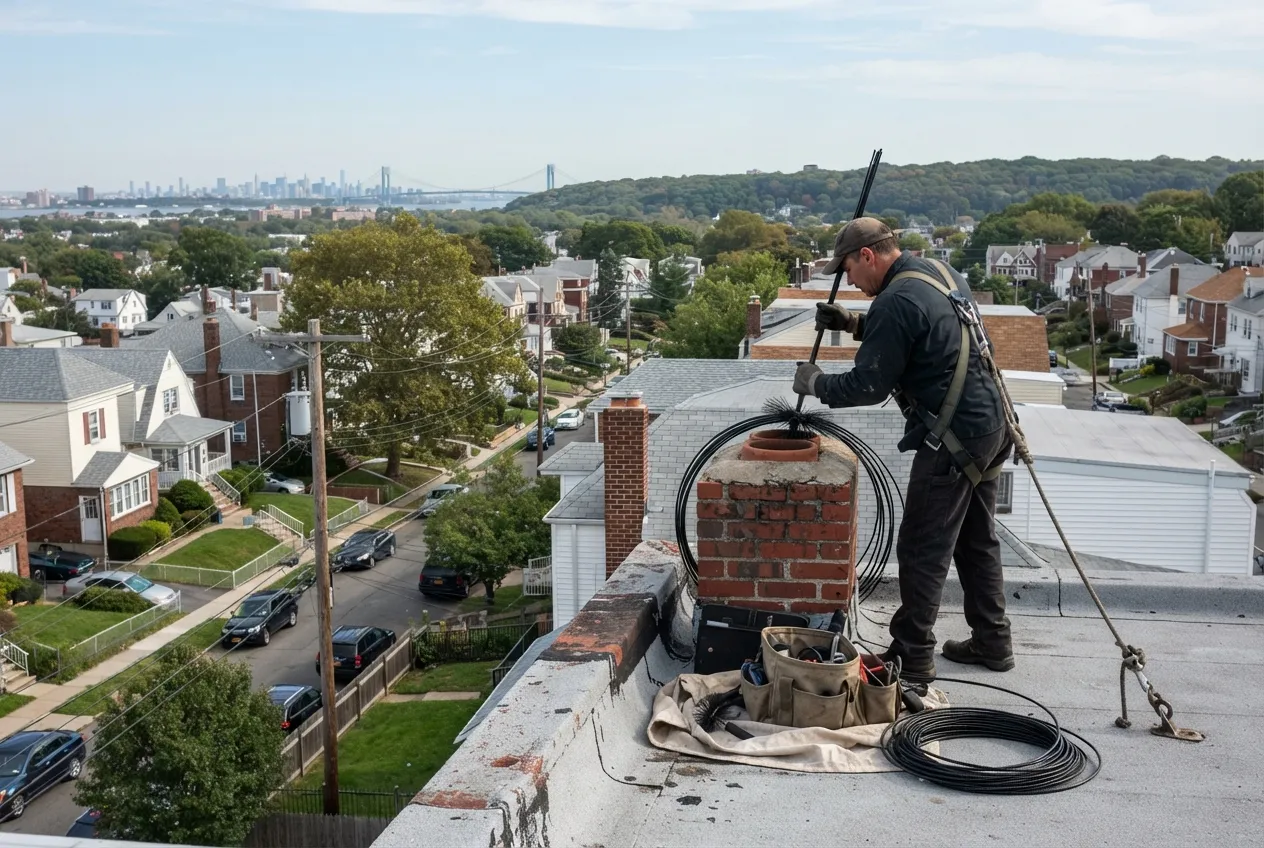
A chimney liner is the channel inside the chimney that carries smoke and exhaust gases up and out of the house. Many Tottenville homes have masonry chimneys that serve a boiler, furnace, water heater or fireplace. Over time the original clay tile liner can crack, lose sections, or end up the wrong size for the appliance it now serves. BluePeak Chimney Service installs new liners for homes in Tottenville and the 10307 ZIP code, about 3 miles west of our Staten Island office. Below is what we look for, the liner types we install, and how the work fits around your heating needs.
Signs a Tottenville chimney needs a new liner
Liners wear out quietly. Clay tiles crack from heat and the mortar joints between them erode. Water that gets past a worn crown or a missing cap speeds up the damage. Because the liner sits inside the masonry, most problems are found during an inspection rather than noticed from the living room.
Homeowners usually call us after one of these:
The NFPA 211 standard calls for chimneys, fireplaces and vents to be inspected once a year. A more detailed Level 2 inspection applies when the heating system changes, such as a new appliance or a switch of fuel, or when a home is sold. That is often when liner problems come to light.
- An inspection or camera scan found cracked, shifted or missing flue tiles
- Pieces of tile or masonry turning up in the cleanout or firebox
- Staining, dampness or white powder on the chimney walls in the attic or basement
- A new boiler, furnace or water heater that needs a flue of a different size
- A switch from oil to gas heat
- A fireplace that smokes back into the room or draws poorly
Oil-to-gas conversions in Tottenville homes
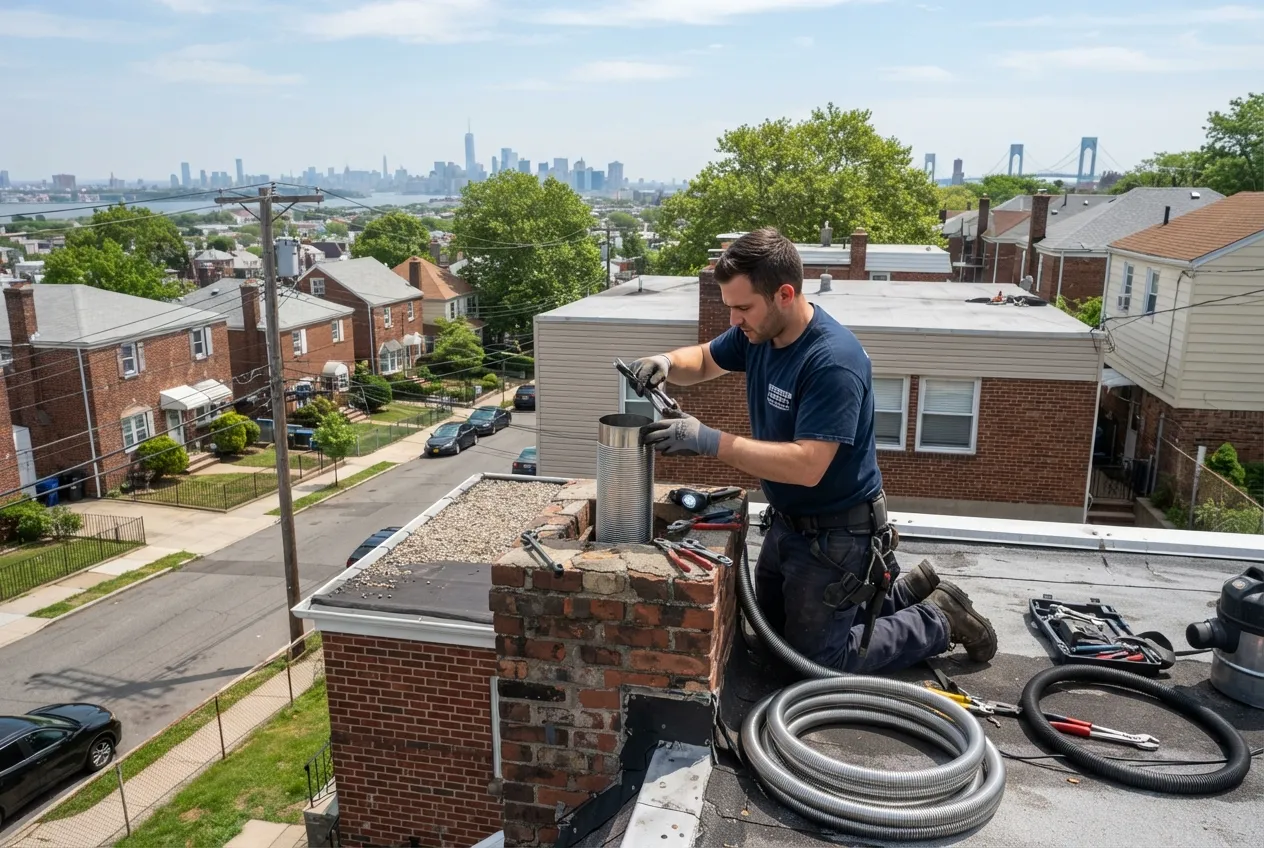
Many detached and semi-attached homes in Tottenville were set up to burn heating oil, and some are now converting to gas. In New York City, the chimney has to be evaluated as part of an oil-to-gas boiler conversion. A new liner is often needed because gas exhaust produces acidic condensate. That condensate can corrode a masonry flue that held up fine for years on oil.
We work with your heating contractor so the liner is sized to the new boiler or water heater and is ready when the equipment goes in. If your plumber or the utility flagged the chimney during a conversion, we can inspect it and explain what the flue needs before the work moves ahead.
Liner options we install
The right liner depends on what the chimney serves and the condition of the masonry around it. Our certified technicians measure the flue and match the liner to each appliance's venting requirements. We don't use one size for every job.
Older chimneys with bends or tight spots get extra attention. If the shape of your flue limits your options, we'll tell you up front.
- Stainless steel liners for gas and oil boilers, furnaces and water heaters, sized to the appliance
- Insulated stainless steel liners for wood-burning fireplaces and stoves, where insulation helps keep the flue warm and the draft steady
- Liner setups for chimneys that serve more than one appliance, planned so each one vents properly
- New caps and top plates to keep rain and animals out of the new liner
Time for your annual chimney check?
How a liner installation works
Most residential liner jobs follow the same steps:
We protect floors and furniture near the work area. When the job is done, we walk you through what we found and what we installed. If the inspection turns up masonry damage that has to be repaired first, we'll show you photos and explain it before any other work starts.
- Inspect the chimney, including a camera look at the inside of the flue
- Clean the flue so the new liner goes into a clear passage
- Measure and confirm the liner size for each connected appliance
- Lower the liner from the roof and connect it at the base to the appliance or fireplace
- Seal and cap the top, then check that the system drafts properly
Scheduling liner work around the heating season
New York City's heat season runs from October 1 through May 31. Losing the boiler in midwinter because the chimney failed is hard to fix quickly, both for homeowners and for anyone renting out part of a two-family house. Spring and summer are the easiest times to replace a liner. They also give you time to plan a fuel conversion without rushing.
Along with Tottenville, we install chimney liners in nearby Charleston, Annadale, Huguenot, Prince's Bay and Woodrow.
More services in Tottenville
- Chimney Sweep in Tottenville
- Chimney Inspection in Tottenville
- Chimney Repair in Tottenville
- Air Duct Cleaning in Tottenville