The short answer
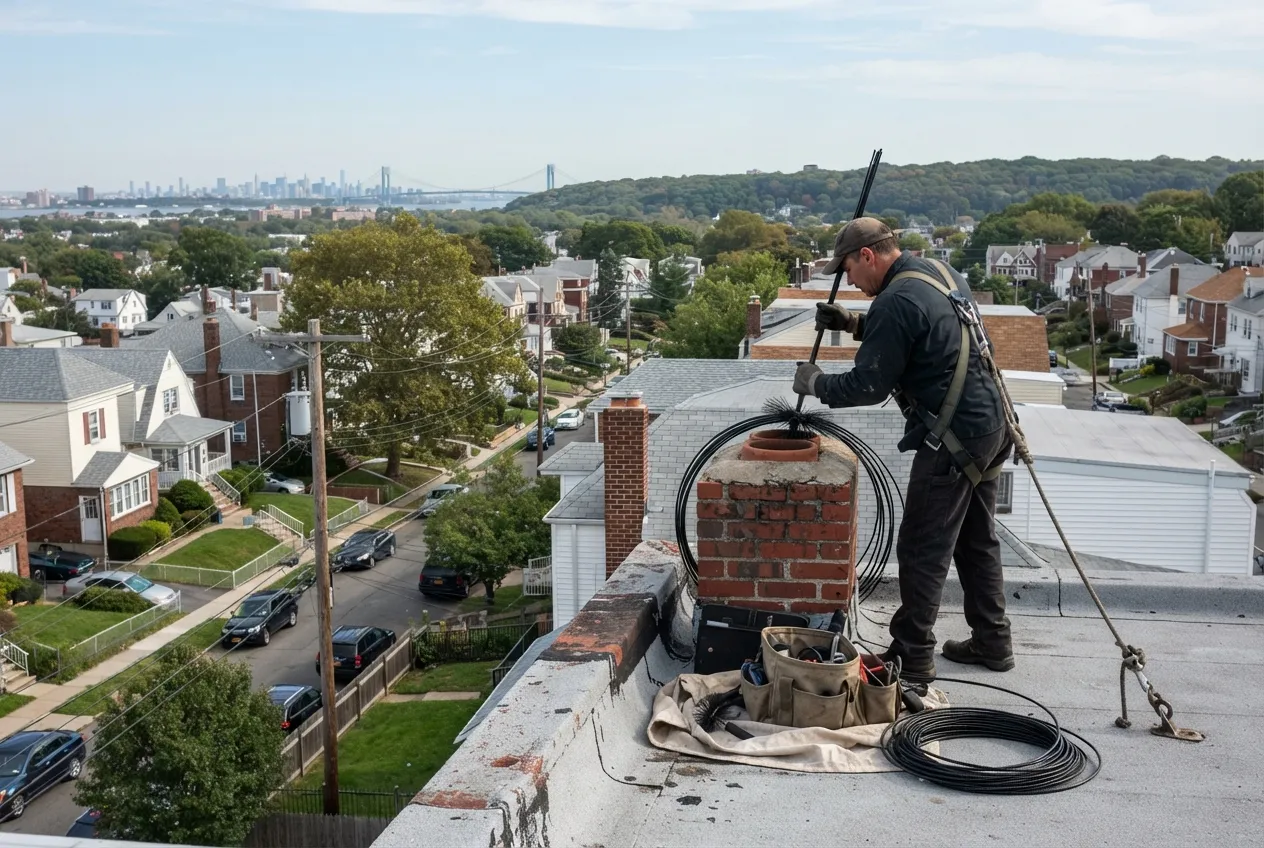
Chimney repair in Tottenville starts with an inspection to find where water, heat, or exhaust is getting where it shouldn't. From there we repair crowns, masonry, flashing, caps, dampers, and liners on the detached and attached homes common in this part of Staten Island.
Most chimney damage in Tottenville homes starts small: a cracked crown, a loose flashing seam, a few mortar joints that let water in. Left alone through a few freeze-and-thaw winters, those small problems turn into leaks, stained ceilings, crumbling brick, and flues that are no longer safe to use. BluePeak Chimney Service repairs chimneys on homes across Tottenville and the 10307 ZIP code, about 3 miles from our Staten Island office. Our certified technicians inspect the whole system first, then tell you plainly what needs fixing now, what can wait, and why.
Chimney problems we see in Tottenville homes
Tottenville has a mix of older detached frame houses, mid-century homes, and newer attached and semi-attached houses. Each type has its own weak points. Older masonry chimneys tend to show worn mortar and spalling brick. Newer homes often have factory-built chimneys or chases where the trouble is a rusted chase cover or a failed seal rather than the brick itself.
Weather on the South Shore of Staten Island is hard on anything that sits above the roofline. Wind-driven rain and repeated winter freezing push water into any opening it can find. Signs that your chimney needs attention include:
- Water stains on the ceiling or wall next to the chimney
- White staining (efflorescence) on the outside brick
- Brick faces flaking or popping off
- Cracks in the concrete crown on top of the chimney
- A musty smell from the fireplace, especially after rain
- Rust on the damper, firebox, or chase cover
- Pieces of tile or masonry falling into the firebox
We find the cause before we repair anything
A leak near the chimney isn't always the chimney's fault, and a crack you can see may not be the one causing the damage. That's why every repair starts with an inspection. The NFPA 211 standard calls for chimneys, fireplaces, and vents to be inspected once a year, and it describes three inspection levels.
A Level 1 inspection fits a chimney that's in regular use with no changes. A Level 2 inspection is called for when something about the system changes, such as a new heating appliance or a switch in fuel, or when the home is being sold. It includes a camera inspection of the flue. A Level 3 inspection is only needed when a hidden hazard has to be reached by opening part of the chimney or the building. We explain which level fits your situation and what we found, with photos when they help.
Chimney repairs we handle
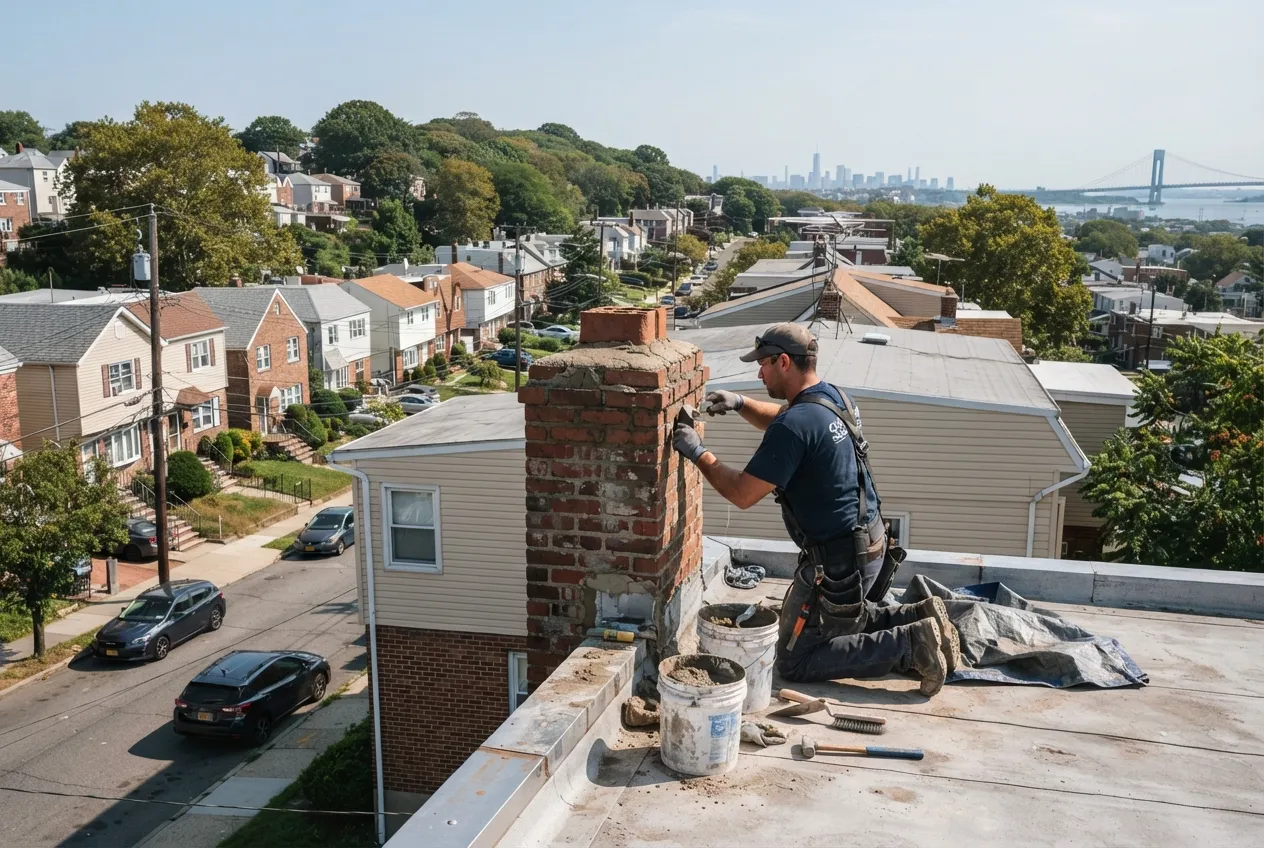
Once we know what's wrong, we match the repair to the problem instead of rebuilding more than necessary. Common repairs on Tottenville homes include:
- Repointing: removing worn mortar and replacing it with new joints
- Replacing damaged or spalled brick
- Partial or full rebuilds above the roofline when the masonry is too far gone
- Rebuilding or sealing cracked chimney crowns
- Resealing or replacing flashing where the chimney meets the roof
- Installing or replacing chimney caps to keep out rain and animals
- Repairing or replacing dampers, including top-sealing dampers
- Flue liner repair and relining for damaged or unsuitable flues
- Firebox repairs, including cracked firebrick and mortar joints
- Chase cover replacement on factory-built chimneys
Time for your annual chimney check?
Converting from oil to gas? Check the chimney first
Some Tottenville homes still heat with oil, and many owners are switching to gas. When a New York City building converts its boiler from oil to gas, the chimney has to be evaluated as part of the work. A new liner is often needed, because gas exhaust produces acidic condensate that can corrode a masonry flue over time.
If you're planning a conversion, have the chimney looked at early so a liner doesn't hold up the job. A change of fuel is also one of the situations where a Level 2 inspection is appropriate.
When to schedule chimney repair
The best time for most chimney repair is spring through early fall. Mortar and crown work need reasonable temperatures to cure properly, and finishing before you need the heat avoids being without a working fireplace or heating system in cold weather.
New York City's heat season runs from October 1 through May 31. If you own a multi-family home and rent out units, the heating system has to keep tenants at the city's minimum temperatures during those months, so a chimney problem that affects the boiler venting can't wait. If you notice smoke, soot, or exhaust smells inside, stop using the appliance and call for an inspection.
Serving Tottenville and nearby neighborhoods
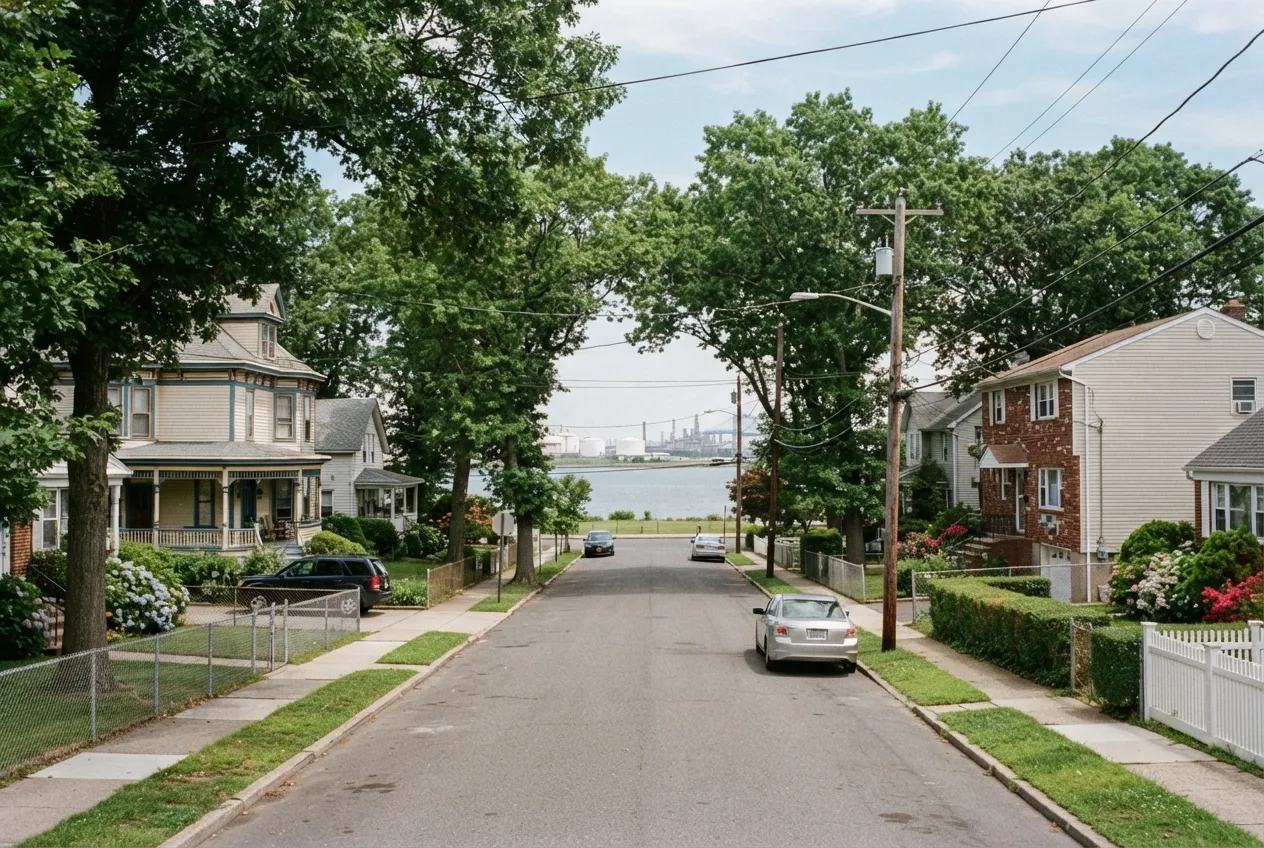
We repair chimneys throughout Tottenville and the 10307 ZIP code, along with nearby Charleston, Annadale, Huguenot, Prince's Bay, and Woodrow. Because we're based in Staten Island, we know the housing styles here and the kind of weather wear these chimneys take.
More services in Tottenville
- Chimney Sweep in Tottenville
- Chimney Inspection in Tottenville
- Air Duct Cleaning in Tottenville
- Chimney Liner Installation in Tottenville