The short answer
A chimney sweep in Great Kills removes creosote, soot and debris from your flue and checks the chimney for damage or blockages. The NFPA 211 standard calls for chimneys, fireplaces and vents to be inspected once a year, and sweeping is done when the inspection shows buildup. BluePeak serves all of 10308 from our nearby Staten Island office.
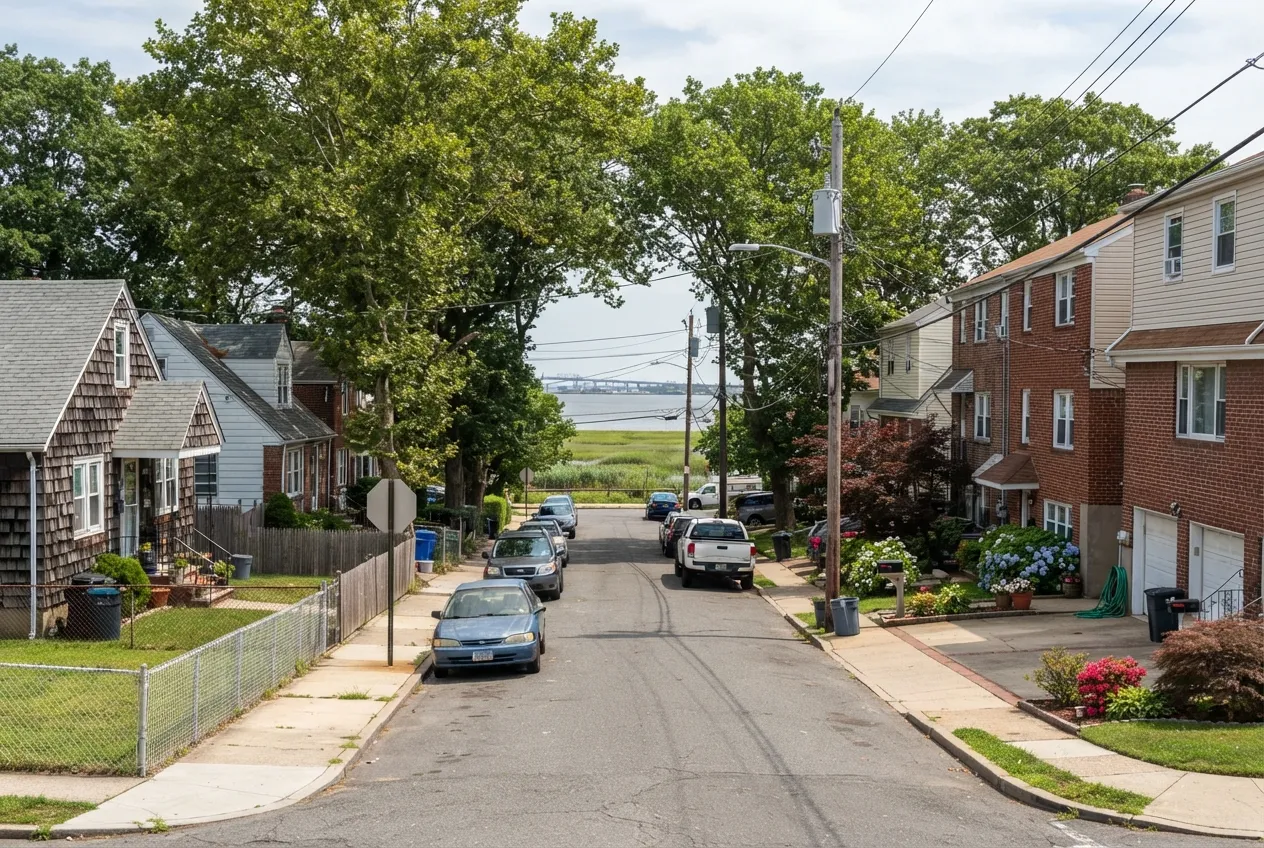
If you have a wood-burning fireplace, a wood stove, or an oil or gas heating system venting through a chimney in Great Kills, regular sweeping keeps that flue clear and working the way it should. BluePeak Chimney Service is based about a mile from Great Kills, so we schedule visits throughout the 10308 ZIP code without long travel windows. Our certified technicians clean the flue, check the parts you can't easily see, and tell you plainly what they found. The neighborhood is mostly detached and semi-detached houses, with some attached homes. Many have a fireplace in the living room and a separate flue serving the boiler or furnace. Each of those flues needs attention, and they don't always need the same thing.
What a Chimney Sweep Includes
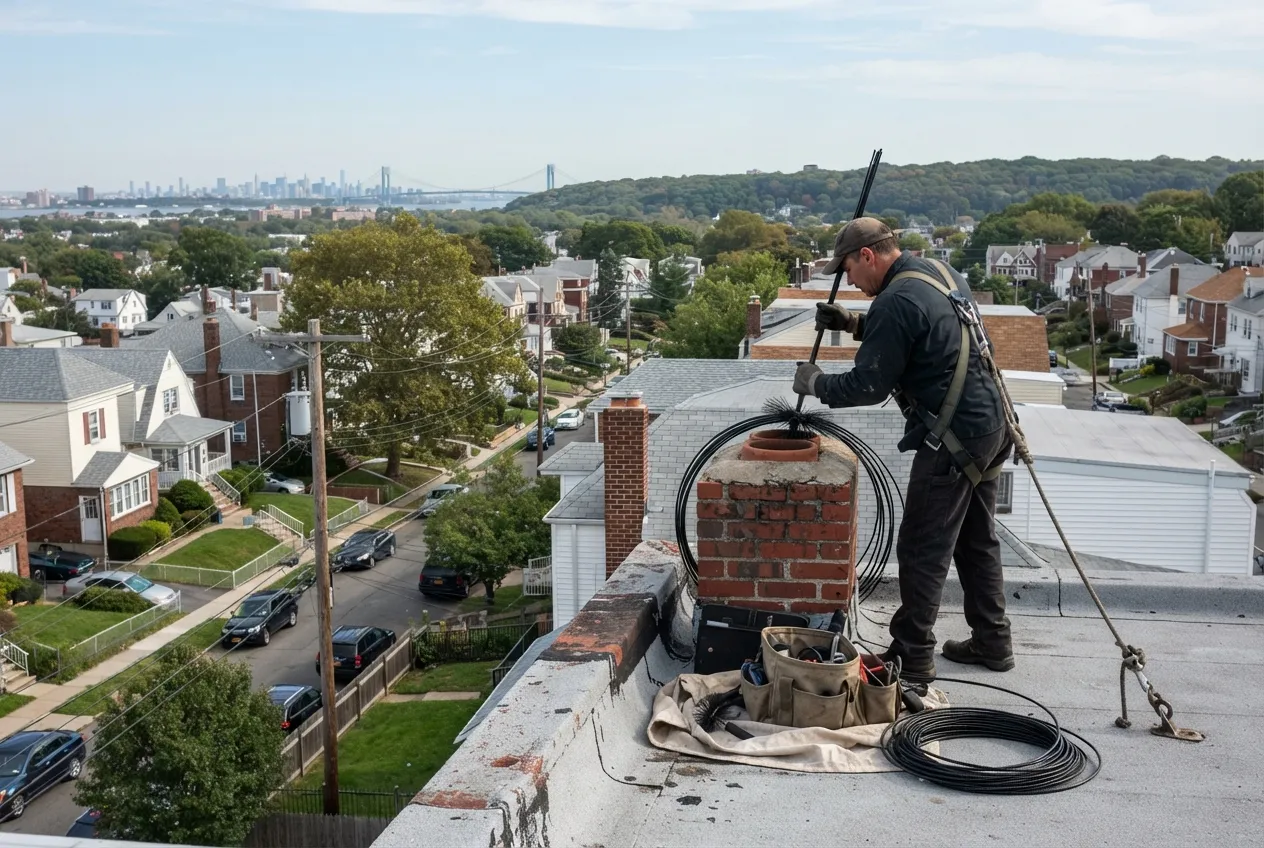
A sweep is more than running a brush up the flue. We protect the room first, then clean the system from the firebox or appliance connection up through the flue, and we check the condition of each part as we go. When we finish, you get a straightforward explanation of what we saw and anything that needs follow-up.
- Drop cloths and dust containment around the fireplace or appliance
- Removal of soot, creosote and loose debris from the flue, smoke chamber and firebox
- A check of the damper, smoke shelf and flue liner for cracks, gaps or deterioration
- A look for nests, leaves or other blockages, which are common in chimneys left unused over the summer
- A visual check of the crown, cap and visible masonry from the roof when it is safe to access
- A plain-language summary of findings, with photos when they help explain an issue
Why Great Kills Homes Need Regular Sweeping
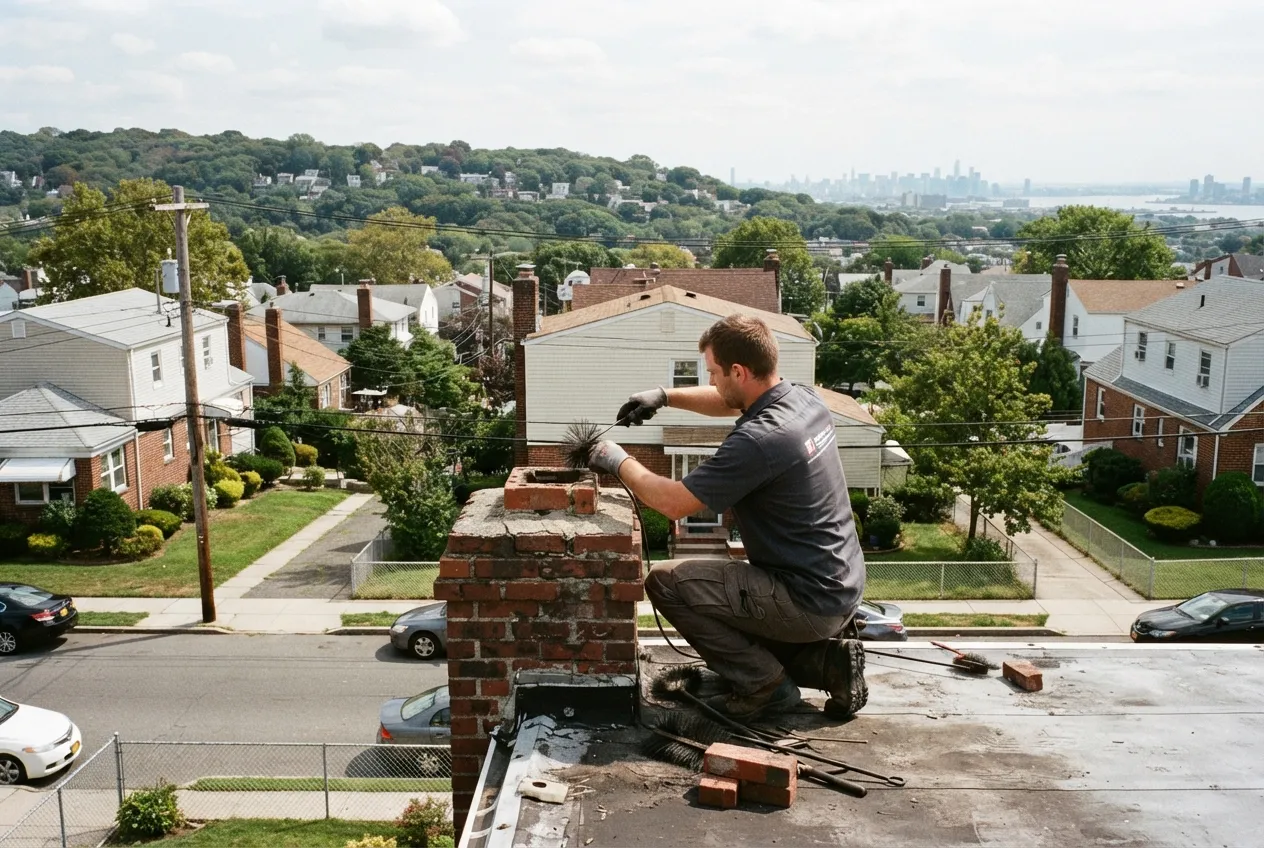
Creosote is the tar-like residue that wood smoke leaves on the inside of a flue. It builds up faster when the wood is damp, the fire smolders, or the flue runs cool. That last one is common in exterior chimneys on older detached homes. Enough creosote can ignite inside the chimney, and a chimney fire can damage the liner even if nobody notices it happening.
Heating flues need attention too. A boiler or furnace flue can collect soot, scale or fallen debris that restricts the draft and lets exhaust linger where it shouldn't. Since many Great Kills houses run a fireplace and a heating system off the same chimney stack, we check each flue on its own terms.
Yearly Inspections and the Three Inspection Levels
The NFPA 211 standard calls for chimneys, fireplaces and vents to be inspected once a year. Chimney professionals use three inspection levels. A Level 1 inspection fits when nothing about your system has changed. A Level 2 inspection is called for when the system changes, such as a new appliance or a switch of fuel, or when the home is being sold. A Level 3 inspection is reserved for cases where a hidden hazard can only be reached by opening part of the chimney or the building.
For most Great Kills homeowners, the routine is a yearly inspection with a sweep when the inspection shows buildup. If you're buying or selling a house in the neighborhood, ask about a Level 2 inspection so you know the chimney's condition before closing.
Time for your annual chimney check?
Converting From Oil to Gas
Some older homes on Staten Island still heat with oil, and many owners eventually switch to gas. When a New York City building converts its boiler from oil to gas, the chimney has to be evaluated as part of the work. A new liner is often needed, because gas exhaust produces acidic condensate that can corrode a masonry flue. If a conversion is in your plans, we can sweep and inspect the chimney ahead of time so the liner question is answered early, not in the middle of the project.
When to Schedule Your Sweep
Late summer and early fall are the easiest times to book, before you start using the fireplace and before heating systems run steadily. New York City's heat season runs from October 1 through May 31, so having the heating flue checked before October makes sense if you rent out part of your home or own a multi-family house. Call us sooner if you notice a strong smoky or tar-like smell, smoke coming back into the room, falling flakes of black material, or animal sounds in the chimney.
We also serve nearby Eltingville, Oakwood, Richmondtown, Arden Heights and Rossville, so neighbors on adjacent streets can often book visits close together.
More services in Great Kills
- Chimney Inspection in Great Kills
- Chimney Repair in Great Kills
- Air Duct Cleaning in Great Kills
- Chimney Liner Installation in Great Kills