The short answer
If your Charleston home's flue liner is cracked, deteriorated, or doesn't match your heating appliance, a new liner restores safe venting and protects the masonry. Relining often comes up when a home switches from oil to gas, gets a new boiler or furnace, or shows damaged clay tiles during an inspection.
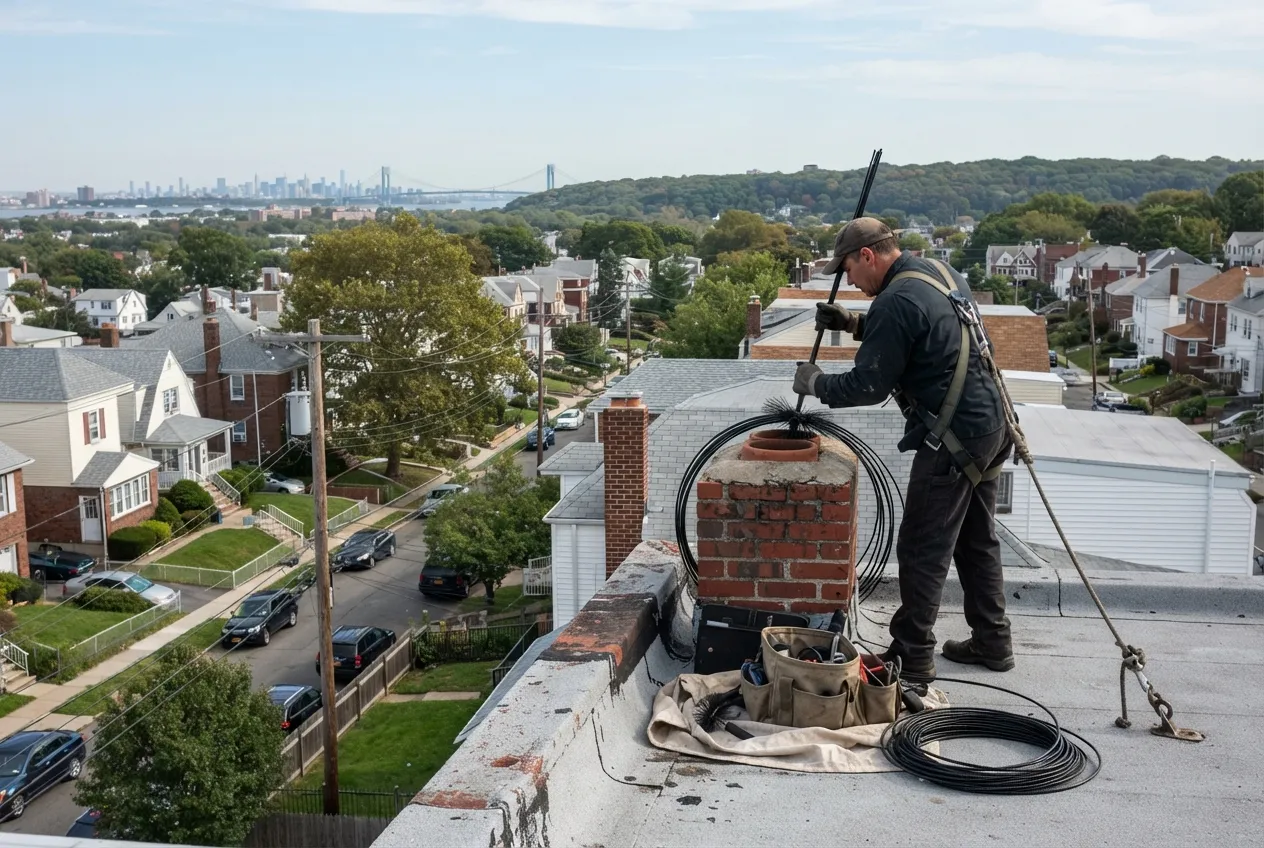
A chimney liner is the protective channel inside your flue that carries smoke and exhaust gases out of the house and keeps heat and acidic byproducts away from the surrounding masonry and framing. In Charleston (ZIP 10307), most homes are detached or semi-attached houses with masonry or prefabricated chimneys serving a fireplace, a boiler, a furnace, or a water heater. When that liner is cracked, missing, or the wrong size for the appliance it serves, the chimney can't vent safely. BluePeak Chimney Service is about 3 miles from Charleston, and our certified technicians inspect, size, and install chimney liners for homes across this part of the South Shore.
Why the Liner Matters in Charleston Homes
Many chimneys in Charleston were built with clay tile liners. Clay works well when it's intact, but tiles can crack from a chimney fire, settling, or years of freeze-thaw cycles, and mortar joints between tiles can erode. Once that happens, heat and exhaust can reach the brick and the wood framing around the chimney.
Liner size matters too. A flue that is too large for a modern, efficient appliance can let exhaust cool and condense before it leaves the chimney, which leads to moisture damage and poor draft. A flue that is too small can push exhaust back into the house. Matching the liner to the appliance is a core part of the job, not an afterthought.
When Relining Usually Comes Up
The NFPA 211 standard calls for chimneys, fireplaces, and vents to be inspected once a year, and a Level 2 inspection is the standard when the system changes, such as a new appliance or a switch of fuel, or when a home is sold. Those are the moments when liner problems most often come to light.
- Converting a boiler or furnace from oil to gas. In New York City the chimney has to be evaluated as part of that work, and a new liner is often needed because gas exhaust produces acidic condensate that can corrode a masonry flue.
- Replacing a boiler, furnace, or water heater with a model that needs a different flue size.
- Cracked, shifted, or missing clay tiles found during an inspection.
- Crumbling masonry, flaking flue tiles, or water stains near the chimney.
- Adding a wood or pellet stove, or reopening a fireplace that hasn't been used in years.
- Buying or selling a home in Charleston or nearby.
Liner Options We Install
The right liner depends on the fuel, the appliance, and the shape and condition of the existing chimney. We explain the options that fit your situation before any work starts.
- Stainless steel liners for gas and oil boilers, furnaces, and water heaters, sized to the appliance's venting requirements.
- Insulated stainless steel liners for wood stoves, inserts, and fireplaces, where keeping the flue warm helps draft and reduces creosote buildup.
- Liners for chimneys that serve more than one appliance, when the layout allows it to be done safely.
- Chimney caps installed with the liner to keep out rain, debris, and animals.
Time for your annual chimney check?
How Installation Works
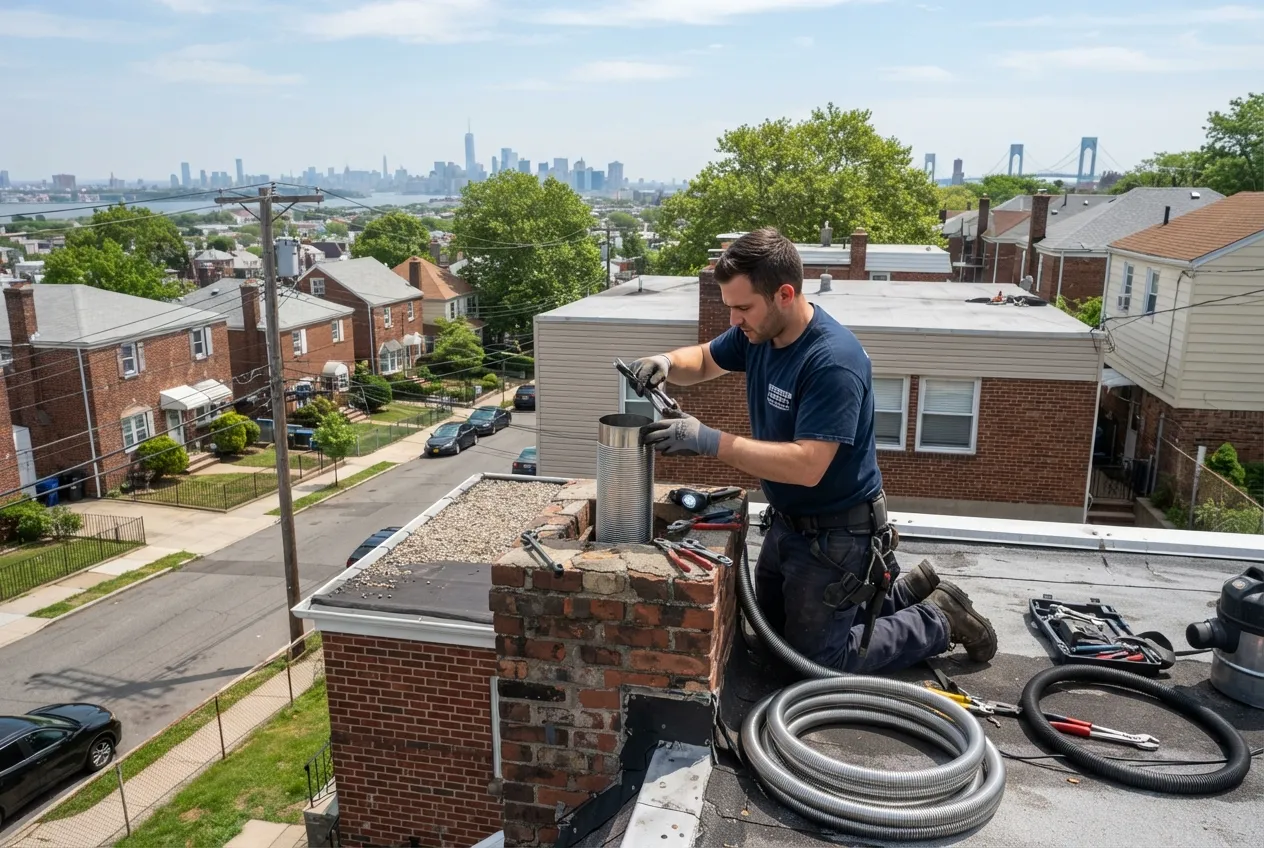
We start with an inspection, usually including a camera look inside the flue, to confirm the condition of the existing liner and masonry and to measure the flue. From there we size the new liner for the appliance it will serve.
On installation day we protect the work area inside the house, clean the flue if needed, and lower the new liner down from the top of the chimney. We connect it at the base to the appliance or fireplace, seal and cap the top, and check that the system drafts properly. Before we leave, we walk you through what was done and what to watch for going forward.
Plan Ahead of Heat Season
New York City's heat season runs from October 1 through May 31. If you're planning an oil-to-gas conversion, replacing a boiler, or fixing a damaged flue, scheduling the liner work in late spring or summer gives you time to finish before you depend on your heat. Fall gets busy, and a heating system that can't vent safely shouldn't be run.
Along with Charleston, we install chimney liners in Tottenville, Annadale, Huguenot, Prince's Bay, and Woodrow.
More services in Charleston
- Chimney Sweep in Charleston
- Chimney Inspection in Charleston
- Chimney Repair in Charleston
- Air Duct Cleaning in Charleston