The short answer
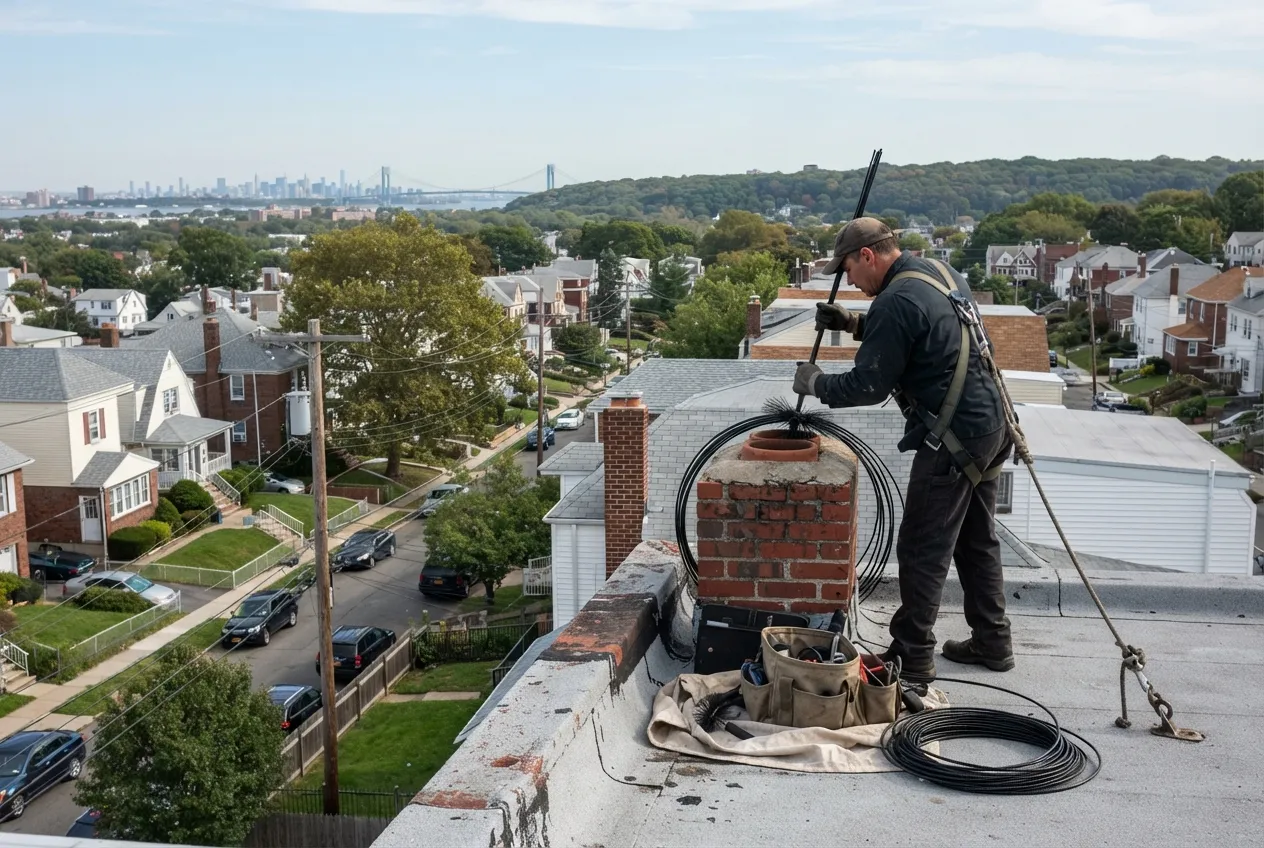
Chimney repair in Charleston usually means fixing water entry at the crown, cap or flashing, repointing worn mortar joints, or relining a flue that no longer vents safely. BluePeak inspects first, shows you what we find, and repairs the specific failure. We also serve Tottenville, Annadale, Huguenot, Prince's Bay and Woodrow.
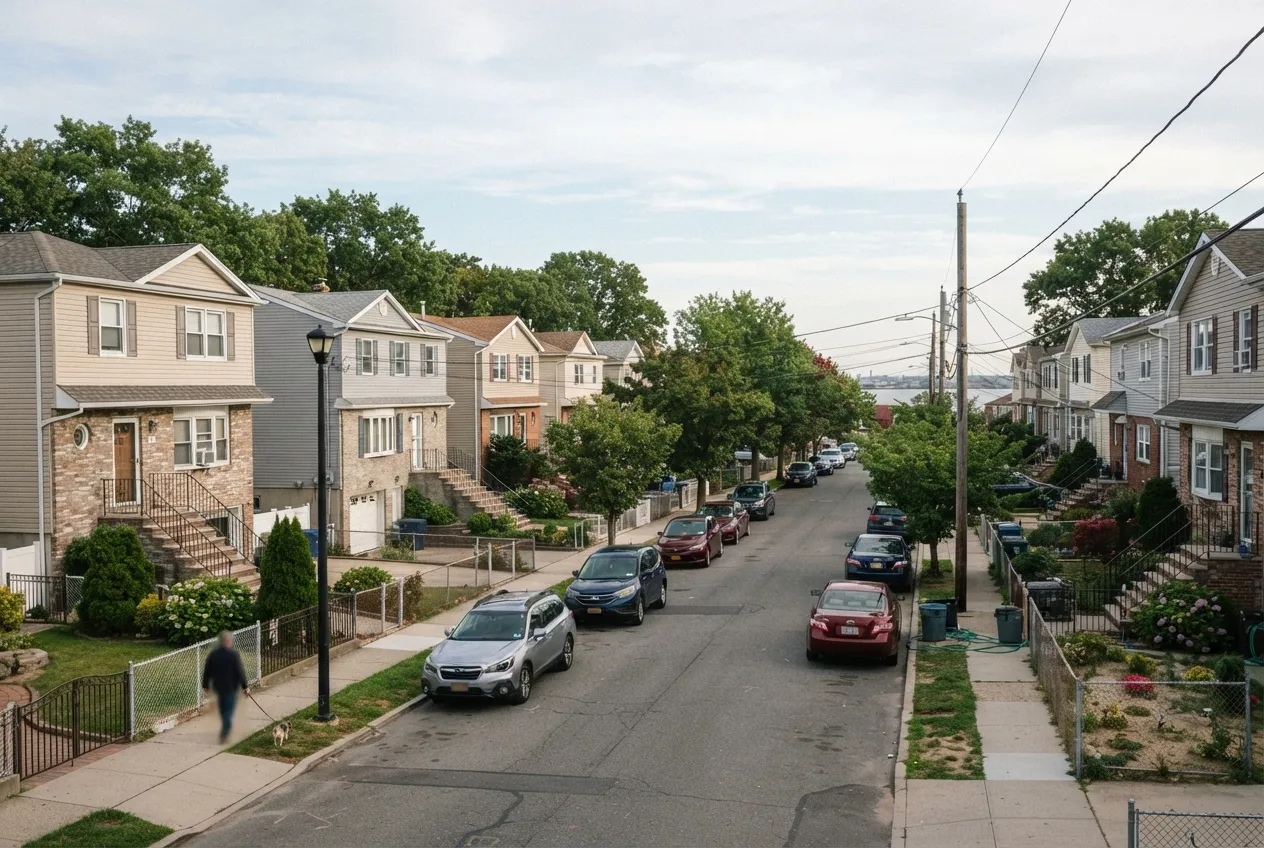
Charleston sits on Staten Island's South Shore, about 3 miles west of our office. The neighborhood is mostly detached houses, along with semi-detached homes and newer townhouses. Many have masonry chimneys serving a fireplace, a furnace, a boiler, or a water heater. Each of those chimneys takes the same weather year after year: freeze-thaw cycles in winter, wind-driven rain from the water, and summer heat on the crown and flashing. BluePeak's certified technicians repair chimneys throughout Charleston (10307). We start by finding out what is actually wrong, then fix that problem rather than selling a full rebuild you may not need.
The repairs Charleston chimneys need most
Most chimney damage we see on the South Shore starts with water. Water that gets into brick and mortar freezes, expands, and slowly pushes joints and faces apart. A small crack in the crown or a lifted edge of flashing can let in enough water over a few winters to damage the masonry below it.
Here are the repairs we handle most often on homes in and around Charleston:
- Crown repair or replacement, when the concrete or mortar cap on top of the chimney has cracked or pulled away from the flue tile
- Flashing repair where the chimney meets the roof, a common source of ceiling stains and leaks in the attic
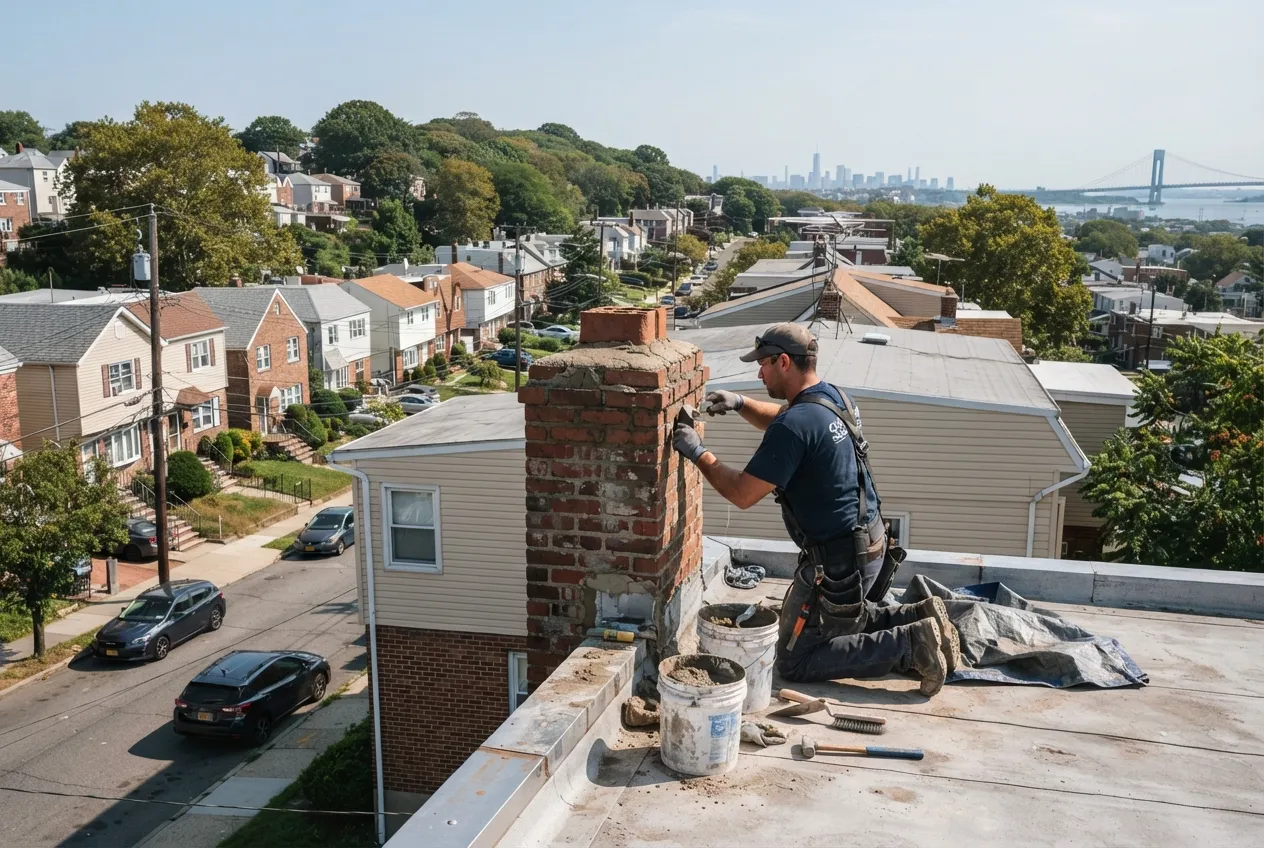
- Repointing (tuckpointing), which means removing crumbling mortar joints and replacing them with new mortar
- Spalled brick replacement, for brick faces that have flaked or popped off
- Chimney cap installation or replacement, to keep out rain, animals and debris
- Flue liner repair or relining for cracked clay tiles or flues that no longer fit the appliance they serve
- Damper repair or replacement for fireplaces that won't seal or won't open fully
Signs your chimney needs attention
Chimney problems often show up inside the house before anyone looks at the roof. Watch for water stains on the ceiling or wall near the chimney, damp or musty smells from the fireplace, white mineral deposits on the brick (called efflorescence), or bits of tile or mortar in the firebox or at the base of the flue.
Outside, look for gaps in the mortar joints, bricks with broken faces, a leaning or cracked crown, rust on a metal cap, or flashing that has peeled up from the shingles. If you heat with oil or gas, a chimney that leaves soot around the appliance, or a draft problem that makes the system run poorly, needs a closer look.
Inspection comes before repair
The NFPA 211 standard calls for chimneys, fireplaces and vents to be inspected once a year. We use that inspection to scope repairs, so the work matches the damage. Chimney professionals use three inspection levels. A Level 1 is for a system that hasn't changed. A Level 2 applies when the system changes, for example a new appliance or a switch of fuel, or when the home is sold. A Level 3 is for cases where a hidden hazard can only be reached by opening part of the chimney or the building.
After the inspection we walk you through what we found, with photos where we can take them. We tell you which repairs address safety and which can reasonably wait.
Time for your annual chimney check?
Converting from oil to gas
Some Charleston homes still have oil-fired boilers or furnaces, and owners who convert to gas often run into a chimney issue they didn't plan for. In New York City, the chimney has to be evaluated as part of an oil-to-gas conversion. A new liner is often needed, because gas exhaust produces acidic condensate that can corrode a masonry flue. Old clay tile sized for oil may also be the wrong size for the new appliance.
We can evaluate the flue before or during your conversion and install a properly sized liner. That way the chimney is ready when the new equipment goes in.
Timing your repair around heating season
New York City's heat season runs from October 1 through May 31. Most Charleston households depend on their heating system the whole time, so late spring and summer are the easiest months for masonry work and relining. Mortar and crown materials also cure better in mild weather.
If a problem turns up in the middle of winter, call anyway. Some repairs, such as a damaged cap or a failed damper, can be handled in cold weather, and we will tell you plainly if a repair should wait for better conditions.
More services in Charleston
- Chimney Sweep in Charleston
- Chimney Inspection in Charleston
- Air Duct Cleaning in Charleston
- Chimney Liner Installation in Charleston