The short answer
Eltingville homes usually need a new chimney liner when the old clay tile flue is cracked or when a boiler or furnace is converted from oil to gas. BluePeak inspects the flue first, then installs a liner sized and rated for your appliance.
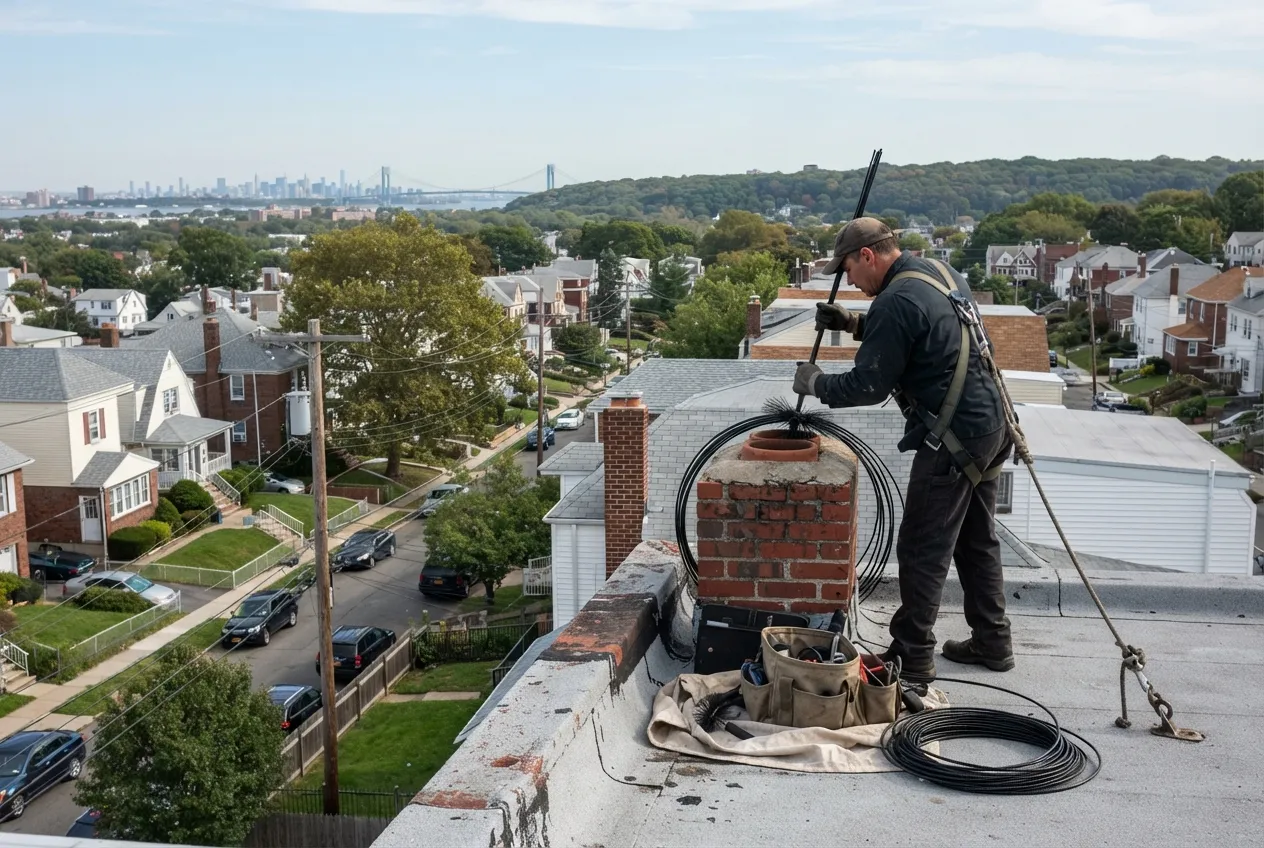
A chimney liner is the protective channel inside your flue that carries smoke and exhaust out of the house and keeps heat and corrosive byproducts away from the surrounding masonry and framing. In Eltingville, many detached and semi-attached homes still rely on original clay tile flues or bare masonry that were built for an older heating setup. When those liners crack, shift, or no longer match the appliance they serve, the chimney can leak exhaust into the home or let heat reach materials it shouldn't. BluePeak Chimney Service is based about a mile southwest of Eltingville, so our certified technicians can easily reach homes throughout the 10308 ZIP code to inspect flues and install liners sized for the equipment you actually use.
Why Eltingville Homes Need New Chimney Liners
Most homes in Eltingville are single-family and two-family houses, many detached and some semi-attached, with chimneys serving a boiler, furnace, water heater, fireplace, or a combination. Over decades, clay tile liners can crack from repeated heating and cooling, mortar joints between tiles can erode, and water can work its way in through a worn crown or missing cap.
A liner problem is easy to miss from the outside. Damage often shows up as flaking tile pieces at the base of the chimney, white staining on the masonry, a draft that seems weaker than it used to be, or an inspection camera showing gaps in the flue. Any of these is a reason to have the liner evaluated before the next heating season.
Oil-to-Gas Conversions and Your Flue
Many Staten Island homeowners have switched their heating from oil to gas. In New York City, the chimney has to be evaluated as part of that conversion, and a new liner is often needed. Gas exhaust produces acidic condensate that can corrode a masonry flue that held up fine under oil.
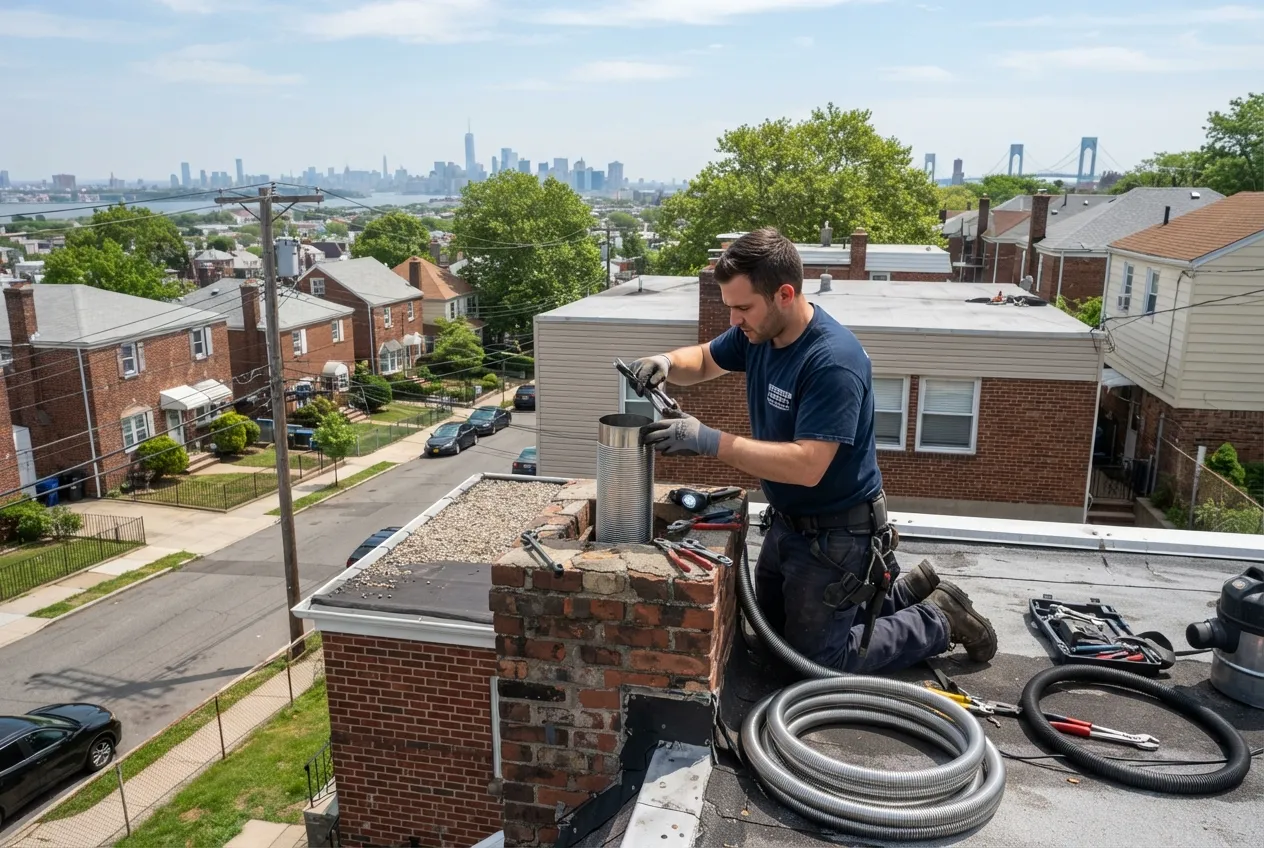
If you are planning a conversion or have recently finished one, we can inspect the chimney and install a liner suited to the new gas appliance. Matching the liner size to the appliance matters: a flue that is too large for a modern, efficient boiler can cool the exhaust too quickly, which adds to condensation and weak draft.
Liner Options We Install
The right liner depends on the appliance, the fuel, and the shape and condition of the existing chimney. After inspecting, we explain which option fits your home and why.
- Stainless steel liners for gas and oil boilers, furnaces, and water heaters, including flexible liners that can follow offsets in older chimneys
- Aluminum liners where they are appropriate for certain gas appliances
- Insulated stainless liners for wood-burning fireplaces and stoves where clearance or heat transfer is a concern
- Liners sized for a shared flue when a boiler and water heater vent through the same chimney
- New caps and top plates to keep rain, debris, and animals out of the new liner
Time for your annual chimney check?
How Liner Installation Works
Every job starts with an inspection. The NFPA 211 standard calls for chimneys, fireplaces, and vents to be inspected once a year, and it describes three levels. A Level 2 inspection applies when the system changes, such as a new appliance or a switch of fuel, or when the home is sold, which covers most liner projects. If a hidden hazard has to be reached by opening part of the chimney or building, a Level 3 inspection may be needed.
Once we know what's inside the flue, we clean it, measure it, and install the liner from the top down. The liner is connected to the appliance at the bottom and sealed at the top with a cap. We then check the draft and walk you through what was done, along with photos of the flue when they're helpful.
Planning Around Heat Season
New York City's heat season runs from October 1 through May 31. For two-family homes with a tenant, that means the heating system needs to be working throughout that period. For any household, a chimney problem discovered in January is harder to deal with than one fixed in summer.
Scheduling liner work in late spring or summer gives time to inspect, install, and confirm everything is venting properly before you need steady heat. If you are converting from oil to gas, coordinate the liner with your heating contractor's timeline so the chimney is ready when the new boiler goes in.
Serving Eltingville and Nearby Neighborhoods
Along with Eltingville, we install chimney liners in Great Kills, Oakwood, Richmondtown, Arden Heights, and Rossville. Homes across this part of Staten Island share many of the same chimney issues, from aging clay tile to flues left oversized after a fuel conversion, so our technicians know what to look for when they get on the roof.
More services in Eltingville
- Chimney Sweep in Eltingville
- Chimney Inspection in Eltingville
- Chimney Repair in Eltingville
- Air Duct Cleaning in Eltingville