The short answer
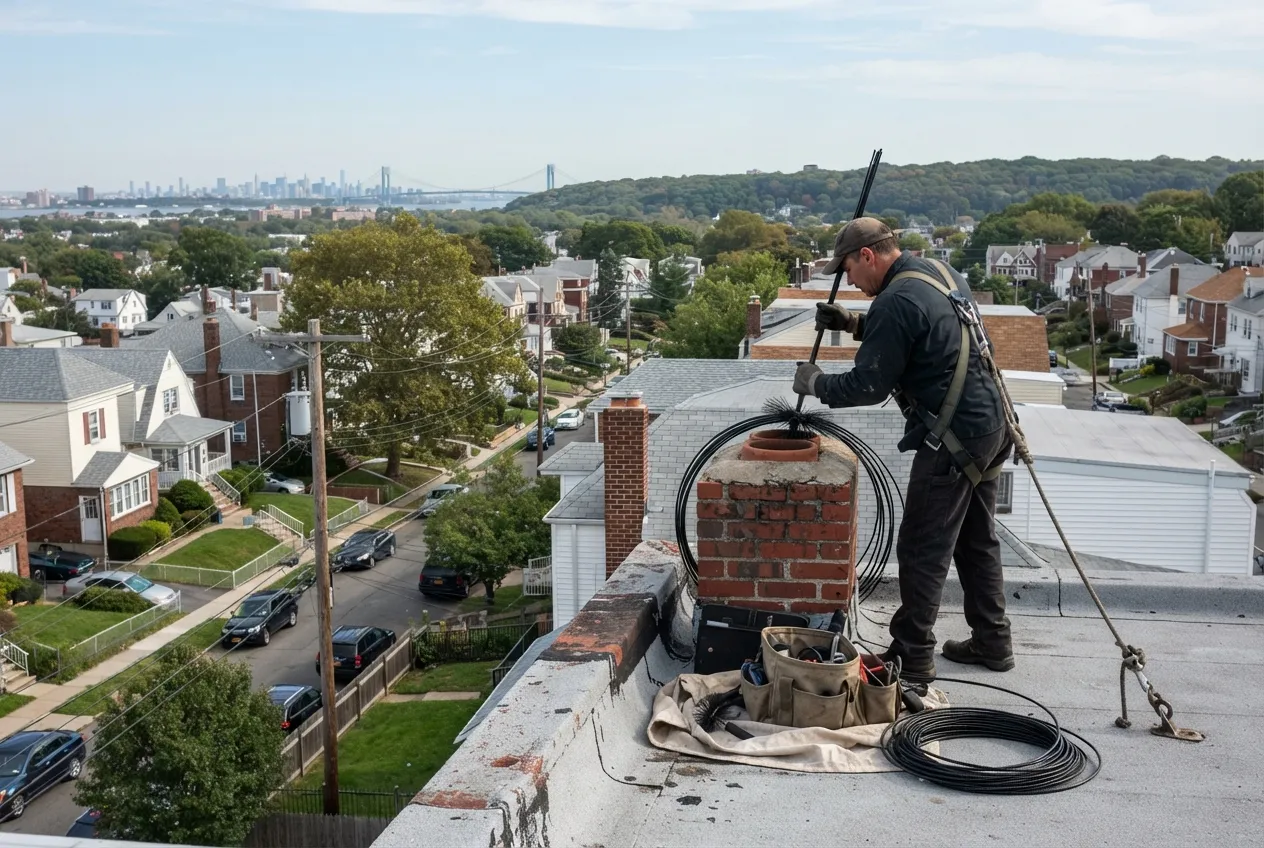
Chimney repair in Eltingville usually involves cracked crowns, failed flashing, deteriorating mortar joints, damaged flue liners or missing caps. BluePeak inspects the chimney first, explains what's wrong with photos, and recommends repairs based on what we find rather than a standard package.
Most homes in Eltingville are detached or semi-detached houses with masonry chimneys that serve a fireplace, a boiler, a water heater, or some combination. Those chimneys take steady punishment from wind-driven rain, freeze-thaw cycles and years of exhaust. When something starts to fail, it usually shows up as a leak, a stain, crumbling brick or a draft problem long before it becomes a safety issue. BluePeak Chimney Service is based about a mile southwest of Eltingville, so our certified technicians can reach homes in ZIP code 10308 easily. We inspect first, show you what we find, and repair what actually needs fixing.
Common chimney problems in Eltingville homes
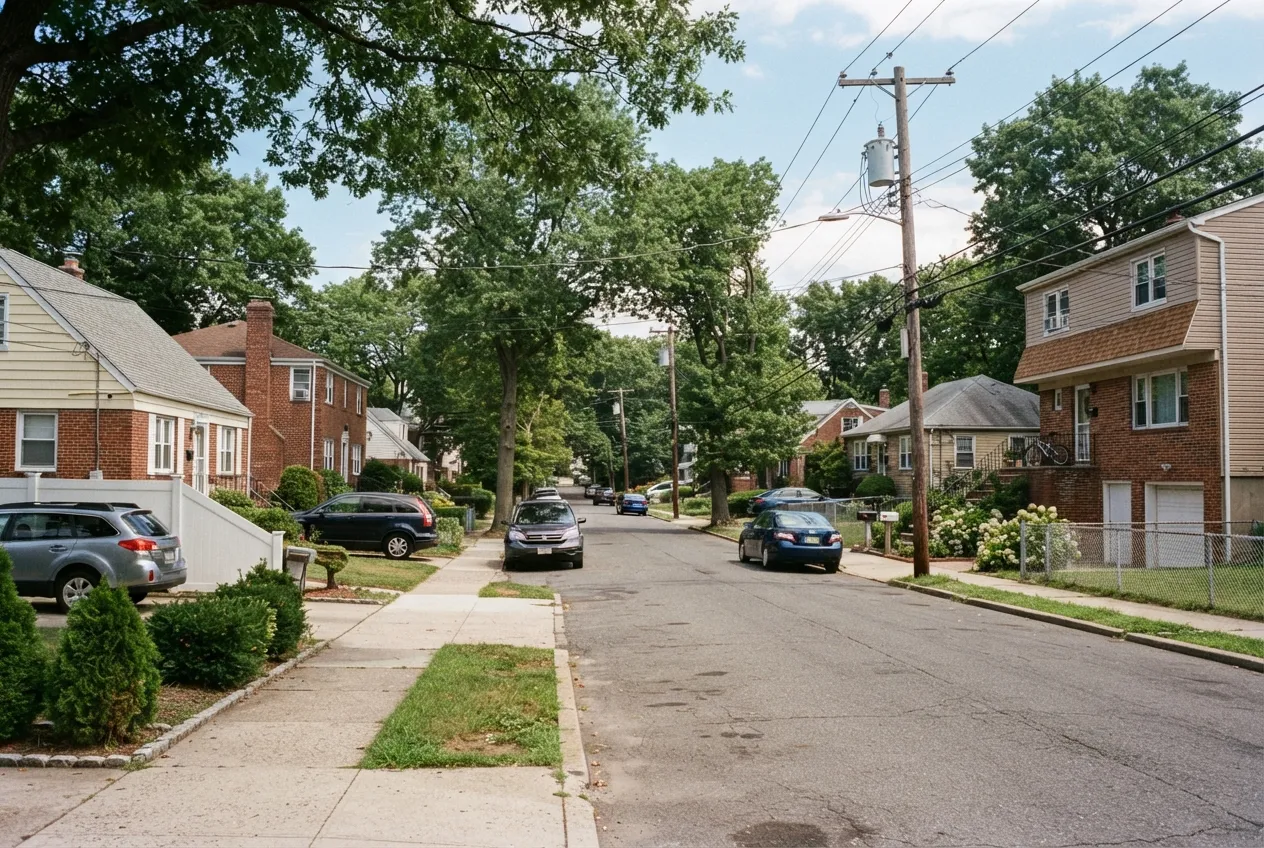
Eltingville's housing is mostly detached homes, semi-detached houses and some attached townhouses. Many have a single chimney that runs up an exterior wall or through the roof. Exposed chimneys like these absorb water from every storm. Once water gets into the brick and freezes, it expands and pushes the masonry apart a little more each winter.
These are the repairs we're called for most often on homes like these:
- Cracked or crumbling chimney crowns that let water run straight into the masonry
- Loose or rusted flashing where the chimney meets the roof, a frequent cause of ceiling and wall stains
- Eroded mortar joints that need repointing before bricks loosen
- Spalling brick, where the face of the brick flakes or pops off
- Cracked or deteriorated clay flue liners
- Missing or damaged chimney caps that let in rain, birds and animals
- Dampers that stick, warp or no longer seal
Why we inspect before we repair
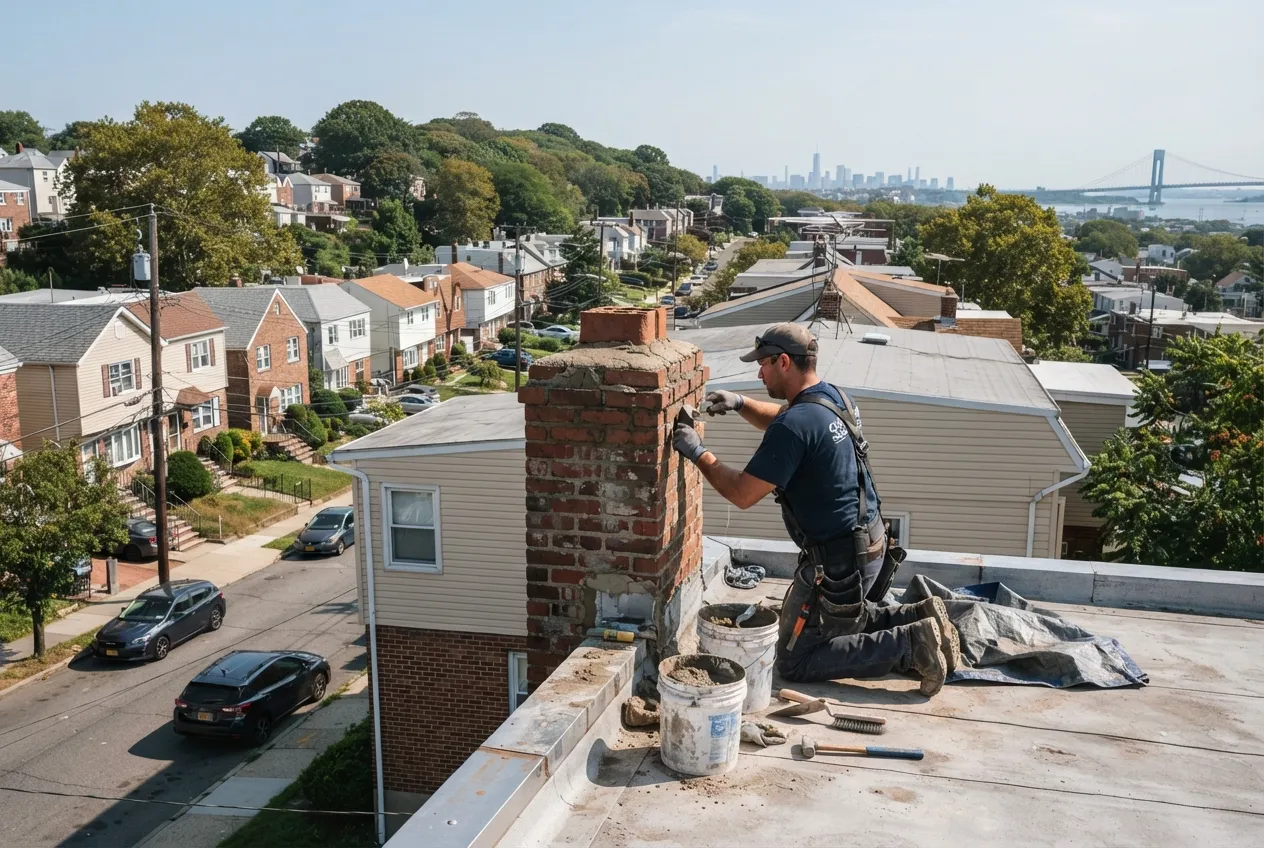
A water stain near a chimney can come from the crown, the flashing, the brick, the cap or the roof itself. Fixing the wrong one wastes your money and leaves the leak in place. That's why every repair starts with an inspection. We check the outside of the chimney, the roof connection, the firebox or appliance connection, and the flue.
The NFPA 211 standard calls for chimneys, fireplaces and vents to be inspected once a year. A Level 1 inspection fits when nothing about the system has changed. A Level 2 inspection is used when the system changes, such as a new appliance or a fuel switch, or when the home is sold. A Level 3 inspection applies when a hidden hazard can only be reached by opening part of the chimney or the building. We'll tell you which level makes sense and why before any work begins.
Liner repairs and oil-to-gas conversions
Some Eltingville homeowners are moving their heating from oil to gas. In New York City, the chimney has to be evaluated as part of that conversion. A new liner is often needed, because gas exhaust produces acidic condensate that can corrode a masonry flue that was built or lined for oil.
If you're planning a conversion or have already done one, we can evaluate the existing flue and explain whether it can stay in service, needs repair or needs a properly sized liner for the new appliance. Liner problems are also common on older clay-tile flues even without a fuel change. Cracked or shifted tiles can let heat and exhaust reach parts of the house they shouldn't.
Time for your annual chimney check?
Timing your repair around the heating season
New York City's heat season runs from October 1 through May 31. If your chimney vents a boiler or furnace, it's in use for most of the year. That makes late spring and summer the easiest time for masonry repairs, crown rebuilding and liner work, because the system can be shut down without leaving the house cold.
That said, some problems shouldn't wait. If you notice exhaust smells, soot around the appliance, a damper that won't open, or pieces of brick or tile falling into the firebox, stop using the appliance or fireplace and call for an inspection.
What to expect from a BluePeak repair visit
When our technicians arrive, they'll ask what you've noticed and where. Then they'll inspect the chimney and take photos of anything that needs attention. You'll get a plain explanation of each problem, what will happen if it's left alone, and which repairs matter most. If a repair can't be done the same day, we'll schedule it and explain what's involved.
We also serve homes in nearby Great Kills, Oakwood, Richmondtown, Arden Heights and Rossville, so if you're comparing notes with neighbors, the same approach applies across the area.
More services in Eltingville
- Chimney Sweep in Eltingville
- Chimney Inspection in Eltingville
- Air Duct Cleaning in Eltingville
- Chimney Liner Installation in Eltingville