The short answer
The NFPA 211 standard calls for chimneys, fireplaces and vents to be inspected once a year, and that applies to Great Kills homes whether they burn wood, oil or gas. Most homes need a Level 1 inspection. A Level 2 inspection is needed after a change such as a new boiler, a fuel switch or a home sale.
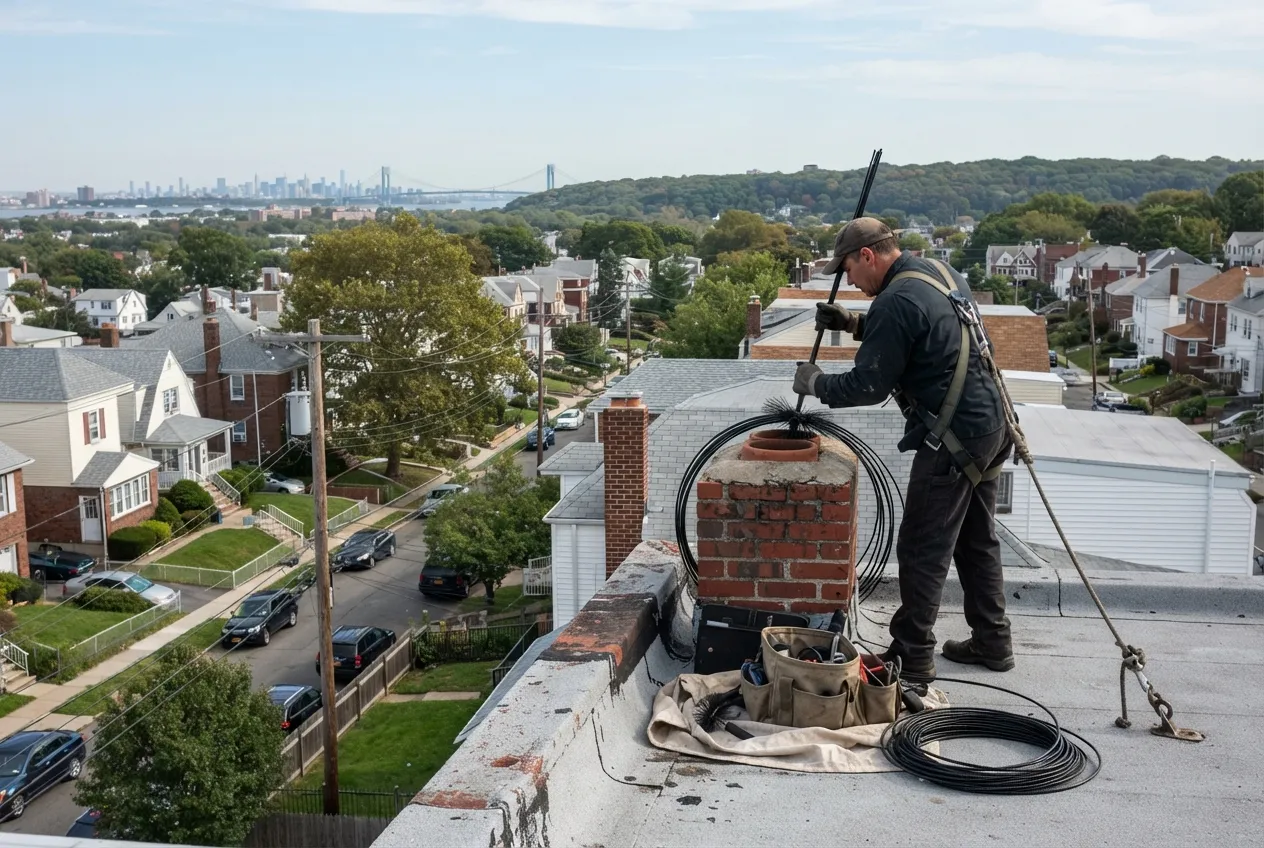
Most chimneys in Great Kills work hard for half the year and get little attention the rest of the time. Whether you have a detached house with a wood-burning fireplace, a semi-attached home with a gas boiler, or a two-family house with a shared flue, a chimney inspection tells you whether the system is safe to use and what, if anything, needs attention. BluePeak Chimney Service is based about a mile from Great Kills, so our certified technicians can reach homes in the 10308 ZIP code quickly. We explain what we find in plain terms and show you photos where we can.
Why Great Kills Homes Need a Yearly Chimney Inspection
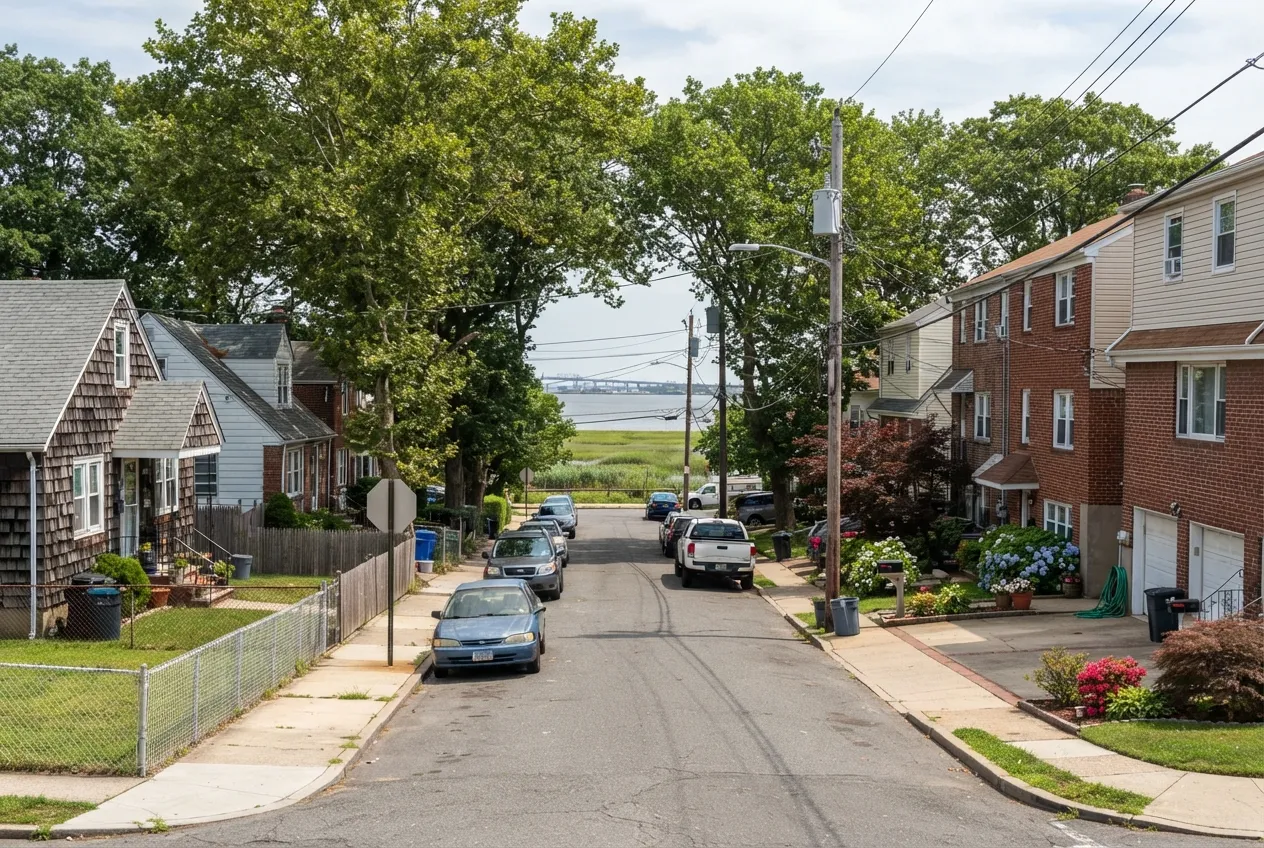
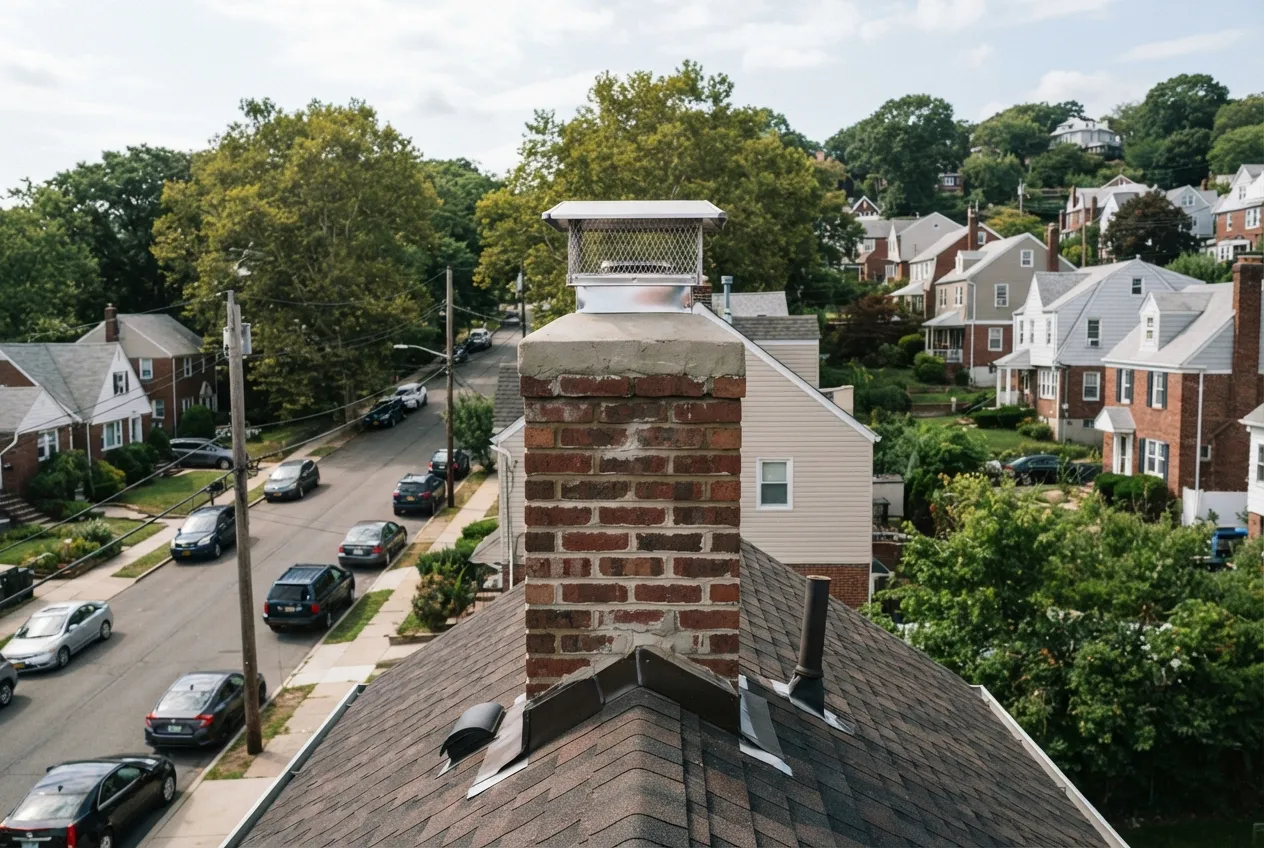
Great Kills has a mix of older detached homes, semi-attached houses and newer attached townhouses. Many of these homes have masonry chimneys that vent a furnace, boiler or water heater, and some also serve an open fireplace or wood stove. Over time, mortar joints wear down, flue liners crack, crowns break up and caps go missing. Most of this damage is hard to see from the ground or from inside the house.
The NFPA 211 standard calls for chimneys, fireplaces and vents to be inspected once a year. That includes chimneys that only vent a gas appliance. Even if you never light a fire, your heating system sends exhaust up that flue all winter, and a blocked or damaged flue can push combustion gases back into the home.
Which Inspection Level Does Your Home Need?
Chimney professionals use three levels of inspection. The right one depends on what has happened with your home and heating system since the last inspection. We will tell you which level fits before we start, and why.
- Level 1: For a chimney that has been in regular use with no changes. We check the readily accessible parts of the chimney, the firebox or appliance connection, and look for blockages and obvious damage.
- Level 2: Needed when the system changes, such as a new boiler or furnace, a switch from oil to gas, or a new fireplace insert. It is also called for when a home is sold. This level includes a camera inspection of the flue interior plus the attic, crawl space and roof where accessible.
- Level 3: Used when a hidden hazard has to be reached by opening part of the chimney or building, such as after a chimney fire or when a Level 2 inspection points to concealed damage.
Converting From Oil to Gas
Many Staten Island homeowners have moved or are thinking about moving from oil heat to gas. When a building in New York City converts its boiler from oil to gas, the chimney has to be evaluated as part of the work. A new liner is often needed because gas exhaust produces acidic condensate that can corrode a masonry flue from the inside.
If you are planning a conversion in Great Kills, schedule a Level 2 inspection early so the liner question is answered before the new boiler goes in. If you already converted and nobody looked at the chimney, an inspection now can tell you whether the flue is holding up.
Time for your annual chimney check?
What Our Technicians Check
Every inspection covers the parts of the chimney that most often cause trouble. Here is what we look at on a typical visit:
- Chimney cap, crown and flashing for cracks, gaps and water entry
- Exterior brick and mortar joints for spalling and loose masonry
- Flue liner condition, including cracks, gaps and corrosion
- Creosote and soot buildup in wood-burning flues
- Nests, debris or fallen masonry blocking the flue
- Damper operation and smoke chamber condition
- Connector pipes from the boiler, furnace or water heater
- Clearance between the chimney and nearby wood framing where accessible
When to Schedule in Great Kills
Late summer and early fall are the easiest times to inspect, because repairs can be finished before the first cold night. New York City's heat season runs from October 1 through May 31. If you own a two-family house and rent out a unit, that is the stretch when you are responsible for keeping the apartment heated to the city's minimum temperatures, so a chimney problem found in January is much harder to deal with.
We also inspect chimneys in nearby Eltingville, Oakwood, Richmondtown, Arden Heights and Rossville.
More services in Great Kills
- Chimney Sweep in Great Kills
- Chimney Repair in Great Kills
- Air Duct Cleaning in Great Kills
- Chimney Liner Installation in Great Kills