The short answer
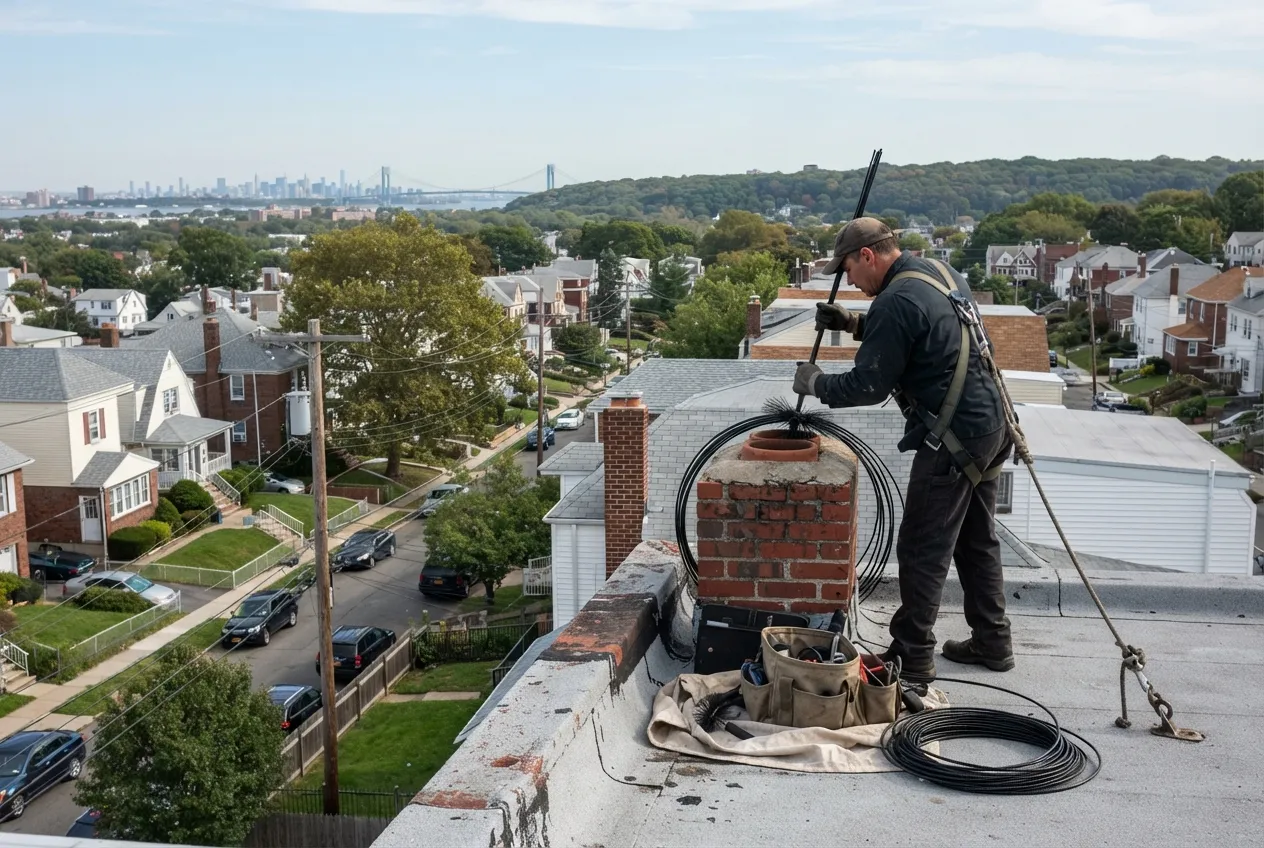
BluePeak repairs chimney masonry, crowns, flashing, caps, dampers and flue liners for homes in Great Kills, Staten Island. Every repair starts with an inspection so you know what is wrong, why it matters and what fixing it involves before any work begins.
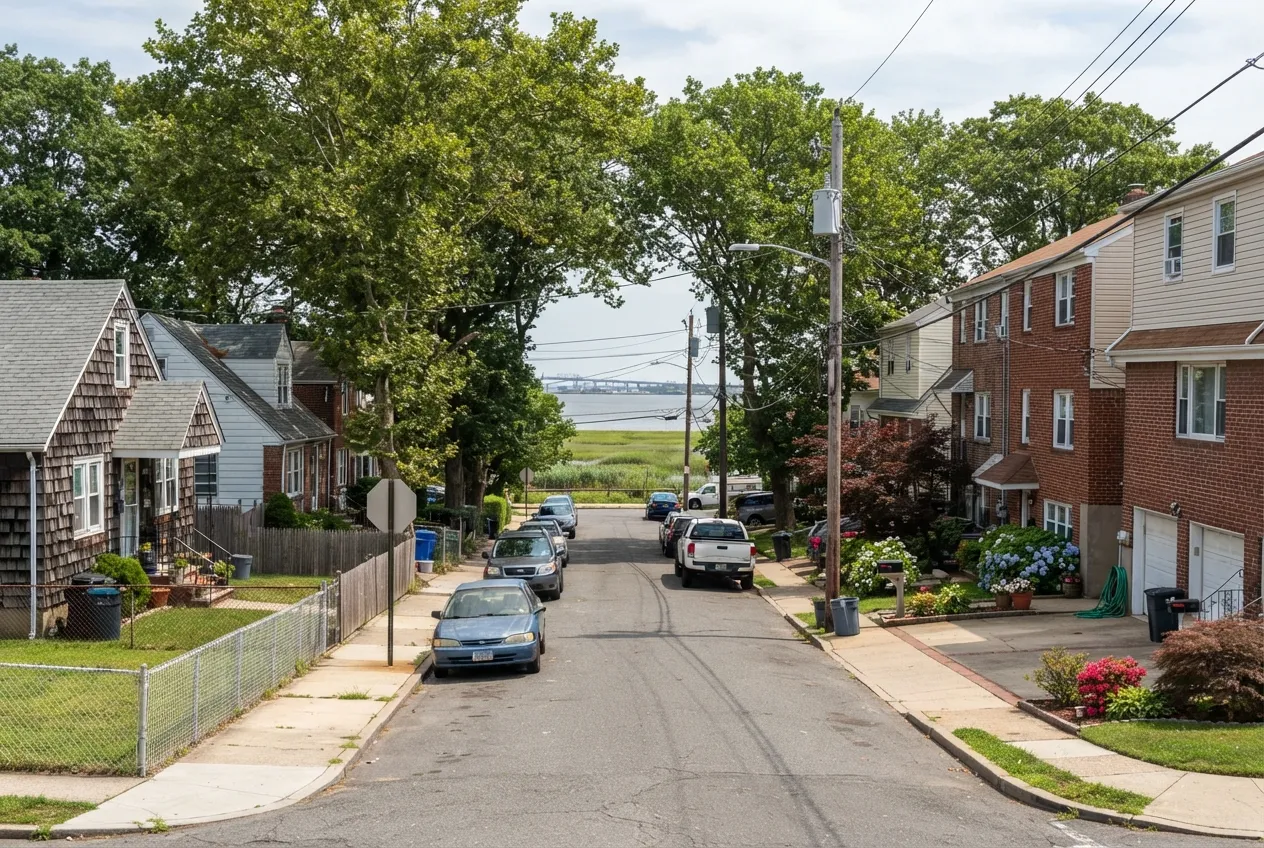
Most chimneys in Great Kills belong to detached and semi-attached houses: older capes, colonials and bungalows, plus newer homes built in the decades since. Many still have the original brick stack, crown and flashing, and Staten Island winters wear on all of them. BluePeak Chimney Service is based about a mile from Great Kills, so our certified technicians can inspect a chimney in the 10308 ZIP code, explain what we find in plain terms, and repair the parts that need it before small cracks turn into leaks, loose brick or an unsafe flue.
Common Chimney Problems in Great Kills Homes
A chimney sits on the roof with no shelter, taking rain, wind and repeated freezing and thawing. Water is behind most of the damage we see. It soaks into brick and mortar, freezes, expands and slowly pushes material apart. On many older houses the chimney has never had more than a quick patch, so the wear has been building for a long time.
These are the problems we're most often called about:
- Cracked or crumbling mortar joints that let water into the stack
- Spalling brick, where the face of the brick flakes or pops off
- A cracked or missing chimney crown on top of the stack
- Failed flashing where the chimney meets the roof, often showing up as a ceiling or wall stain
- Missing or rusted chimney caps that let in rain, leaves and animals
- Damaged, cracked or missing flue liners
- Dampers that stick, won't seal or have rusted through
How We Approach a Repair
We start by finding out why the damage happened, not just where it shows. A water stain on a ceiling might come from the flashing, a cracked crown, porous brick or a missing cap, and patching the wrong one leaves the leak in place. Our technicians look at the chimney from the roof, from inside the home and through the flue when needed.
The NFPA 211 standard calls for chimneys, fireplaces and vents to be inspected once a year. It describes three inspection levels: Level 1 when nothing has changed, Level 2 when the system changes or the home is sold, and Level 3 when a hidden hazard can only be reached by opening part of the chimney or building. We'll tell you which level fits your situation and why.
After the inspection we walk you through what we found, show you photos where they help, and separate what needs attention now from what can be watched.
Masonry, Crown and Flashing Repairs
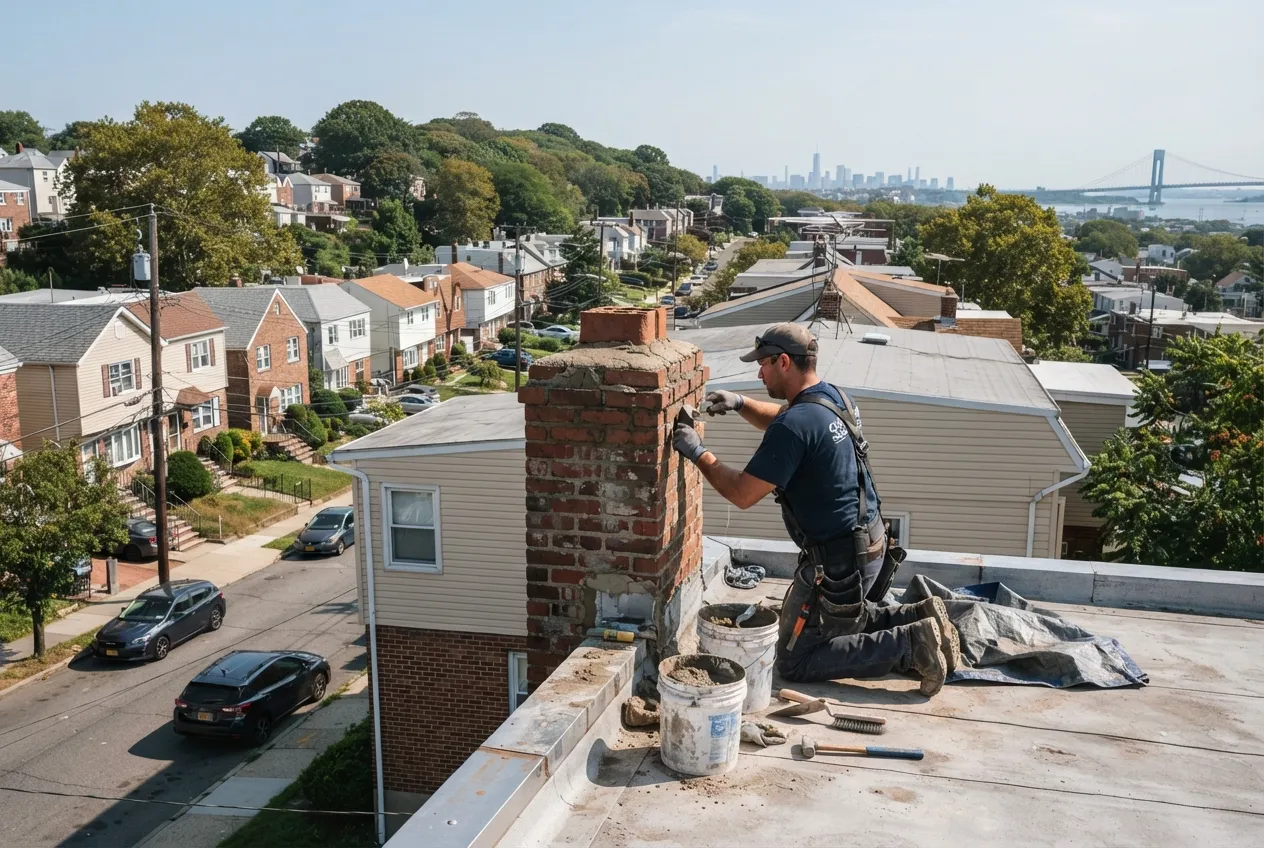
Repointing replaces worn mortar joints with fresh mortar so water stays out of the stack. Where bricks have spalled or cracked through, we replace them individually rather than covering the problem. If damage near the top of the chimney is extensive, a partial rebuild of the upper courses may be the more lasting fix.
The crown is the concrete or mortar cap that sheds water off the top of the chimney. Small cracks can sometimes be sealed, while a crown that is breaking apart usually needs to be rebuilt. Flashing seals the joint between the chimney and the roof, and when it lifts, rusts or was installed poorly, water runs straight into the attic or the walls below. We can reseal or replace flashing and add a cap to keep rain and animals out of the flue.
Time for your annual chimney check?
Flue Liners and Oil-to-Gas Conversions
The flue liner protects the house from heat and carries exhaust safely out of the home. A cracked or deteriorated liner can let heat and gases reach parts of the structure they shouldn't. Repairs range from fixing sections of an existing liner to installing a new one sized for the appliance it serves.
Many Staten Island homes have switched heating systems from oil to gas. When a New York City building converts its boiler from oil to gas, the chimney has to be evaluated as part of the work, and a new liner is often needed. Gas exhaust produces acidic condensate that can corrode a masonry flue that was fine for oil. If you're planning a conversion or have already made one, we can evaluate the chimney and explain whether a new liner is needed.
When to Schedule Chimney Repair
New York City's heat season runs from October 1 through May 31, and your boiler, furnace or fireplace depends on a sound chimney through all of it. Late spring and summer are the easiest times to schedule masonry and crown work, because mortar cures best in mild weather and you aren't relying on the heating system.
Don't wait for the season if you notice water stains near the chimney, bits of brick or mortar on the roof or in the firebox, a strong smell from the fireplace, or smoke that doesn't draw properly. Those signs are worth a prompt inspection. We also serve nearby Eltingville, Oakwood, Richmondtown, Arden Heights and Rossville.
More services in Great Kills
- Chimney Sweep in Great Kills
- Chimney Inspection in Great Kills
- Air Duct Cleaning in Great Kills
- Chimney Liner Installation in Great Kills